 English
 русский
 Tiếng Việt
Content
- 1 Overview of the Three Main Condenser Types
- 2 Air-Cooled Condensers: Structures and Common Configurations
- 3 Water-Cooled Condensers: Shell-and-Tube Design and Efficiency
- 4 Evaporative Condensers: Combining Air and Water Cooling
- 5 Matching a Condenser to Cold Rooms and Water Chillers
- 6 Condenser Maintenance Tips to Extend Service Life
- 7 Sourcing Condensers from a Chinese HVAC Manufacturer
There are three main types of condensers used in refrigeration and HVAC systems: air-cooled, water-cooled, and evaporative. Air-cooled condensers use fans to push ambient air across finned coils, water-cooled condensers rely on circulating water inside shell-and-tube coils, and evaporative condensers combine both air and water spray to reject heat. The right choice depends on climate, water availability, system capacity, and whether the equipment serves a cold room, a water chiller, or a packaged condensing unit.
Overview of the Three Main Condenser Types
Every condenser performs the same job inside a refrigeration circuit: it takes hot, high-pressure refrigerant gas discharged by the compressor and removes enough heat to turn it back into a liquid before it reaches the evaporator. The difference between condenser types comes down to the cooling medium and how the heat is carried away. The table below compares the three categories side by side.
| Condenser Type | Cooling Medium | Typical Approach Temp | Best Suited For |
| Air-Cooled | Ambient air, forced by fans | 10 to 15 degrees C | Cold rooms, condensing units, small to medium plants |
| Water-Cooled | Circulating or tower water | 4 to 8 degrees C | Water chillers, large industrial refrigeration storage |
| Evaporative | Air plus water spray | 3 to 6 degrees C | Ammonia plants, large cold storage, high capacity systems |
Globally, air-cooled condensers make up roughly 60 percent of installed units because they need no water supply and are simple to maintain, while water-cooled and evaporative units take over once capacity climbs into the large industrial range, where their smaller footprint and lower condensing temperature translate into real energy savings.
Air-Cooled Condensers: Structures and Common Configurations
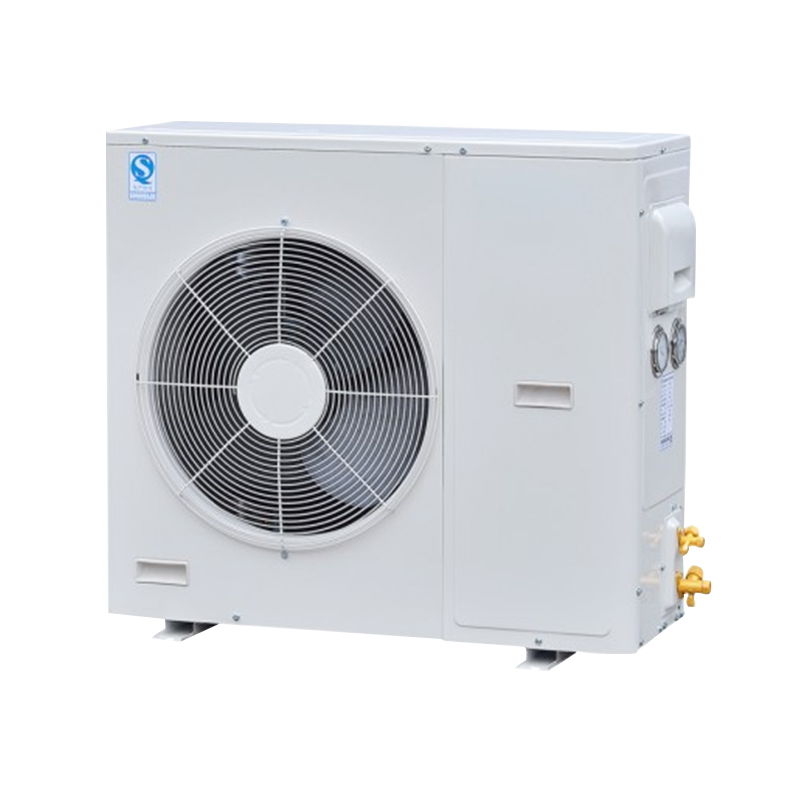
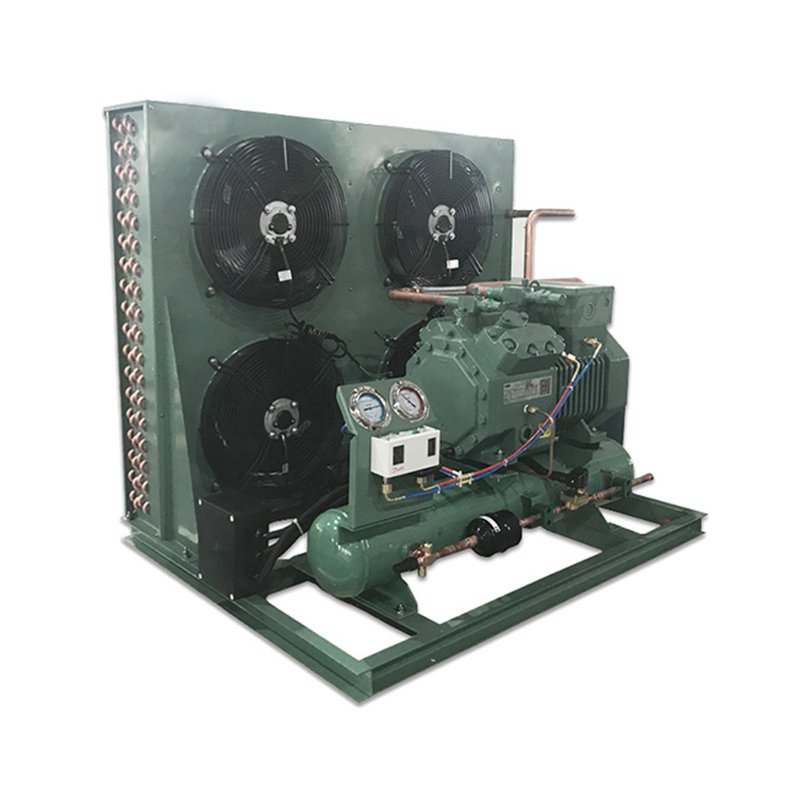
Air-cooled condensers move ambient air over finned copper tubes using axial fans. They are the standard choice for packaged condensing units, commercial cold rooms, and split refrigeration systems because they eliminate the cost of water treatment and piping. Manufacturers usually offer several coil layouts to fit different cabinet shapes and airflow directions.
H Type Air-Cooled Condenser
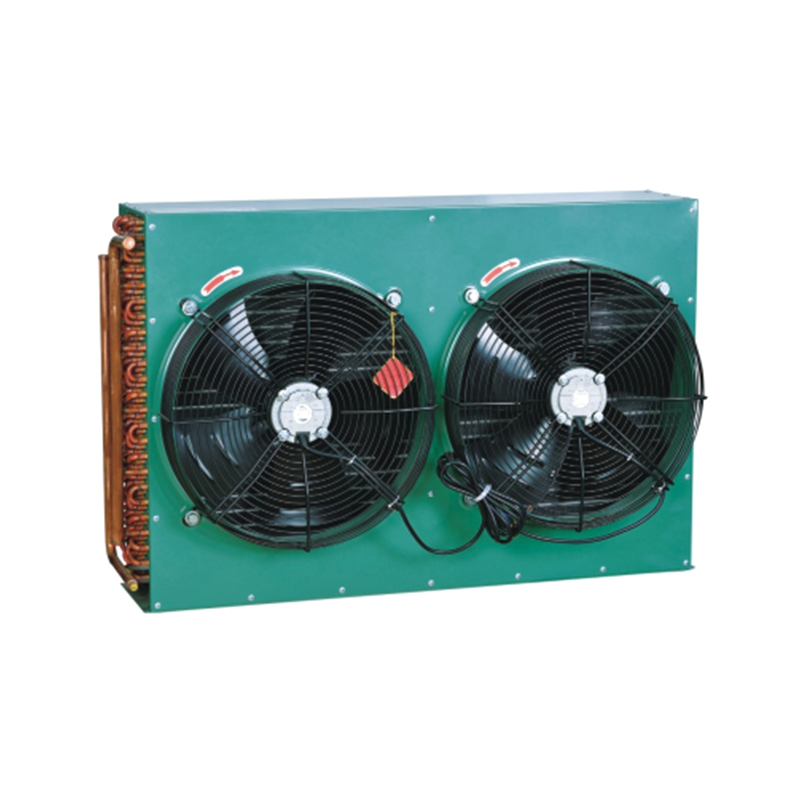
H type units use a plate-style side air outlet with staggered coil rows. Copper tubes are mechanically expanded into aluminum fins for a tight bond, which keeps heat transfer efficient while the compact coil layout suits panel-mounted condensing units and box-type cabinets.
V Type Air-Cooled Condenser
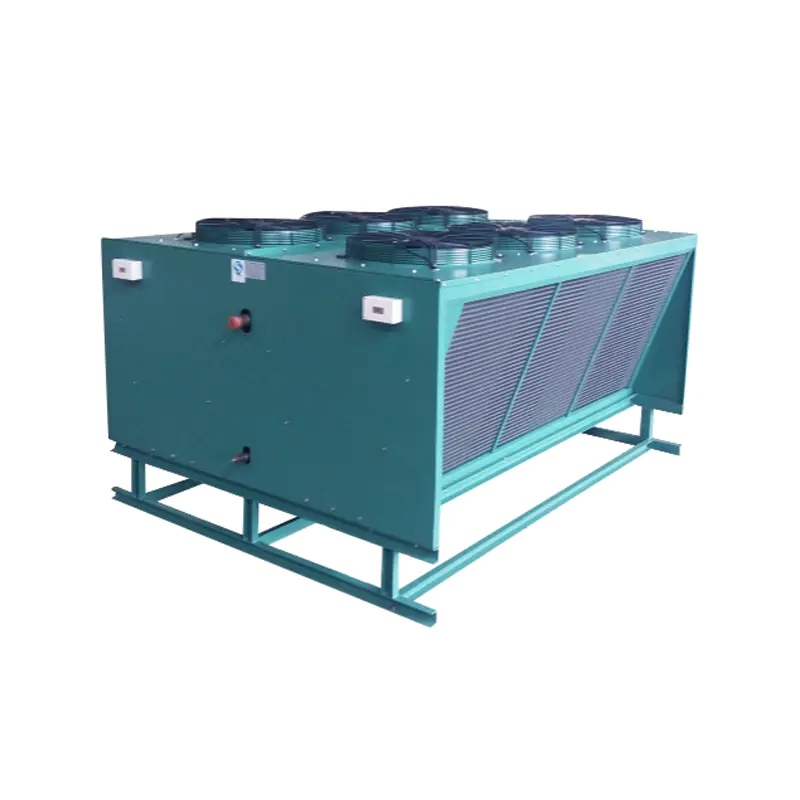
V type condensers use a top air outlet and a steel casing that is phosphated and spray-coated to resist corrosion. The V-shaped coil arrangement increases the surface area within a smaller cabinet footprint, which is useful when equipment room space is limited.
U Type Air-Cooled Condenser
U type units release air from the apex of the unit and can be built as non-standard designs to match a customer's cabinet dimensions or airflow requirements, which makes them popular for OEM condensing unit projects and custom cold room builds.
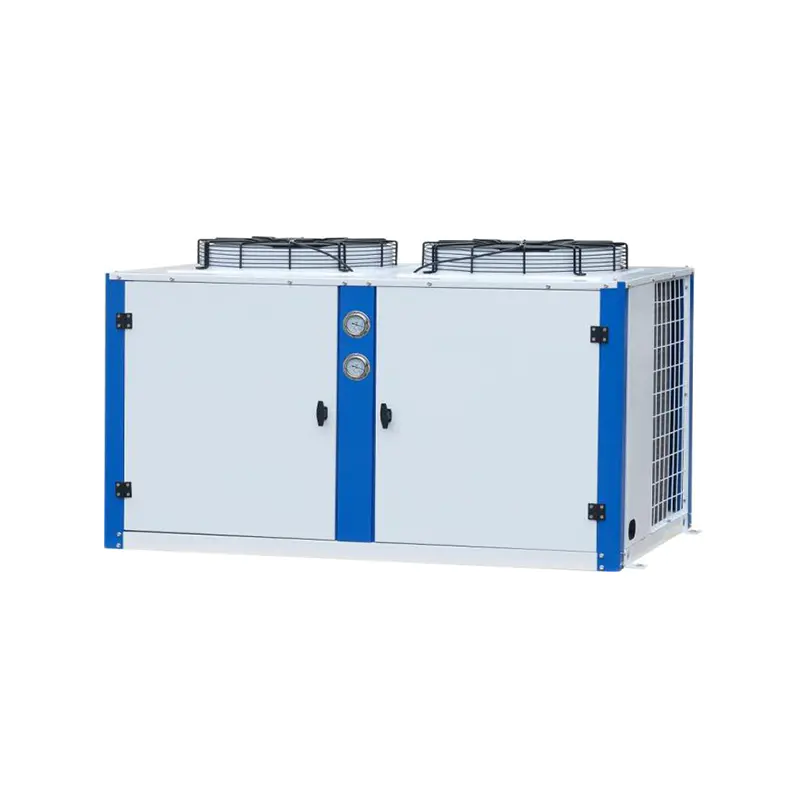
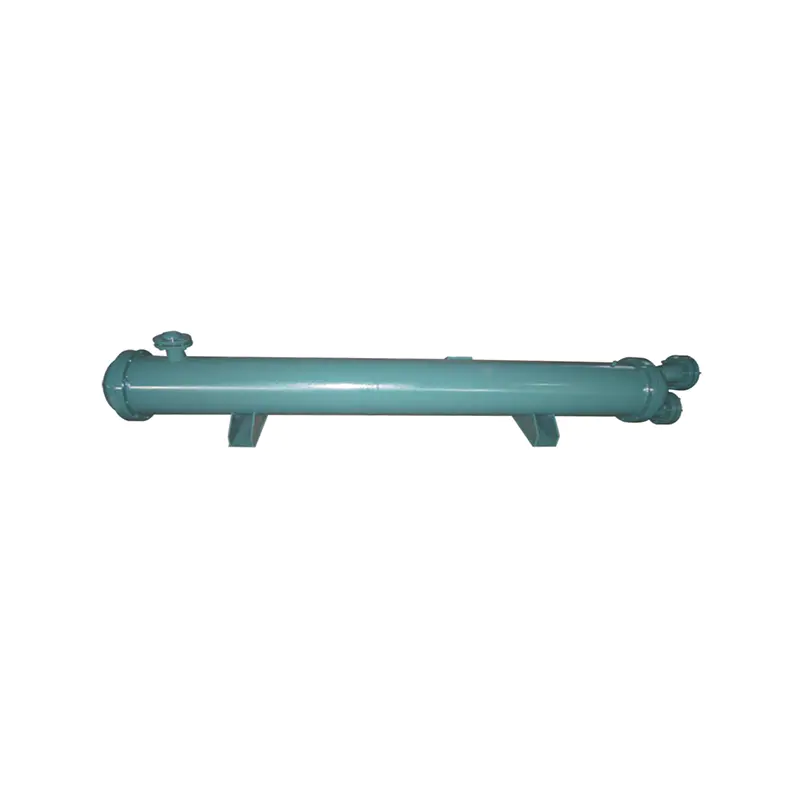
Condenser Product Range
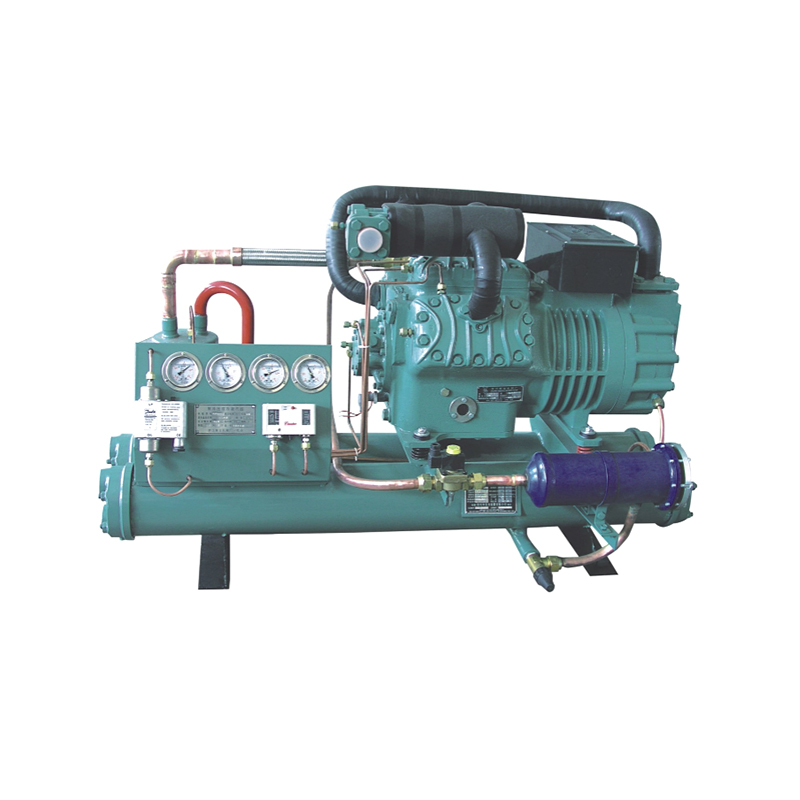
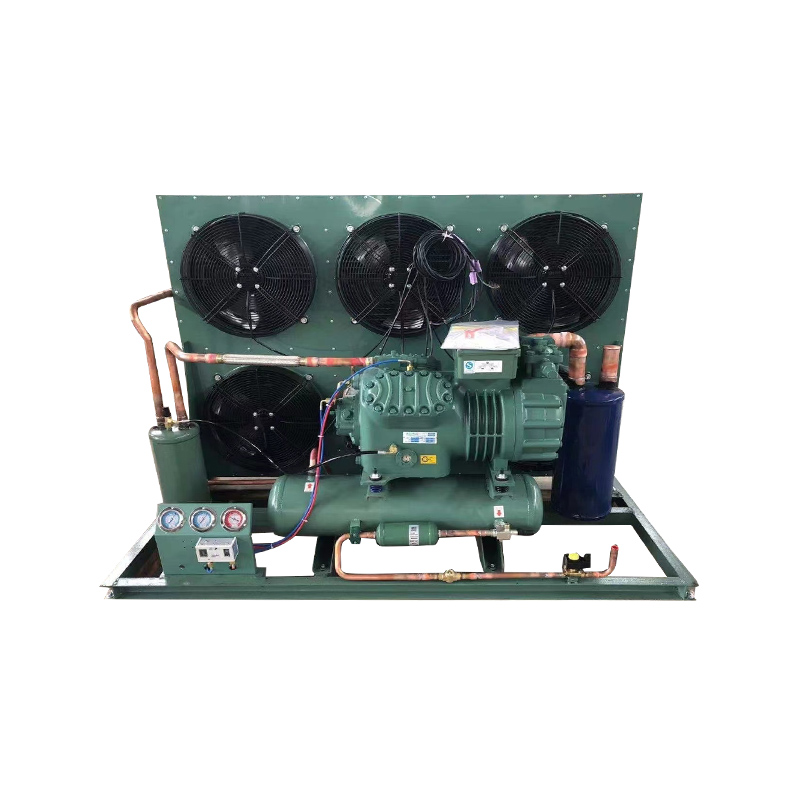
Air-cooled and water-cooled condenser models built for cold rooms, condensing units, and industrial refrigeration storage projects.
Water-Cooled Condensers: Shell-and-Tube Design and Efficiency
Water-cooled condensers rely on water flowing through or around a tube bundle to absorb heat from the refrigerant. Because water carries far more heat per unit volume than air, these units run at a lower condensing temperature and take up noticeably less space than an air-cooled unit of the same capacity.
Shell-and-tube condensers are the most common water-cooled design. Cooling water flows inside the tubes while refrigerant vapor condenses on the outer tube surface, then collects at the bottom of the shell before flowing to the receiver. This layout is a natural fit for water chillers, plate freezing plants, and any facility that already has a cooling tower or well water supply available.
- Horizontal shell-and-tube: refrigerant enters at the top, condenses on the outer tube wall, and exits at the bottom as liquid.
- Vertical shell-and-tube: refrigerant enters mid-shell and flows downward along the tube wall into a liquid receiver.
- Double-tube (sleeve) condensers: refrigerant condenses in the annular space between an inner and outer tube, giving a compact, serpentine flow path.
Evaporative Condensers: Combining Air and Water Cooling
Evaporative condensers spray water over the condensing coil while a fan draws air across it, so the refrigerant is cooled partly by convection and partly by the evaporation of the water film. This combination allows the condensing temperature to approach the wet-bulb temperature of the air rather than the higher dry-bulb temperature, which is why evaporative units are common on large ammonia-based cold storage plants where every degree of condensing temperature affects compressor energy use.
Matching a Condenser to Cold Rooms and Water Chillers
Choosing between air-cooled, water-cooled, and evaporative designs usually comes down to four practical questions: how much heat load needs to be rejected, whether water is available and affordable at the site, how much noise and space the installation can tolerate, and what type of compressor and evaporator the condenser needs to pair with.
| Application | Recommended Condenser | Reason |
| Small commercial cold room | Air-cooled condensing unit | No water piping needed, easy to service on site |
| Industrial water chiller | Shell-and-tube water-cooled | Compact footprint, stable low condensing temperature |
| Large ammonia cold storage | Evaporative condenser | Lower condensing temperature reduces compressor load |
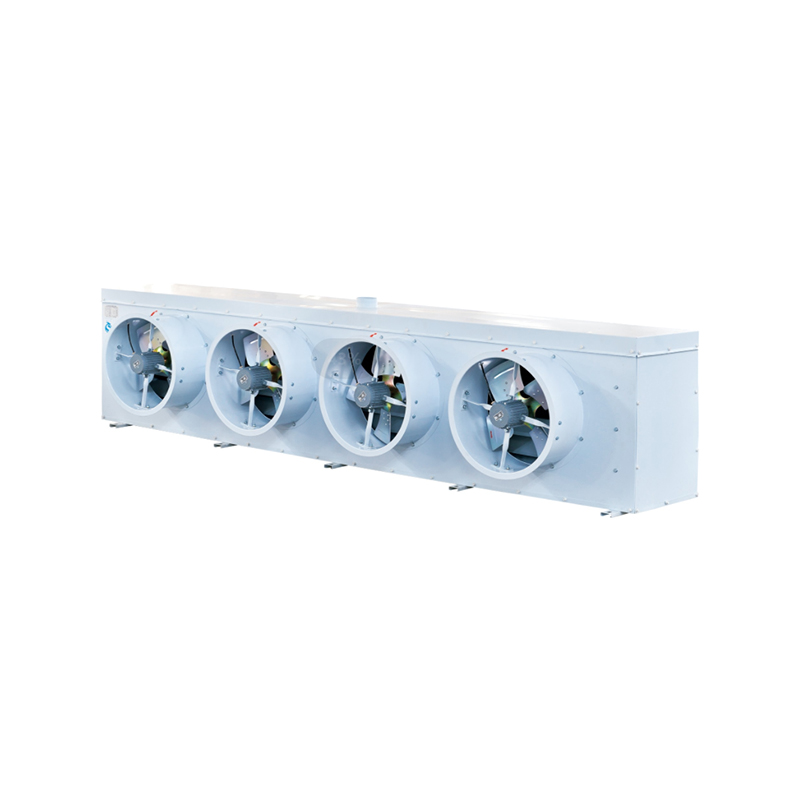
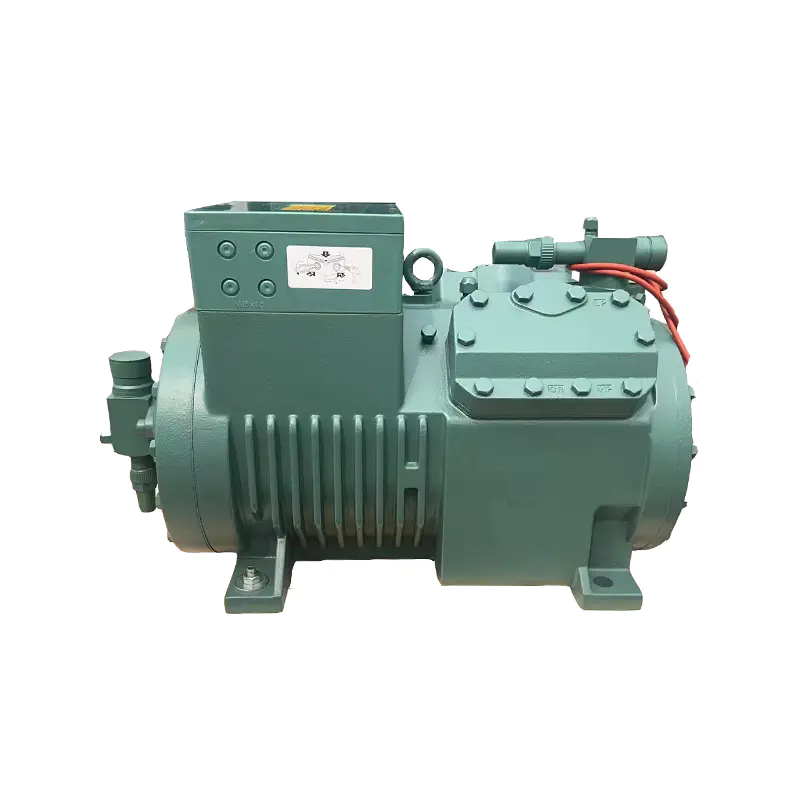
The condenser never works alone. It is paired with a compressor that supplies the hot gas, an evaporator that absorbs heat from the cold room or product, and often an air cooler on the low side of the system. Getting the condenser capacity right, relative to the compressor and evaporator, keeps head pressure stable and protects the whole refrigeration storage system from short cycling.
Condenser Maintenance Tips to Extend Service Life
Regardless of type, a condenser loses efficiency once its heat exchange surface gets dirty or its water side scales up. A short maintenance routine keeps head pressure and energy use predictable.
- Brush or chemically clean air-cooled fins every six to twelve months to remove dust, oil, and lint.
- Check shell-and-tube condensers for scale buildup and clean the water side on a schedule that matches local water hardness.
- Monitor inlet and outlet temperature difference, fan speed, and system pressure regularly to catch fouling before it raises head pressure.
- Inspect refrigerant piping and joints for corrosion or leaks that reduce charge and cooling capacity.
Sourcing Condensers from a Chinese HVAC Manufacturer
Working with a manufacturer that produces the full refrigeration line, including condensers, condensing units, compressors, evaporators, and refrigeration accessories, makes it easier to match components correctly and get consistent build quality across a project. A factory with in-house R and D can also offer non-standard coil sizes and air outlet directions for cold rooms, water chillers, and industrial refrigeration storage projects that do not fit a catalog size.