 English
 русский
 Tiếng Việt
When you specify a commercial refrigeration system in 2026, the first decision is the refrigerant. With high-GWP HFCs under phase-down through the Kigali Amendment and the EU F-Gas Regulation, natural refrigerants such as carbon dioxide (CO2), ammonia (NH3) and propane (R-290) have moved from niche alternatives to the default choice across much of the cold chain. The conclusion for buyers is simple: new equipment should be designed around a natural refrigerant unless the application clearly rules it out. They offer lower long-term cost, a much smaller environmental footprint, and a compliance position that will not expire with the next regulation.
What Are Natural Refrigerants?
A natural refrigerant is a substance that occurs in nature and is used directly as the working fluid in a refrigeration cycle. The name does not mean it is harvested from the ground; most natural refrigerants are produced industrially in high purity. What matters is their chemistry: no ozone-depleting potential, negligible global warming impact, and in most cases lower refrigerant cost.
Four substances carry almost the entire commercial market:
- Carbon dioxide (R-744), the non-flammable, pressure-intensive standard for supermarkets and cascade systems.
- Ammonia (R-717), the thermodynamic benchmark for industrial cold storage and food processing.
- Propane (R-290) and isobutane (R-600a), the flammable but highly efficient hydrocarbons used in plug-in and small commercial equipment.
- Water (R-718) and air, which remain niche working fluids for specialized systems.
The contrast with synthetics explains the shift. R-404A, common in older low-temperature racks, has a 100-year GWP of 3,922; R-134a is 1,430. CO2 is 1, ammonia is 0, propane and isobutane are about 3. Over a fifteen-year operating life, leak impact drops by three orders of magnitude.
Why Commercial Refrigeration Is Moving to Natural Refrigerants
The conclusion comes first: for most new commercial refrigeration capacity, a natural refrigerant is the lower-risk choice. Three forces drive the change.
- Regulatory deadlines. The Kigali Amendment to the Montreal Protocol schedules steep cuts in HFC consumption. The revised EU F-Gas Regulation bans defined high-GWP applications on a fixed timetable, and similar rules are spreading across North America and Asia.
- Refrigerant economics. As production quotas tighten, high-GWP refrigerants become scarce and expensive. A system built for CO2 or propane is insulated from that price curve.
- Energy and lifecycle performance. CO2 booster plants can match HFC racks in energy use while recovering heat for the building. Ammonia is exceptionally efficient at scale, and small propane systems run close to HFC efficiency.
The chart below shows the 100-year GWP of three natural refrigerants beside the two legacy HFCs. Natural bars are drawn at a minimum height only so they remain visible on the same scale.
100-year global warming potential, select refrigerants (IPCC AR5)
Natural refrigerant bars are shown at a minimum height of 3px for visibility. Their true GWP values are 0 to 3.
The practical effect of this gap is already visible in the market: CO2 transcritical equipment is standard in several European supermarket chains, R-290 plug-in cabinets are the fastest-growing category of commercial display equipment, and ammonia-CO2 cascade systems are expanding beyond their traditional industrial base.
The Main Natural Refrigerants, Compared
Carbon dioxide (R-744)
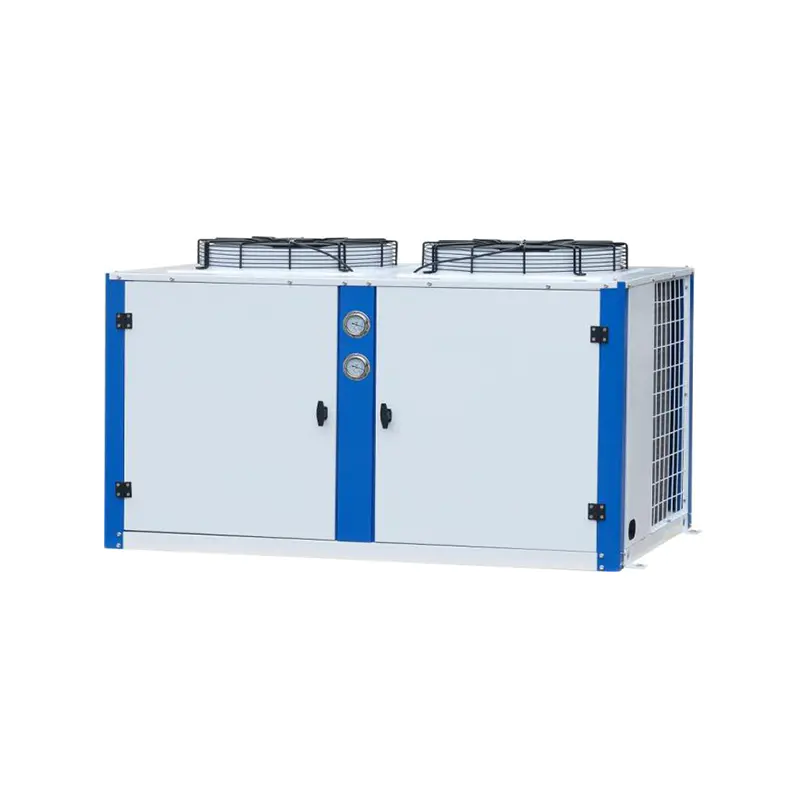
CO2 is the natural refrigerant with the broadest commercial reach because it is non-flammable, low in toxicity and free of charge limits. Its cost of admission is pressure: the critical temperature of CO2 is about 31°C, so in warm weather the system runs transcritically at high-side pressures of 80 to 120 bar. Compressors, gas coolers, piping, valves and evaporators must all be pressure-rated for that envelope. In return, CO2 delivers strong low-temperature performance, compact piping for a given capacity, and high-grade discharge heat that can be recovered for defrost and space heating. Supermarkets typically use centralized transcritical booster systems, often with a parallel condensing unit arrangement that stages multiple compressors to match the store load.
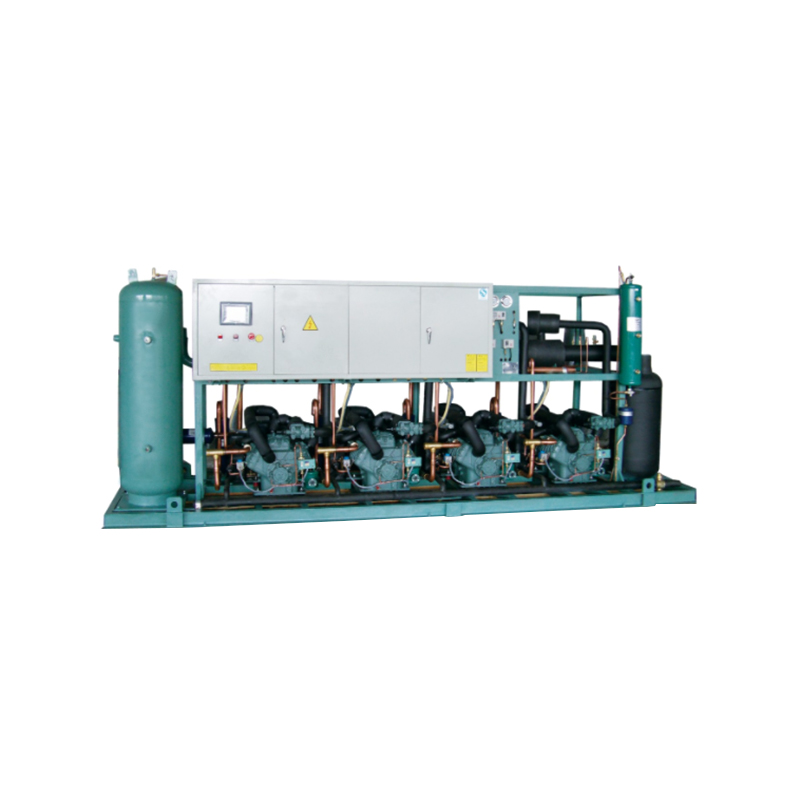 Custom Parallel condensing unit Manufacturers, Suppliers - Zhejiang Brozer RefriZhejiang Brozer Refrigeration Technology Co., Ltd is China OEM/ODM Parallel condensing unit manufacturers and Parallel condensing unit su...View Product →
Ammonia (R-717)
Ammonia offers the best thermodynamics of any common refrigerant: GWP of 0, high volumetric capacity and excellent heat transfer. It is the default for industrial cold storage, food processing and blast freezing, where the plant can be isolated in a machine room. Its ASHRAE safety class is B2L, meaning toxic with lower flammability, so direct ammonia systems in occupied retail spaces are rare. Engineers instead use ammonia in a central plant that cools a secondary fluid such as CO2 or brine circulating to the sales area. Material compatibility is an extra constraint: ammonia attacks copper-based alloys, so steel piping and valves are required.
Hydrocarbons: propane (R-290) and isobutane (R-600a)
Propane and isobutane have GWP values near 3, zero ODP, and thermodynamic performance close to the HFCs they replace. Their limiting factor is flammability, which places both in safety class A3. Standards such as ISO 5149 and IEC 60335 cap the charge based on room area, cabinet volume and ventilation, so the design is distributed rather than centralized: several modest propane units placed close to the loads they serve. R-290 is now standard in plug-in display cabinets, bottle coolers, ice cream freezers and a growing number of condensing units for walk-in cold rooms. R-600a dominates small hermetic circuits.
Water and air
Water appears in absorption and evaporative cooling rather than vapor-compression systems, and air-cycle refrigeration remains a specialty product. Both complete the natural family but will not drive commercial equipment decisions in the coming years.
| Refrigerant | Type | GWP | ODP | ASHRAE class | Typical commercial use |
|---|---|---|---|---|---|
| R-744 (CO2) | Carbon dioxide | 1 | 0 | A1 | Supermarkets, transcritical systems, cascade plants |
| R-717 (ammonia) | Ammonia | 0 | 0 | B2L | Industrial cold storage, food processing, blast freezing |
| R-290 (propane) | Hydrocarbon | 3 | 0 | A3 | Plug-in cabinets, small condensing units, cold rooms |
| R-600a (isobutane) | Hydrocarbon | 3 | 0 | A3 | Small hermetic circuits, bottle coolers |
| R-134a | HFC (legacy) | 1,430 | 0 | A1 | Medium-temperature systems being phased down |
| R-404A | HFC blend (legacy) | 3,922 | 0 | A1 | Older low-temperature racks being phased down |
Design and Safety Considerations That Decide the Outcome
Choosing the refrigerant is the easy half. The harder half is building and operating a system that keeps that refrigerant inside its intended envelope. Each natural option changes the rules in a different direction.
Pressure design for CO2 systems
CO2 components must be rated for several times the working pressure of an HFC system, and the design high-side pressure often exceeds 100 bar. Field brazing quality, relief devices and compressor discharge temperatures deserve unusual attention. When a CO2 system fails, a component not approved for the pressure class is a common cause.
Flammability management for hydrocarbons
An R-290 project starts with a charge calculation, not a piping layout. The charge limit determines room classification, ventilation, electrical enclosures and leak detection. On multi-unit retail sites, staying within limits means splitting capacity into smaller distributed machines, which is a design constraint rather than a performance penalty.
Toxicity and machine rooms for ammonia
Ammonia plants need gas detection, emergency ventilation, drainage, pressure relief and operator training. That safety equipment is why large ammonia charges are practical only in dedicated machine rooms or outdoor plant stands, not in occupied retail space.
Heat rejection, evaporators and operating controls
Natural refrigerants depend heavily on the heat-transfer equipment around them. In hot climates, the condenser or gas cooler must reject peak load without raising condensing pressure toward the safety limit. For roof-mounted jobs, a V-type air-cooled condenser offers more face area in a smaller footprint. On the operating side, an uncontrolled low condensing pressure reduces capacity and can starve the compressor of oil; the hazards of low condensing pressure and the usual control methods apply across refrigerants, natural or synthetic.
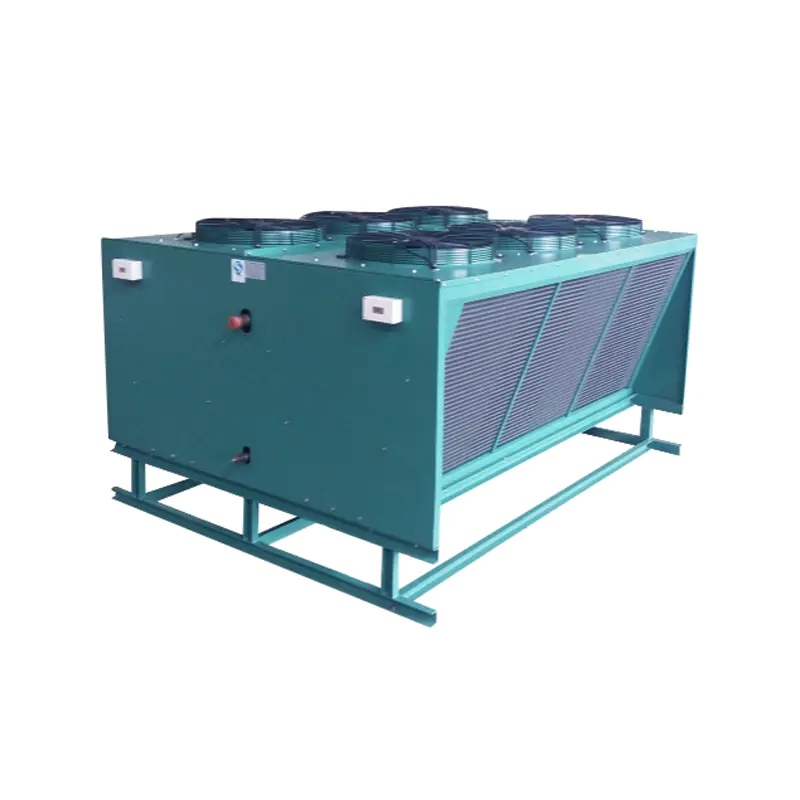 Custom V Type Air Cooled Condenser Manufacturers, Suppliers - Zhejiang Brozer ReZhejiang Brozer Refrigeration Technology Co., Ltd is China OEM/ODM V Type Air Cooled Condenser manufacturers and V Type Air Cooled Conden...View Product →
How to Choose the Right Natural Refrigerant for Your Application
No single natural refrigerant wins everywhere. The right choice matches the load, the building, the local safety regime and the service skills available.
- Plug-in cabinets, bottle coolers and small cold rooms: R-290 (propane), with the charge limit governing room area and ventilation design.
- Supermarkets and large retail stores: CO2 transcritical booster systems, usually with parallel compressor staging for part-load control.
- Industrial cold storage and food processing: ammonia centralized plants, typically with a CO2 secondary loop to keep storage spaces free of ammonia.
- Cold chain distribution centers: CO2 or R-290 depending on total capacity and charge limits; open-type condensing units remain common, and keeping open-type condensing units stable in cold chain logistics is a well-defined service discipline.
Evaporator selection follows the temperature regime. For chilled rooms and medium-temperature storage, a DD-type medium-temperature evaporator sized for the room's latent and sensible load is the usual pairing with a propane condensing unit. Frozen storage requires a low-temperature DJ-type unit with defrost heaters matched to the room.
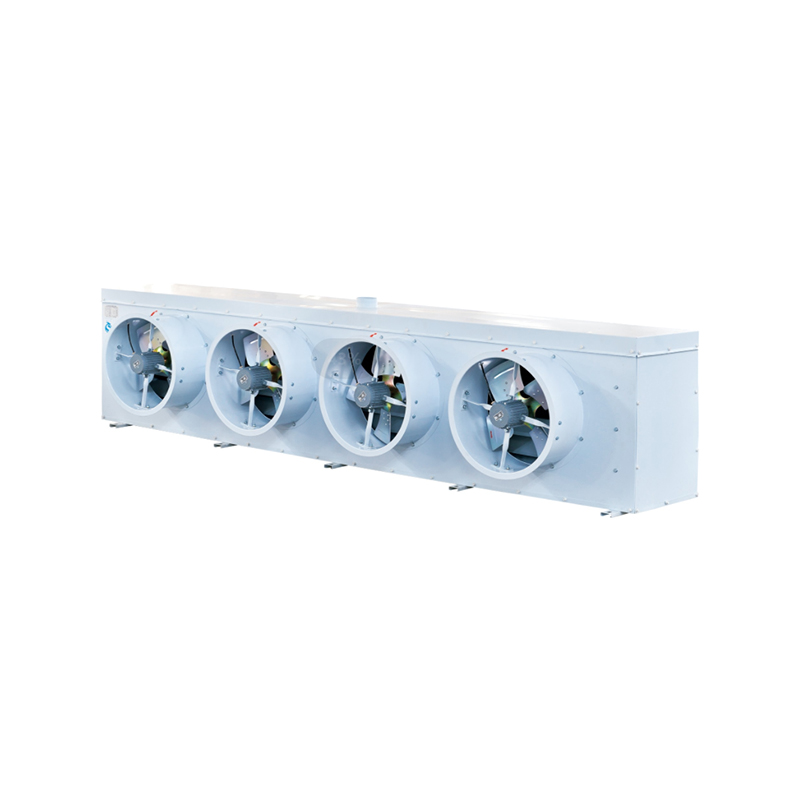 Custom DD type medium-temerature evaporator Manufacturers, Suppliers - Zhejiang Zhejiang Brozer Refrigeration Technology Co., Ltd is China OEM/ODM DD type medium-temerature evaporator manufacturers and DD type medium-...View Product →
Before finalizing the choice, compare total cost of ownership over ten years instead of refrigerant price per kilogram. Include safety equipment, permitted installers, energy use, spare parts and the likely trajectory of HFC prices as quotas tighten. On that basis, natural systems usually win.
After handover, disciplined maintenance determines the outcome. Most cold room failures trace back to blocked circuits, wrong superheat settings or oil return problems discovered too late. A structured cold storage refrigeration system fault analysis finds the root cause before the compressor fails.
Natural Refrigerant FAQ
Are natural refrigerants safe in occupied buildings?
Yes, when the installation follows the governing standards. CO2 is non-flammable and low in toxicity; hydrocarbon charges are capped and paired with ventilation and leak detection; ammonia is generally confined to machine rooms with secondary loops. The safety record of regulated natural refrigerant systems in commercial buildings is strong.
Does CO2 lose efficiency in hot climates?
Transcritical operation in warm conditions raises the theoretical efficiency gap, but modern booster designs, parallel compression and ejectors recover most of it. CO2's excellent low-temperature behavior and heat recovery narrow the gap further, so well-designed CO2 stores in warm regions perform close to, and sometimes better than, HFC baselines.
Can an existing HFC system be converted to a natural refrigerant?
Rarely as a simple drop-in. R-290 requires a different safety envelope; CO2 requires a much higher pressure design; ammonia requires different materials and oils. Most installed evaporators and condensing units are not rated for the new fluid. A full engineered retrofit is possible in some sites, but a new system is usually the cleaner path.
Do natural refrigerants cost more?
The refrigerant substance itself is inexpensive. The higher cost, where it appears, sits in hardware and engineering: pressure-rated components, safety equipment, machine rooms and training. Evaluated over ten years including energy, maintenance and refrigerant refills, natural systems regularly match or beat HFC systems, and they carry no phase-down risk.
Moving Forward with Natural Refrigerants
The refrigeration industry has passed the point where natural refrigerants are a pilot project. The Kigali phase-down is binding, HFC quotas are tightening, and the supply chain now builds CO2, ammonia and propane systems at scale. The practical question for a buyer is no longer whether to switch, but which natural refrigerant fits the application and which components will keep it reliable over the equipment's working life. When the system is designed around the refrigerant's real behavior, the payoff is straightforward: lower GWP, stable refrigerant costs, and a compliance position that does not expire with the next regulation.