 English
 русский
 Tiếng Việt
Content
Core Distinction: Condenser vs. Heat Exchanger
A condenser is a specialized type of heat exchanger designed specifically to convert vapor into liquid through heat removal, while a heat exchanger is a broad category of equipment that transfers heat between two or more fluids without necessarily causing phase change. All condensers are heat exchangers, but not all heat exchangers are condensers.
The fundamental difference lies in the phase change requirement. Condensers operate at saturation conditions where latent heat removal causes vapor-to-liquid transition, typically handling heat loads of 2,260 kJ/kg for water vapor condensation at 100°C. Standard heat exchangers primarily manage sensible heat transfer, with temperature changes of 10°C to 50°C being typical in liquid-to-liquid applications.
| Characteristic | Condenser | General Heat Exchanger |
|---|---|---|
| Primary Function | Vapor-to-liquid phase change | Temperature change (sensible heat) |
| Heat Transfer Mechanism | Latent heat removal | Sensible heat transfer |
| Typical Heat Flux | 5,000–50,000 W/m² | 500–5,000 W/m² |
| Operating Pressure | Vacuum to 200 bar | Atmospheric to 1,000 bar |
| Subcooling Capability | Often included (3–5°C) | Not applicable |
Critical Performance Factors for Condensers
Condenser performance depends on five primary variables that directly impact heat transfer efficiency and operational reliability. Understanding these factors enables optimization of existing systems and informed specification of new installations.
Coolant Temperature and Flow Rate
The temperature difference between the condensing vapor and cooling medium drives heat transfer. A 5°C reduction in cooling water temperature can improve condenser capacity by 8–12% in power plant surface condensers. Flow rates must balance heat removal capacity against pumping costs—typically 1.5–3.0 m/s for water velocities to prevent fouling while minimizing erosion.
Fouling Resistance and Maintenance
Fouling creates thermal barriers that degrade performance over time. Seawater-cooled condensers experience biofouling rates of 0.0001–0.0003 m²K/W per month, while industrial processes with hydrocarbons may see 0.0002–0.001 m²K/W fouling factors. Design fouling factors typically range from 0.000088 m²K/W for treated cooling water to 0.00035 m²K/W for river water.
Non-Condensable Gas Accumulation
Air and other non-condensable gases accumulate at the condenser shell, creating gas blankets that reduce heat transfer coefficients by up to 50%. Effective venting systems must remove these gases while minimizing vapor loss—typically achieving 0.5–2.0% vent steam flow relative to total steam condensed.
Condensate Subcooling and Level Control
Excessive subcooling below saturation temperature wastes energy. Power plant condensers target 0.5–2.0°C subcooling; deviations beyond 5°C indicate level control problems or tube flooding. Proper hotwell level maintenance prevents air ingress while ensuring pump NPSH requirements.
Material Selection and Corrosion
Tube material affects both heat transfer and longevity. Admiralty brass offers 100 W/mK thermal conductivity with 20-year lifespans in clean water, while titanium withstands seawater corrosion but costs 3–4 times more. Stainless steel 316L provides intermediate performance for chemical applications with chloride concentrations below 1,000 ppm.
Condenser Selection Methodology
Selecting the appropriate condenser requires systematic evaluation of process requirements, environmental constraints, and economic factors. The selection process follows a decision hierarchy that narrows options based on critical application parameters.
Step 1: Determine Condenser Category
First, identify whether the application requires direct-contact or surface condensation:
- Direct-contact condensers mix vapor with coolant (water), achieving 99%+ heat transfer efficiency but contaminating condensate. Suitable when condensate purity is non-critical, such as geothermal power plants or vacuum distillation.
- Surface condensers maintain fluid separation, essential for steam power cycles, refrigeration systems, and chemical processes requiring product recovery. These represent 85% of industrial condenser installations.
Step 2: Configure Heat Transfer Surface
Surface configuration depends on vapor pressure and cleanliness:
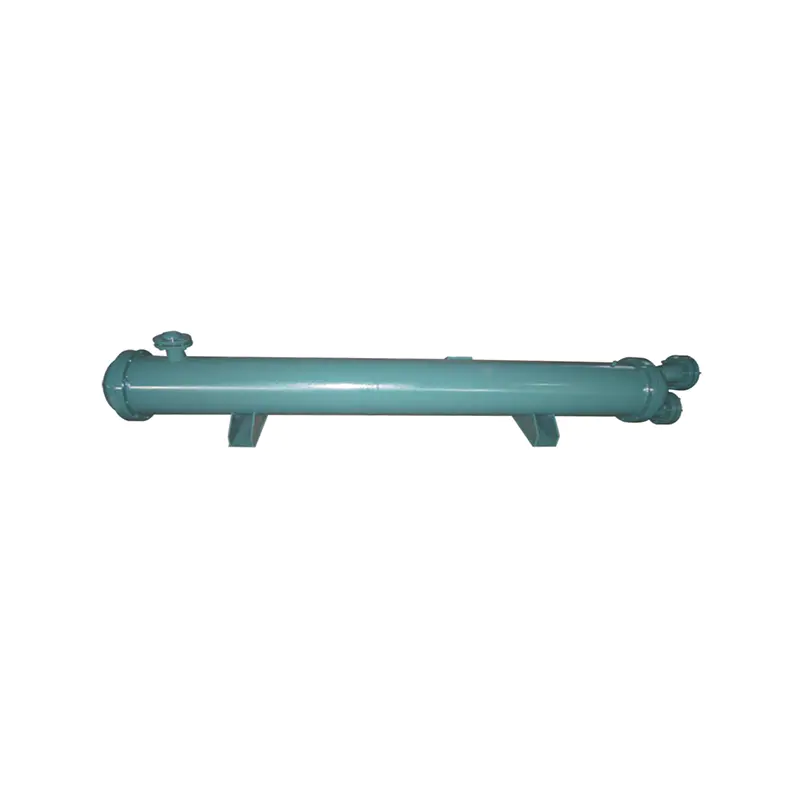
- Shell-and-tube designs handle pressures from vacuum to 200 bar and allow mechanical cleaning. Standard configurations place steam on the shell side for power applications, with tube counts ranging from 100 to 50,000 tubes in large utility condensers.
- Plate condensers offer 3–5 times higher heat transfer coefficients in compact footprints but are limited to 25 bar and temperatures below 200°C. Ideal for HVAC and food processing where space constraints exist.
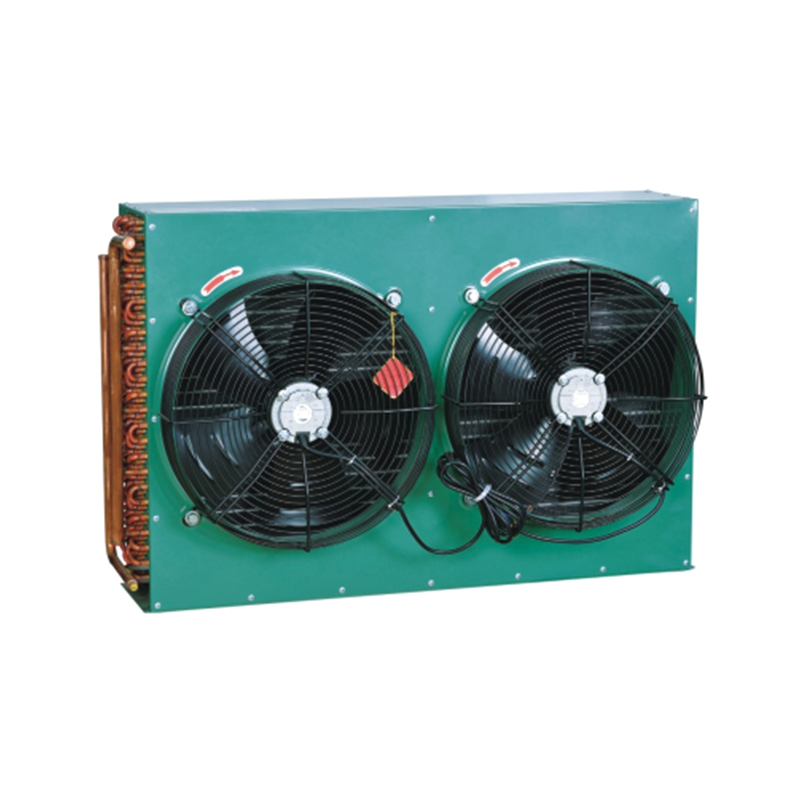
- Air-cooled condensers eliminate water consumption, critical in arid regions. They require 2–3 times more surface area than water-cooled equivalents and face performance degradation at ambient temperatures above 35°C.
Step 3: Size Based on Heat Duty and LMTD
Calculate required heat transfer area using the fundamental equation: Q = U × A × LMTD, where Q is heat duty (kW), U is overall heat transfer coefficient, A is area (m²), and LMTD is log mean temperature difference. Typical U-values range from 800 W/m²K for air-cooled units to 4,000 W/m²K for water-cooled shell-and-tube designs with clean surfaces.
| Application | Recommended Type | Typical Material | Design Pressure |
|---|---|---|---|
| Power Plant (Steam) | Surface, Shell-and-Tube | Titanium/Stainless | 0.05–0.15 bar (vacuum) |
| Refrigeration (HVAC) | Air-Cooled or Plate | Copper/Aluminum | 10–25 bar |
| Chemical Processing | Shell-and-Tube | Hastelloy/Graphite | 1–100 bar |
| Desalination (MED) | Horizontal Tube | Aluminum Brass | 0.1–0.5 bar |
| Geothermal Power | Direct-Contact | Carbon Steel | 0.05–0.2 bar |
Frequently Asked Questions About Condensers
Why does my condenser lose vacuum during summer months?
Rising cooling water or air temperatures reduce the available LMTD, forcing the condenser to operate at higher saturation pressures. For every 1°C increase in cooling medium temperature, condenser pressure rises approximately 0.3–0.5 bar in refrigeration systems. Verify cooling tower performance or air-cooled fan operation, and ensure condenser tubes are clean—fouling amplifies temperature sensitivity.
Can a heat exchanger be converted into a condenser?
Standard heat exchangers can function as condensers only if they accommodate vapor inlet at the top, condensate drainage at the bottom, and non-condensable venting provisions. However, dedicated condensers include features such as larger vapor inlet nozzles (sizing for 50–100 m/s velocity vs. 10–20 m/s in liquid service), internal baffles to prevent condensate subcooling, and de-superheating zones. Retrofitting without these features risks poor performance and water hammer.
How often should condenser tubes be cleaned?
Cleaning frequency depends on water quality and operating hours. Power plants using seawater clean every 3–6 months, while closed-loop cooling systems may extend to 12–24 months. Monitor the cleanliness factor: actual heat transfer coefficient divided by design clean coefficient. When this drops below 0.85, cleaning is economically justified. Mechanical brushing, chemical circulation, or sponge ball systems (automatic continuous cleaning) are standard methods.
What causes condensate to back up into the steam space?
Condensate backup occurs when removal rate exceeds drainage capacity, causing tubes to flood. Root causes include undersized extraction pumps, high backpressure in condensate return lines (should be 0.3 bar maximum), or malfunctioning level controls. Flooded tubes reduce effective heat transfer area by 20–40% and increase dissolved oxygen levels in condensate, accelerating corrosion.
Is a de-superheating zone necessary in all condensers?
De-superheating zones are essential when inlet vapor exceeds saturation temperature by more than 10°C. Superheated steam has low heat transfer coefficients (50–100 W/m²K vs. 5,000–15,000 W/m²K for condensing), requiring separate surface area. Omitting this zone leads to excessive tube wall temperatures and potential thermal stress cracking. In refrigeration systems with near-saturated compressor discharge, integrated de-superheating within the condensing zone suffices.
Operational Optimization Strategies
Maximizing condenser efficiency requires ongoing attention to operating parameters. Implement these proven strategies to maintain design performance:
- Maintain cooling water chemistry within specified pH ranges (typically 6.5–8.5) to prevent scale formation. Calcium carbonate scaling reduces heat transfer by 1–3% per 0.1 mm thickness.
- Optimize venting system operation—continuous venting is more effective than intermittent operation for non-condensable removal.
- Monitor terminal temperature difference (TTD), the gap between condensate and cooling water outlet temperatures. TTD should remain within 2–5°C; increasing TTD indicates fouling or air binding.
- Implement variable speed drives on cooling water pumps and air-cooled fans. Reducing flow by 20% decreases pumping power by approximately 50% (affinity laws) with minimal impact on heat transfer.
Regular performance testing against design baselines enables early detection of degradation. A 5% decline in overall heat transfer coefficient typically justifies investigation and corrective action before severe fouling or mechanical issues develop.