 English
 русский
 Tiếng Việt
Content
- 1 The Core Job of a Condenser in One Sentence
- 2 Four Functions Every Condenser Performs
- 3 How the Condensing Process Actually Works
- 4 Air-Cooled vs Water-Cooled: How Function Shifts by Type
- 5 Brozer Condenser Product Range
- 6 Where the Condenser Sits in a Complete Refrigeration System
- 7 Signs a Condenser Is Not Performing Its Function
- 8 Choosing a Condenser for Cold Room and Chiller Projects
A condenser's main function is to remove heat from hot, high-pressure refrigerant gas coming out of the compressor and turn it back into a liquid. In doing so it also lowers the refrigerant pressure to the level needed by the expansion device, dumps that heat into the surrounding air or water, and keeps the whole refrigeration cycle running smoothly. Without this step, an evaporator has nothing useful to absorb heat with, and a cold room, water chiller, or air cooler simply stops cooling.
The Core Job of a Condenser in One Sentence
Every vapor-compression refrigeration circuit relies on four parts working in sequence: compressor, condenser, expansion valve, and evaporator. The compressor raises the pressure and temperature of the refrigerant gas, and the condenser's job is to take that hot gas and reject its heat to a cooling medium so it condenses into a liquid. That liquid then moves on to the expansion valve at a controlled pressure, ready to absorb heat again inside the evaporator or air cooler. A well-sized condenser can improve the energy efficiency ratio of an air conditioning or industrial refrigeration unit enough to cut electricity use by roughly 20 to 30 percent for the same cooling output, which is why manufacturers treat condenser selection as a performance decision, not an afterthought.
Four Functions Every Condenser Performs
Although condenser designs vary widely, from compact air-cooled coils to large shell and tube units for a water chiller, they all carry out the same four jobs. The table below breaks each one down.
| Function | What Happens | Why It Matters |
| Heat rejection | Hot refrigerant vapor transfers heat to air or water flowing across the coil or tube bundle | Prevents heat from building up inside the refrigeration storage system |
| Phase change | Refrigerant gas condenses into a high-pressure liquid as it loses latent heat | A liquid refrigerant is required for the expansion valve to meter properly |
| Pressure regulation | Pressure drops to a level suited to the downstream expansion device | Keeps the evaporator supplied at the correct working pressure |
| Subcooling | Liquid is cooled slightly below its condensing temperature before leaving the unit | Reduces flash gas and improves cooling capacity at the evaporator |
How the Condensing Process Actually Works
Inside a condenser, refrigerant enters as a superheated gas straight from the compressor discharge line. As the gas moves through the coil or tube bank, a fan or cooling water pulls heat away from it. The gas first cools down to its saturation temperature, then begins converting into liquid while giving off a large amount of latent heat, and finally the resulting liquid is often subcooled a few degrees for stability. This entire process is exothermic, so the condenser surface always runs hotter than the surrounding air or water used to cool it. The basic heat transfer relationship engineers use to size a condenser is Q equals U times A times LMTD, where Q is the heat rejected, U is the overall heat transfer coefficient, A is the surface area, and LMTD is the log mean temperature difference between the refrigerant and the cooling medium.
Air-Cooled vs Water-Cooled: How Function Shifts by Type
The basic function stays the same across condenser types, but the cooling medium changes the performance numbers. Water has a much higher heat transfer capacity than air, so water-cooled condensers can typically run 10 to 15 degrees C lower in condensing temperature than an air-cooled unit handling the same heat load, which lowers compressor power draw. Air-cooled condensers, on the other hand, need no water supply or drainage, which makes installation simpler for a cold room in a location where water is scarce or expensive. Evaporative condensers sit between the two, spraying water over the coil while a fan blows air across it, cutting water use by up to half compared with a cooling tower setup while still achieving strong heat rejection for large cold storage plants.
Brozer Condenser Product Range
Zhejiang Brozer Refrigeration Technology manufactures air-cooled and water-cooled condensers used across cold rooms, condensing units, and industrial chiller systems. Each series is built with corrosion-resistant coils and finned surfaces for stable heat rejection.
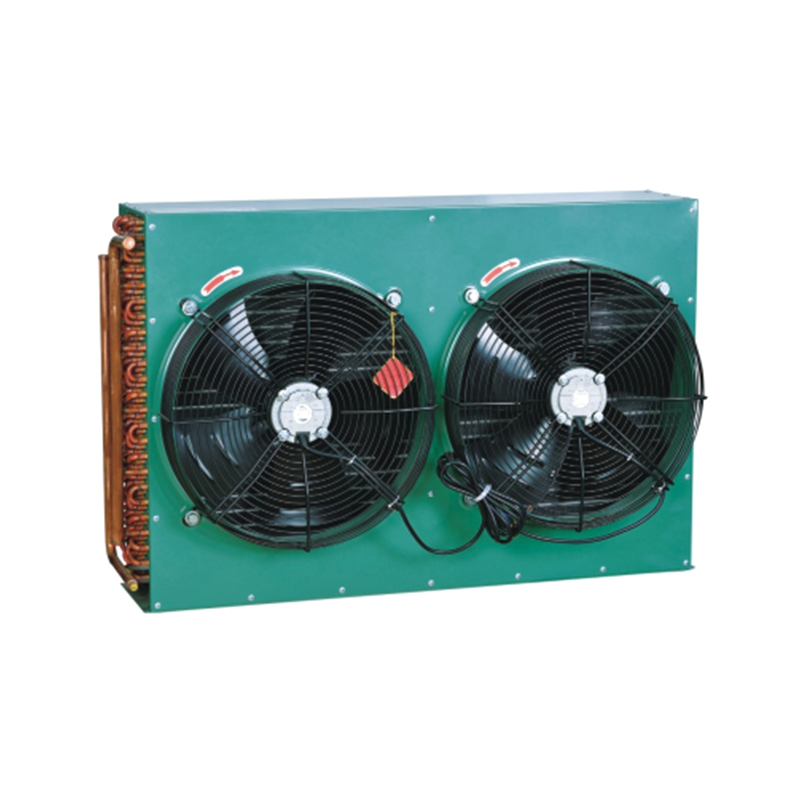
H Type Air Cooled Condenser
Air-Cooled Condenser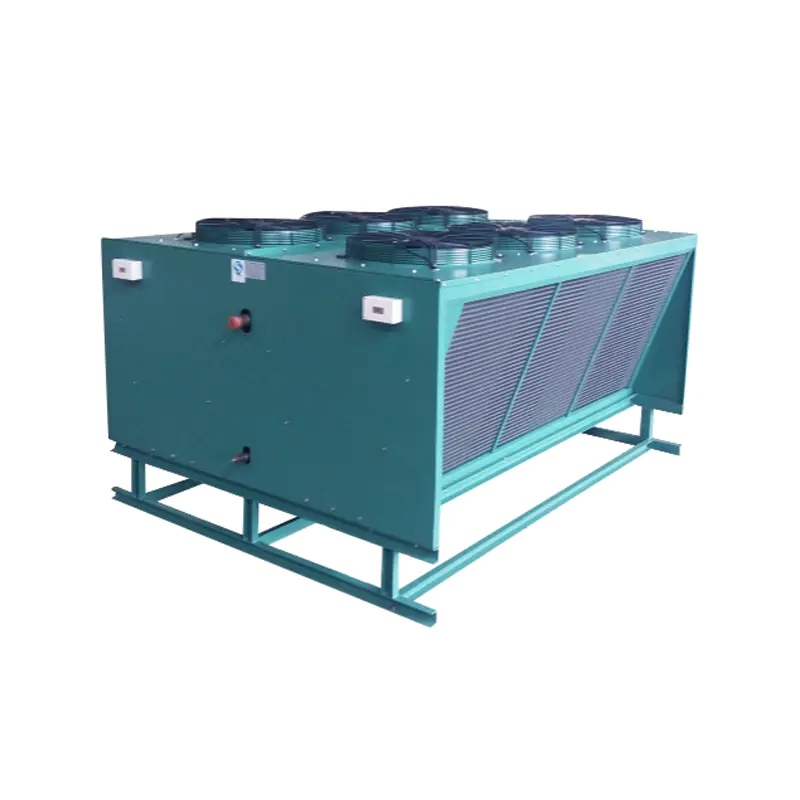
V Type Air Cooled Condenser
Air-Cooled Condenser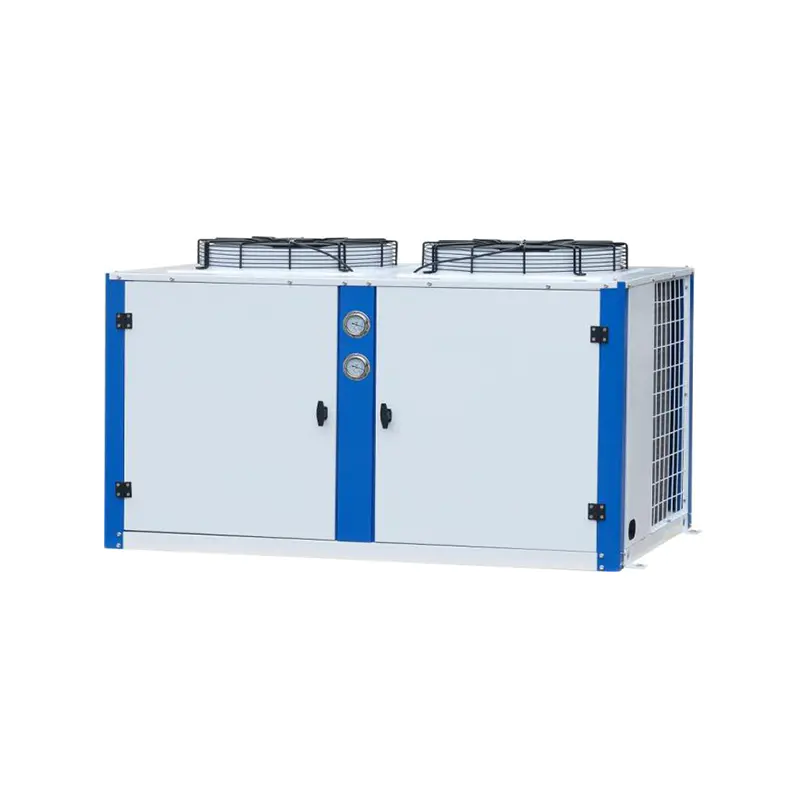
U Type Air Cooled Condenser
Air-Cooled Condenser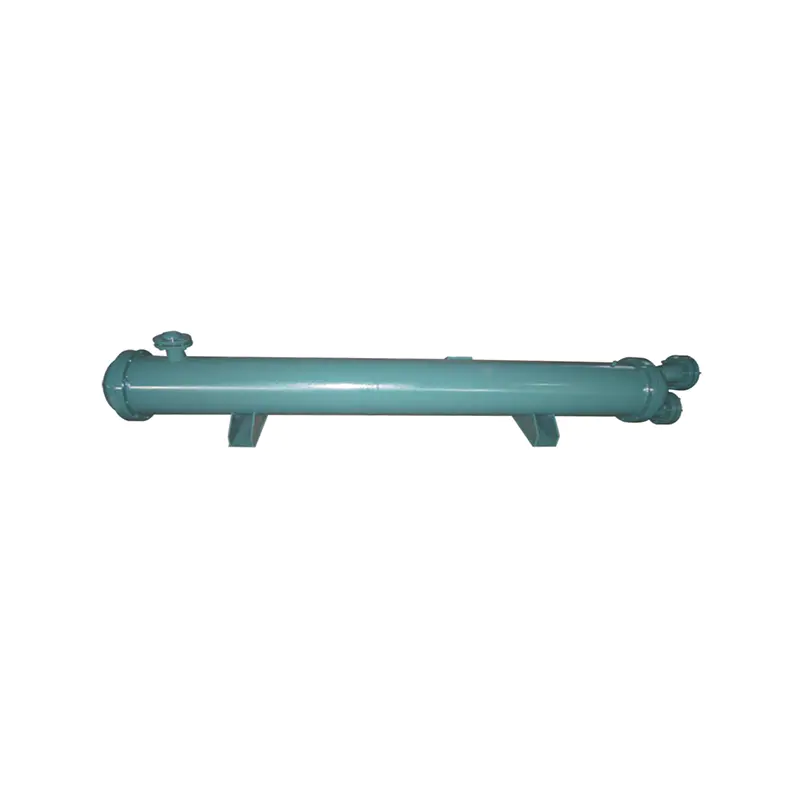
Shell and Tube Water-Cooling Condenser
Water-Cooled CondenserWhere the Condenser Sits in a Complete Refrigeration System
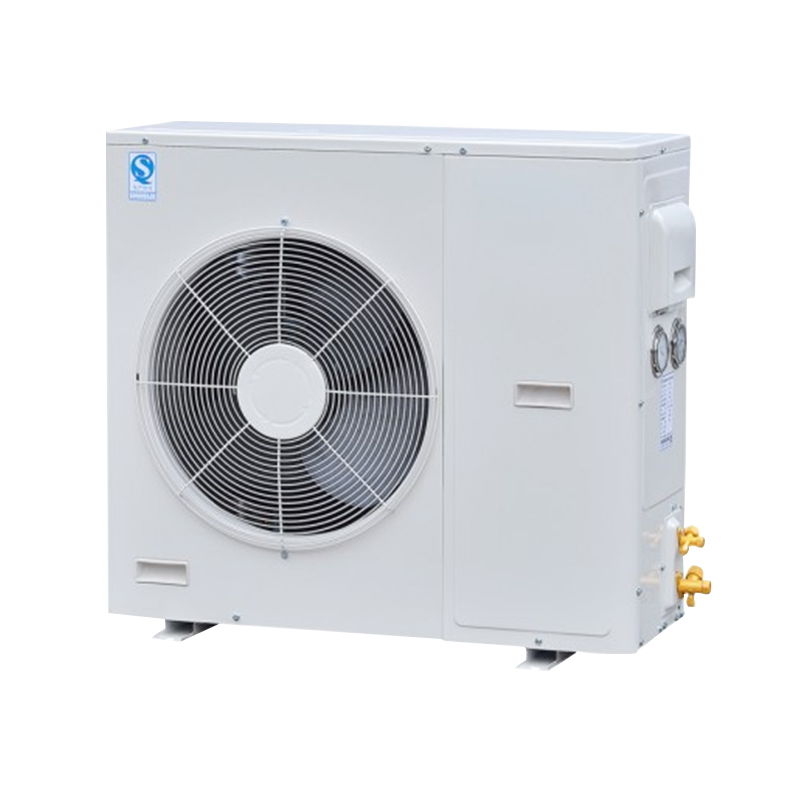
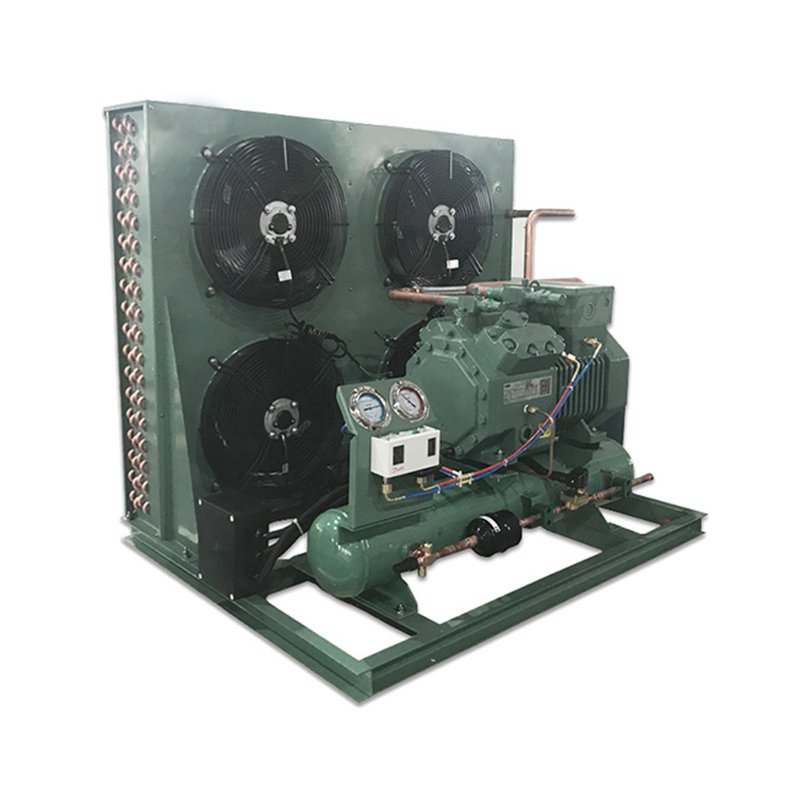
A condenser rarely works alone. In a packaged condensing unit, it is paired directly with the compressor on a shared frame or in a shared enclosure, so refrigerant travels a short, sealed path from compressor discharge to condenser inlet. Downstream, the liquid refrigerant reaches an expansion valve and then the evaporator or air cooler, where it absorbs heat from the cold room, display case, or process fluid. For a water chiller, the condenser rejects the heat that the chilled water loop picked up from the building or process load. Because these components depend on each other, a condenser that is undersized for the compressor and evaporator pairing will raise head pressure, increase compressor wear, and reduce overall cooling capacity, even if each individual part is otherwise in good condition.
Signs a Condenser Is Not Performing Its Function
Recognizing early warning signs can prevent bigger failures in cold room and refrigeration storage operations.
- High discharge pressure readings that stay above the normal range for the refrigerant in use
- Coil surfaces coated in dust, grease, or scale, which blocks airflow or water flow across the tubes
- Fans running but airflow feels weak, often from a failing motor or blocked intake
- Liquid line leaving the condenser feeling warmer than expected, suggesting incomplete condensation
- Compressor cycling more frequently or tripping on high-pressure protection
Routine coil cleaning, refrigerant charge checks, and fan or pump inspections address most of these issues before they affect the evaporator side of the system.
Choosing a Condenser for Cold Room and Chiller Projects
Selecting the right condenser function starts with matching heat rejection capacity to the actual load, not just the compressor nameplate rating. For a small cold room or fresh-keeping warehouse, a compact air-cooled condensing unit is usually sufficient and easier to install without a water supply. For larger constant temperature workshops, industrial chillers, or continuous cold chain operations from plus 5 degrees C down to minus 40 degrees C blast freezing, water-cooled or shell and tube designs tend to deliver better efficiency per unit of floor space. As a Chinese manufacturer HVAC supplier, Brozer builds both air-cooled and water-cooled condenser lines alongside matching compressors, evaporators, and refrigeration accessories, so the condenser, condensing unit, and air cooler in a system are sized to work together rather than being selected in isolation.