 English
 русский
 Tiếng Việt
Content
The Three Main Types of Condensers
Condensers are heat exchangers that reject heat from a refrigeration or air conditioning system to the environment. Based on their cooling medium, condensers fall into three primary categories: air-cooled, water-cooled, and evaporative. Each type operates on the same fundamental principle—removing heat from refrigerant vapor to condense it back into a liquid—but they achieve this through distinct methods suited for different applications. Globally, air-cooled condensers account for approximately 60% of the market due to their simplicity, while water-cooled systems dominate large industrial applications where efficiency is paramount.
Air-Cooled Condensers: The Versatile Workhorse
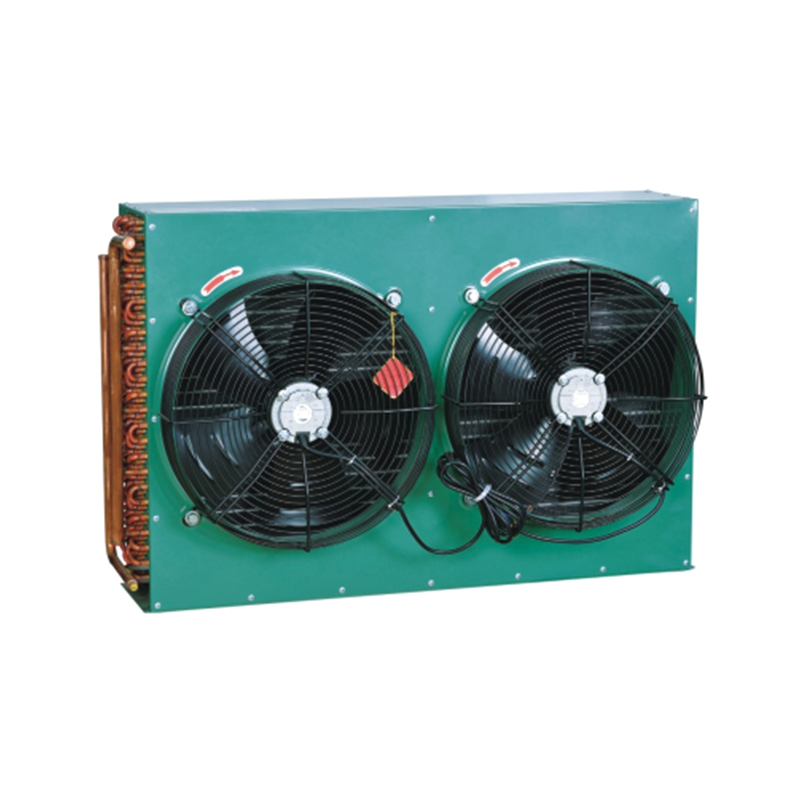
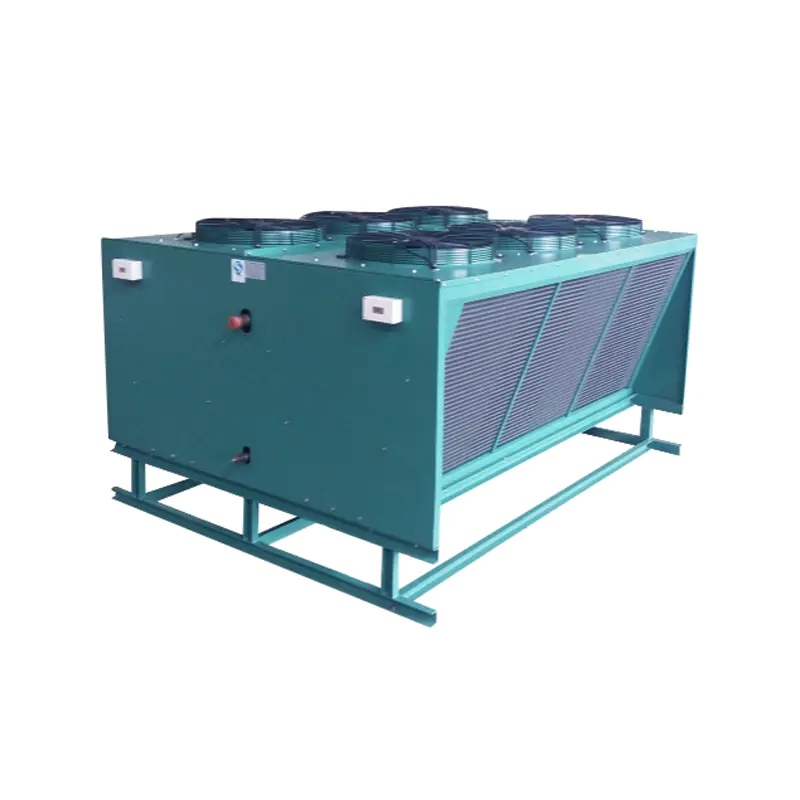
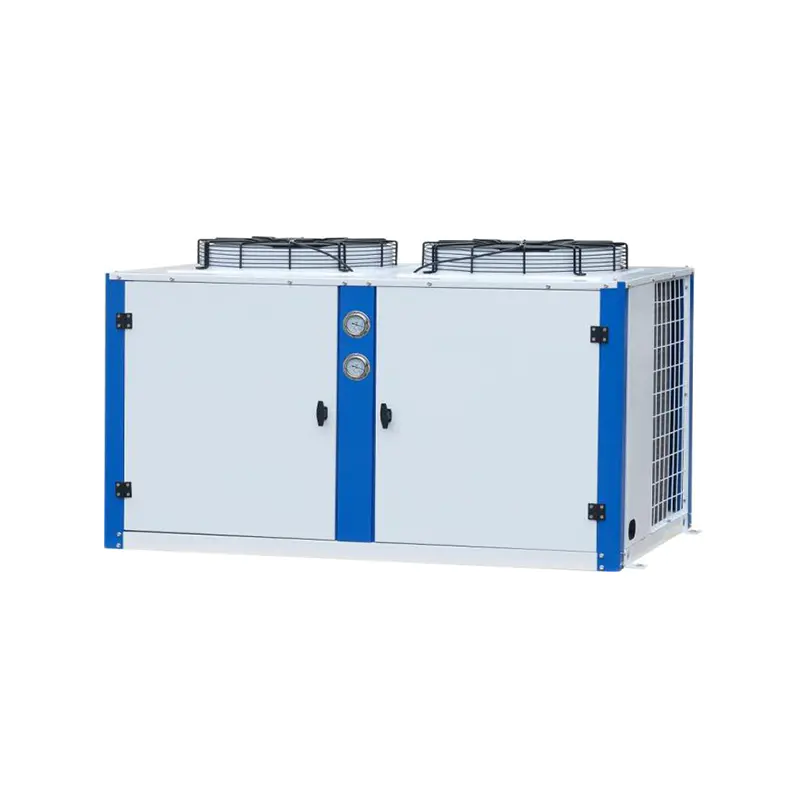
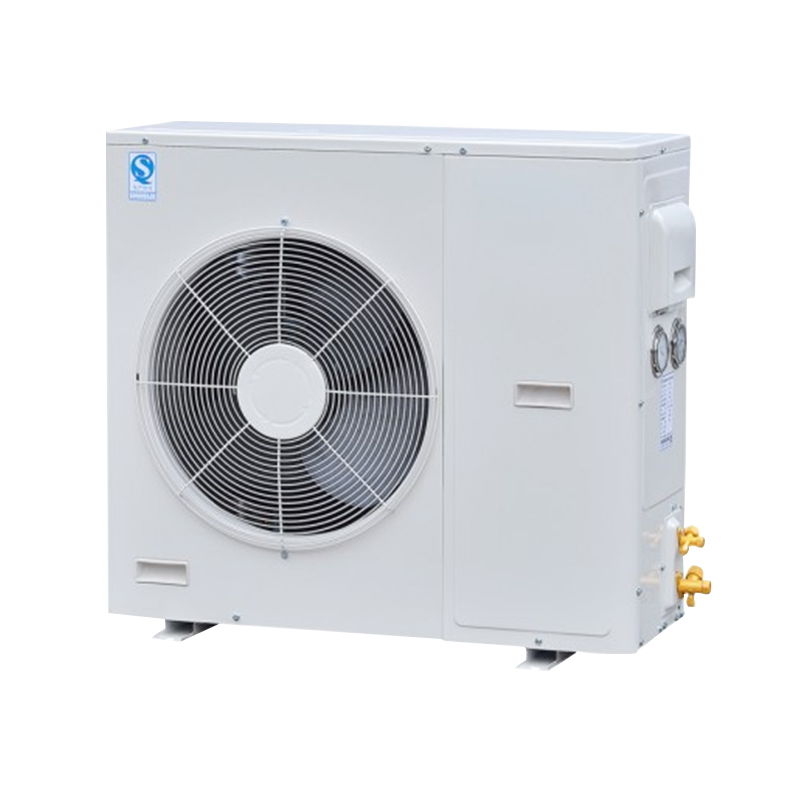
Air-cooled condensers use ambient air flowing over finned tubes to remove heat from the refrigerant. They are the most common type for small to medium-sized systems, including residential air conditioners, commercial refrigerators, and the air-cooled condensing units manufactured by companies like ours. These units typically have a heat transfer efficiency of 30-50% compared to water-cooled models, but they require no water supply or treatment, making them ideal for residential and mobile applications.
Design Variations and Applications
- Natural Convection: Rely on air density differences; low capacity, used in small freezers.
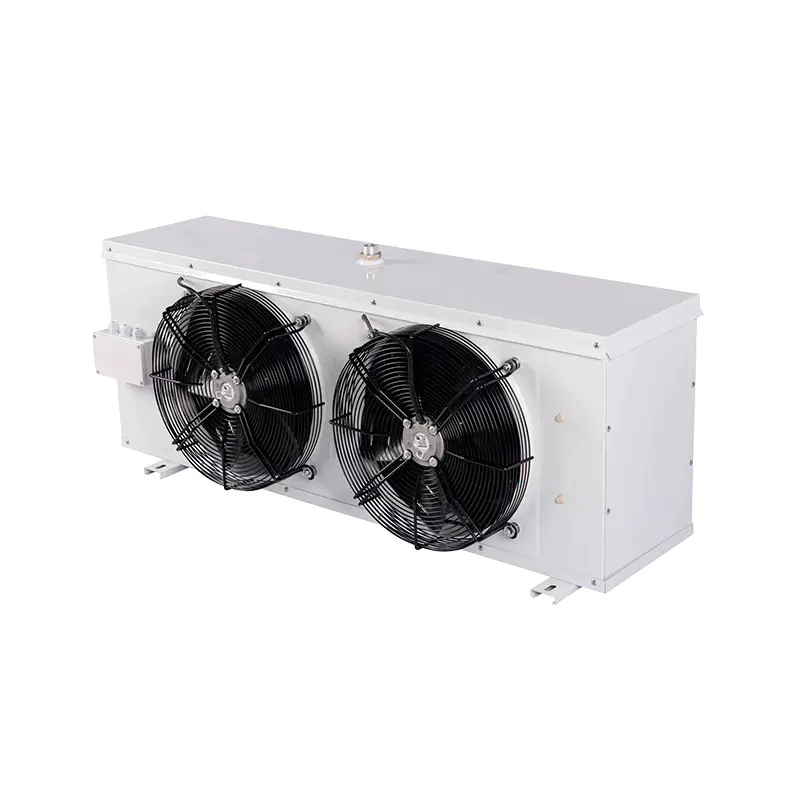
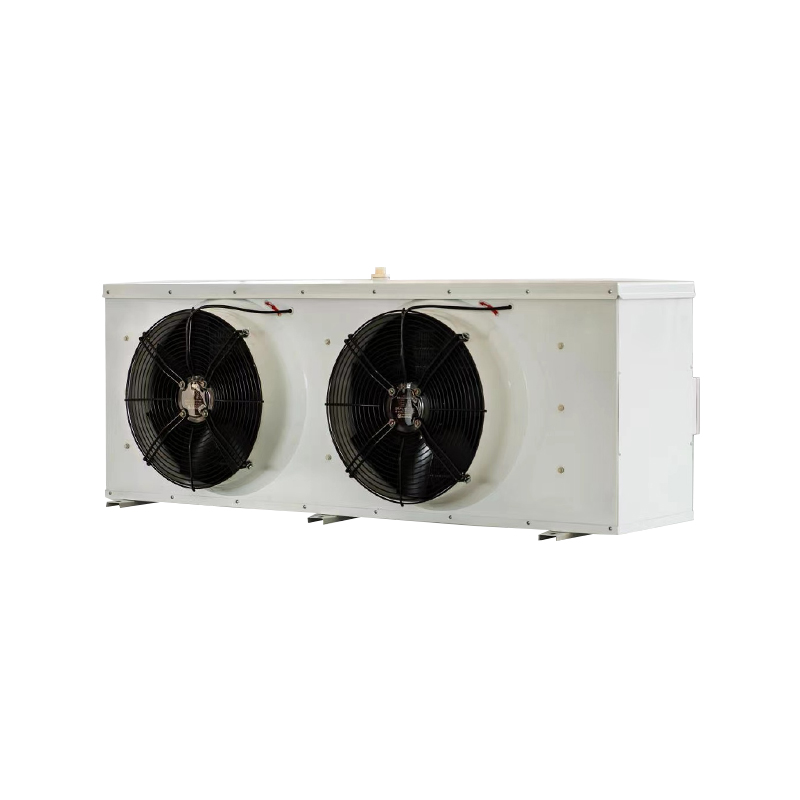
- Forced Convection (Most Common): Use fans to increase airflow. Our D series air cooler and air-cooled condenser series fall into this category, achieving up to 15°C approach temperature under standard conditions.
- Application Range: From small box condensing units to large parallel units for cold storage, air-cooled designs are preferred where water is scarce or expensive.
Water-Cooled Condensers: High Efficiency for Industrial Scale
Water-cooled condensers use water as the cooling medium. Because water has a higher specific heat capacity and thermal conductivity than air, these condensers are significantly more compact and efficient. They achieve condensing temperatures 10-15°C lower than air-cooled equivalents for the same load, translating to lower compressor power consumption and higher system efficiency.
Common Configurations
| Type | Configuration | Typical Application |
|---|---|---|
| Shell-and-Tube | Water through tubes, refrigerant in shell | Medium to large chillers, industrial plants |
| Tube-in-Tube | Refrigerant and water flow in concentric pipes | Small commercial units, water-cooled compression condensing units |
| Shell-and-Coil | Refrigerant coil immersed in water shell | Small hermetic systems, domestic refrigerators |
Our manufacturing expertise includes water-cooled compression condensing units and industrial chillers, often utilized in constant temperature workshops and process cooling where precise temperature control is required.
Evaporative Condensers: The Hybrid Solution
Evaporative condensers combine the principles of air and water cooling. They reject heat by spraying water over refrigerant coils while simultaneously blowing air across them. The evaporation of water absorbs latent heat, enabling condensing temperatures as low as 35-40°C even in hot climates. This hybrid approach reduces water consumption by up to 50% compared to traditional water-cooled systems with cooling towers.
These units are particularly effective in large industrial refrigeration plants, cold storage facilities, and food processing centers. They offer a balance between the low operating costs of water cooling and the simplicity of air cooling. In our product line, specialized configurations for low-temperature screw units and parallel units often integrate evaporative condenser technology for maximum efficiency in large-scale cold storage applications.
Specialized Condenser Configurations
Beyond the cooling medium, condensers are also classified by their system integration and specific design features. Modern refrigeration demands tailored solutions, which is why our R&D team has developed a comprehensive range of units.
Common System-Based Types
- Integral (All-in-One) Units: Condenser, compressor, and receiver in a single chassis. Common in plug-in freezers and small coolers.
- Remote (Split) Units: Condenser located separately from the compressor (condensing unit). Used in large buildings and multi-zone systems.
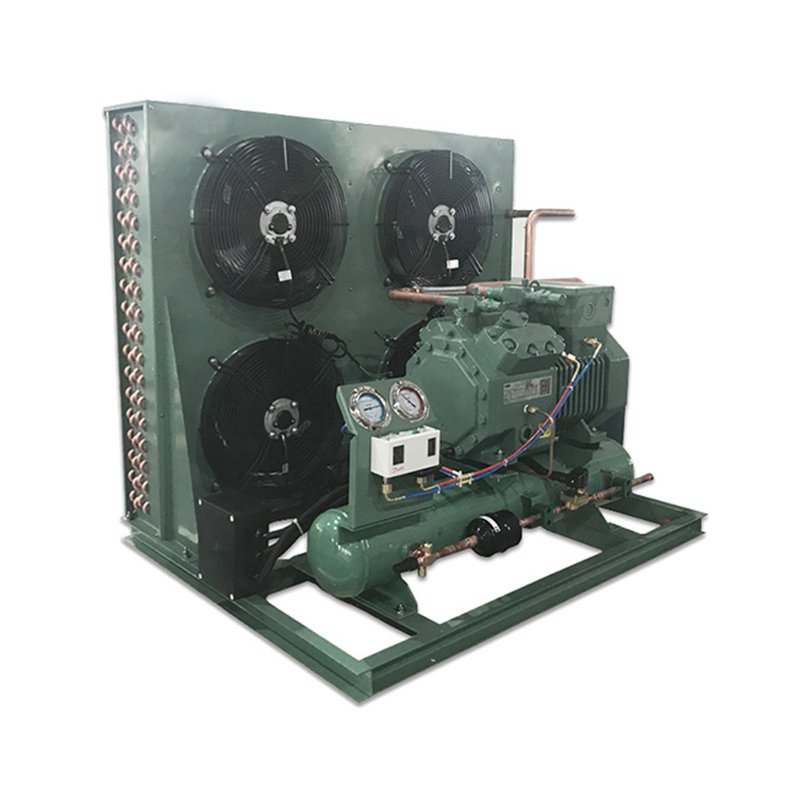
- Parallel Racks (Parallel Units): Multiple compressors and condensers manifolded together. These achieve 20-30% better part-load efficiency than single units, ideal for supermarkets and large cold storage.
- Low-Temperature Screw Units: Use screw compressors paired with large condensers for blast freezing and ultra-low temperature applications down to -40°C.
Our portfolio includes open units, semi-hermetic, and hermetic configurations, ensuring compatibility with various refrigerants and environmental standards across the 80+ countries we serve.
Selecting the Right Condenser Type
Choosing the appropriate condenser depends on several critical factors. The wrong selection can increase energy costs by 15-25% and reduce system lifespan. Consider the following parameters:
- Ambient Conditions: High dry-bulb temperatures favor water or evaporative types; moderate climates suit air-cooled.
- Water Availability & Quality: If water is scarce or expensive, air-cooled is mandatory; if water is plentiful and cheap, water-cooled offers efficiency.
- Noise Constraints: Air-cooled condensers with fans generate noise; water-cooled units are quieter but require a cooling tower.
- Maintenance Capacity: Evaporative condensers require the most maintenance (water treatment, scale prevention); air-cooled require coil cleaning.
- Initial vs. Operating Cost: Air-cooled has lower first cost; water-cooled and evaporative have lower long-term operating costs.
As a professional refrigeration condenser manufacturer, we provide tailored solutions—from standard box units to custom non-standard process refrigeration equipment—ensuring optimal performance for any application, whether it's a small cold storage room or a large industrial complex.