 English
 русский
 Tiếng Việt
Content
- 1 Condenser Definition: What Exactly Is a Condenser?
- 2 How Does a Condenser Work? Step-by-Step
- 3 Key Functions of a Condenser in a Refrigeration System
- 4 Types of Condensers: Air-Cooled vs. Water-Cooled vs. Evaporative
- 5 What Is the Use of a Condenser in Different Industries?
- 6 Factors That Affect Condenser Performance
- 7 Brozercool Condenser Products: Engineering for Real-World Demands
- 8 Condenser Sizing: What You Need to Know Before Specifying
- 9 Condenser Maintenance: Best Practices to Maximize Lifespan
- 10 Frequently Asked Questions About Condensers
- 10.1 What is the main purpose of a condenser?
- 10.2 What happens if the condenser is too small?
- 10.3 How does a condenser differ from an evaporator?
- 10.4 Can I use any refrigerant in my existing condenser?
- 10.5 Is "condensing" the same as "cooling"?
- 10.6 How do I know if my condenser needs cleaning?
- 10.7 What refrigerants do Brozercool condensers support?
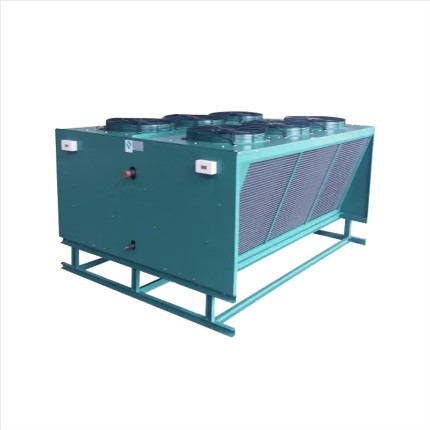
A condenser is a heat exchanger that removes heat from a refrigerant gas, converting it back into a liquid state so the refrigeration cycle can continue. In short: it releases the heat absorbed inside a cold space to the outside environment. Without a properly functioning condenser, no refrigeration or air-conditioning system can operate efficiently—or at all.
Whether you're managing a cold storage facility, running an industrial chiller, or specifying equipment for a constant-temperature workshop, understanding condenser function, types, and performance metrics will help you make smarter, cost-effective decisions.
Condenser Definition: What Exactly Is a Condenser?
A condenser is a device that cools a hot, high-pressure refrigerant vapor until it condenses into a liquid. It sits on the "high side" of a refrigeration or air-conditioning circuit—after the compressor and before the expansion valve. The phase change from gas to liquid releases latent heat, which the condenser transfers to a cooling medium (air or water).
In everyday language, people sometimes confuse "condenser" with "compressor." The distinction is simple:
- Compressor – raises the pressure and temperature of the refrigerant gas.
- Condenser – rejects the heat and turns that hot gas back into a liquid.
The word "condensing" describes this phase-change process. You'll also see it written as condensing unit when the condenser is paired with a compressor in a single packaged assembly.
How Does a Condenser Work? Step-by-Step
The condenser's operation follows four clear stages within the broader refrigeration cycle:
- Hot gas enters. Superheated refrigerant vapor from the compressor (typically 60–90 °C) flows into the condenser inlet.
- De-superheating. The vapor first cools to its saturation (condensing) temperature as it travels through the coil or tubes.
- Condensation. At saturation temperature the refrigerant releases its latent heat and changes phase from gas to liquid. This is where ~70–80% of total heat rejection occurs.
- Sub-cooling. The now-liquid refrigerant cools a few degrees below saturation before leaving the condenser, improving system efficiency and preventing flash gas in the liquid line.
The cooling medium—air blown by fans or water circulated through a tower—absorbs this heat and carries it away from the system. The temperature difference between the refrigerant and the cooling medium (called approach temperature) directly determines how efficiently the condenser works; a smaller approach means higher efficiency.
Key Functions of a Condenser in a Refrigeration System
The condenser performs several overlapping functions, all essential to system reliability and energy efficiency:
Heat Rejection
The primary purpose. The condenser expels the heat collected from the refrigerated space plus the heat added by the compressor. For a 10 kW cooling system, a condenser typically rejects 12–14 kW of heat (the extra 2–4 kW comes from compressor work).
Refrigerant Phase Conversion
By converting refrigerant vapor to liquid, the condenser enables the expansion valve and evaporator to function. No condensation = no liquid refrigerant = no cooling effect downstream.
Pressure Regulation on the High Side
The condenser's ability to reject heat determines the condensing pressure. An undersized or dirty condenser raises head pressure, which forces the compressor to work harder—raising energy consumption by up to 3–5% per 1 °C rise in condensing temperature.
Sub-cooling the Liquid Refrigerant
A well-designed condenser provides 3–8 °C of sub-cooling, which prevents vapor bubbles in the liquid line, increases refrigerating effect, and improves COP (Coefficient of Performance).
Protecting Compressor Life
By keeping discharge pressures within design limits, the condenser prevents compressor overheating and mechanical stress—one of the leading causes of premature compressor failure.
Types of Condensers: Air-Cooled vs. Water-Cooled vs. Evaporative
The three main condenser types each suit different applications, climates, and budgets:
| Type | Cooling Medium | Typical Approach Temp. | Water Use | Best For |
|---|---|---|---|---|
| Air-Cooled | Ambient air | 8–15 °C | None | Cold storage, rooftop units, small chillers |
| Water-Cooled | Chilled/tower water | 3–6 °C | High | Large industrial chillers, process cooling |
| Evaporative | Air + water spray | 4–8 °C | Moderate | Hot-dry climates, medium industrial loads |
Air-Cooled Condensers
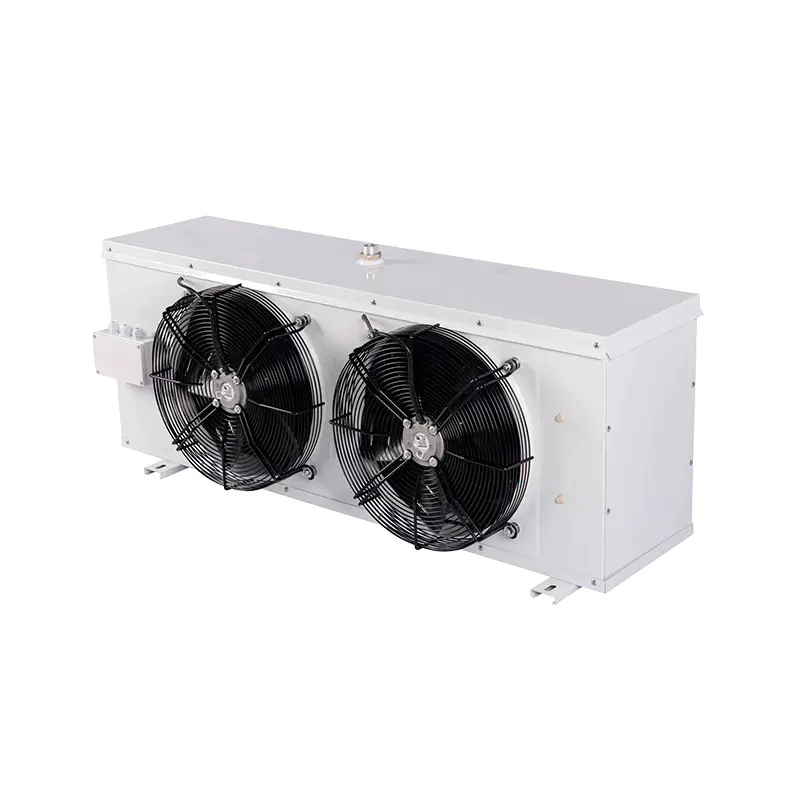
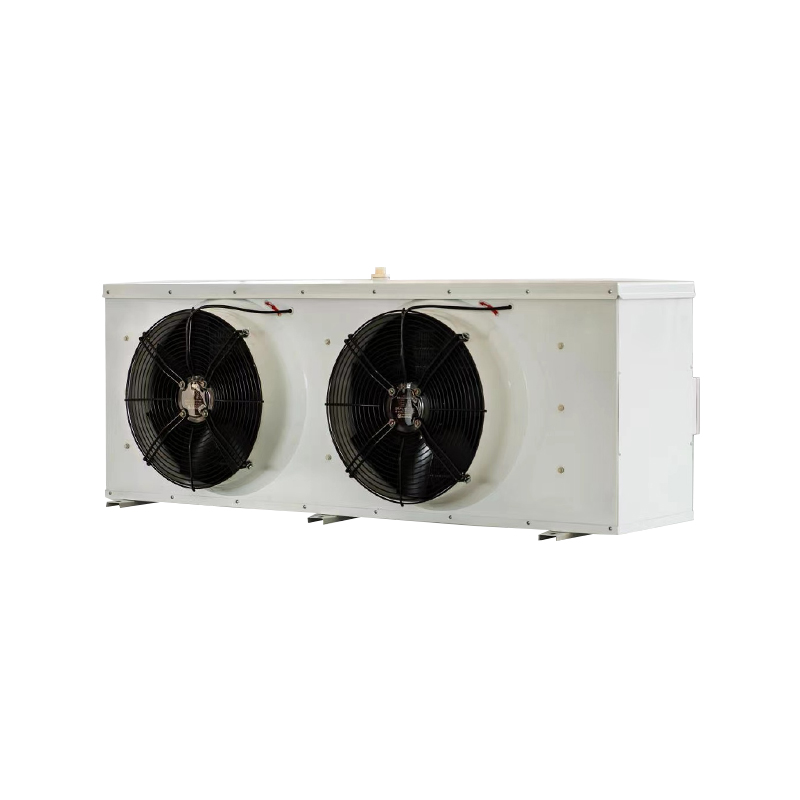
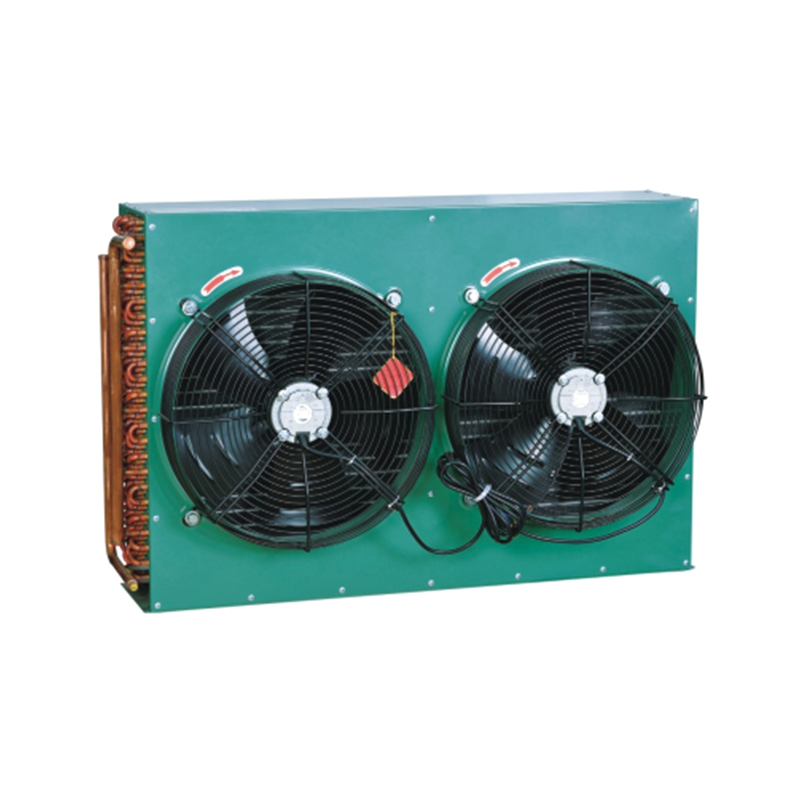
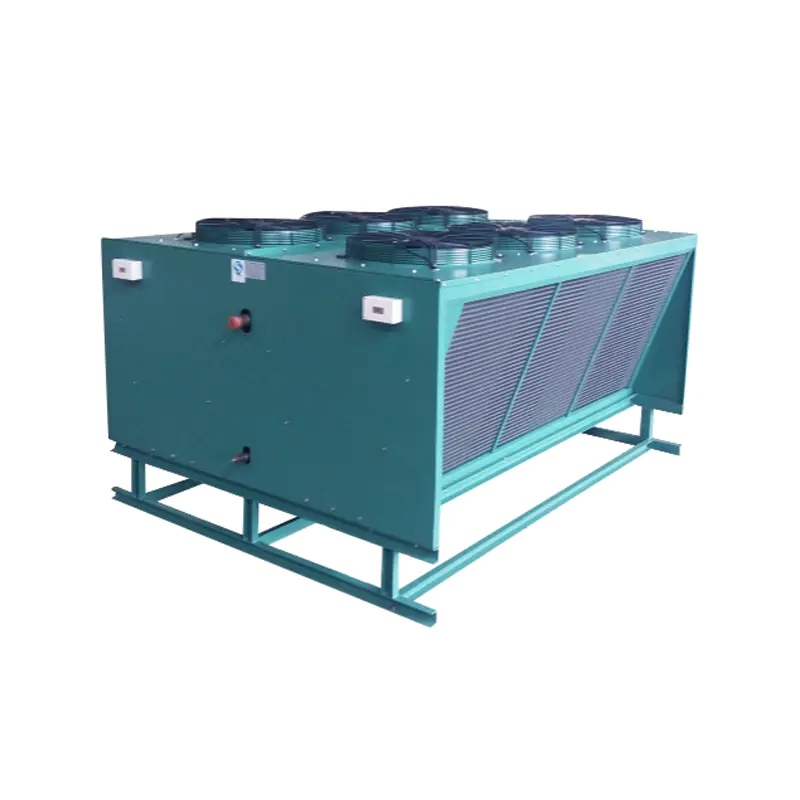
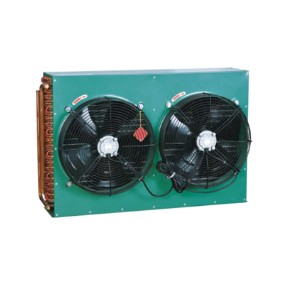
The most widely used type globally. Ambient air is forced over finned coils by one or more fans. No water infrastructure is needed, making installation simple and maintenance costs low. Brozercool's air-cooled condenser series uses high-efficiency copper-tube aluminum-fin coils with EC fan motors, achieving specific heat rejection rates above 1.8 kW/m².
Water-Cooled Condensers
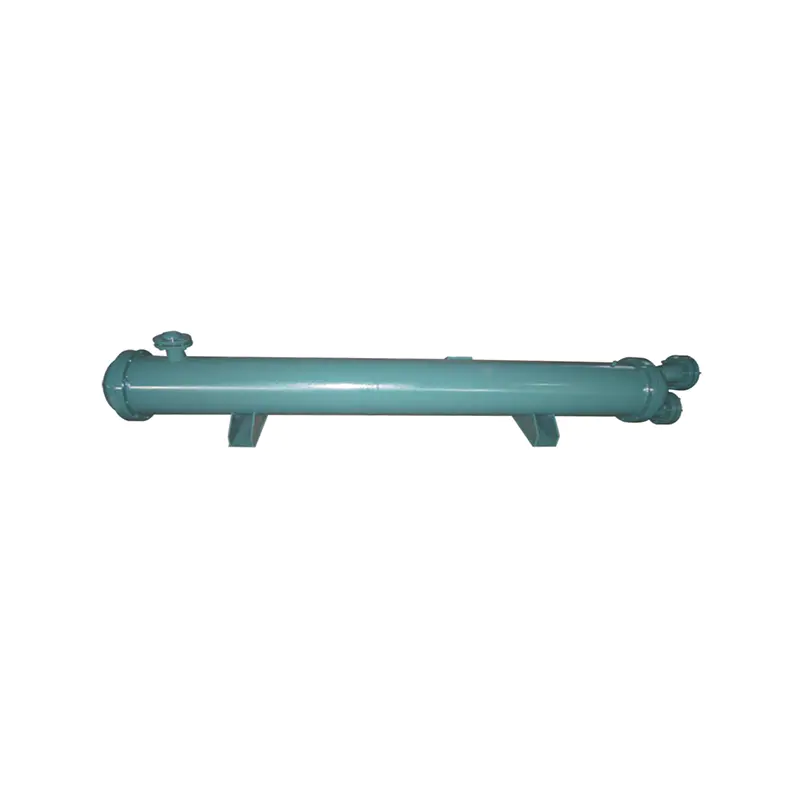
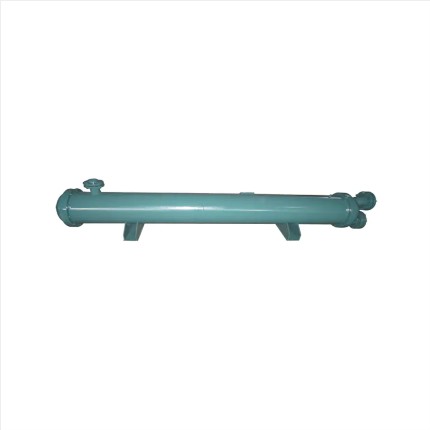
Shell-and-tube or plate-type heat exchangers that use water as the cooling medium. They achieve lower condensing temperatures, improving system COP by 10–20% compared to air-cooled in the same ambient—but require cooling towers, water treatment, and more complex maintenance.
Evaporative Condensers
Water is sprayed over the coil while air is blown through; evaporation cools the coil below the ambient dry-bulb temperature. Ideal where water is available but not abundant, and where ambient temperatures are high.
What Is the Use of a Condenser in Different Industries?
Condensers appear wherever heat must be moved from one place to another. Here are the most common real-world applications:
- Cold storage & fresh-keeping rooms – Air-cooled condensing units maintain temperatures from +10 °C down to −30 °C, preserving meat, produce, dairy, and pharmaceuticals.
- Constant-temperature workshops – Precise condensing control holds process temperatures within ±0.5 °C for electronics manufacturing and precision machining.
- Industrial chillers – Water-cooled condensers in screw or centrifugal chillers serve large HVAC loads ranging from 100 kW to several MW.
- Parallel refrigeration racks – Supermarkets and food distribution centers use multi-compressor parallel systems sharing a single large condenser to reduce peak discharge pressure.
- Non-standard process refrigeration – Chemical plants, breweries, and data centers use condensers integrated into custom refrigeration skids.
- Low-temperature screw units – Blast freezing tunnels and freeze-drying equipment rely on high-pressure-rated condensers for −40 °C to −60 °C operations.
Factors That Affect Condenser Performance
Understanding what degrades or improves condenser output helps operators reduce energy bills and extend equipment life:
Ambient Temperature
Every 1 °C rise in ambient air temperature raises the condensing temperature by approximately 1.2–1.5 °C, increasing compressor power by 2–3%. Siting condensers in well-ventilated, shaded locations is critical in hot climates.
Fouling and Dirt Buildup
Dust, grease, or scale on condenser fins or tubes adds thermal resistance. Studies show a 10–20% reduction in heat transfer from a moderately dirty condenser—translating directly to higher energy costs.
Airflow Restrictions
Hot discharge air that recirculates back through the condenser (short-cycling) raises effective ambient temperature by 5–15 °C. Proper spacing from walls and other units is essential.
Refrigerant Charge
Both overcharge and undercharge affect condensing. Overcharge floods the condenser with liquid, reducing the active condensing surface. Undercharge raises superheat and discharge temperature excessively.
Non-Condensable Gases
Air or nitrogen in the refrigerant circuit collects in the condenser, raising head pressure and reducing heat transfer area. Regular purging or use of automatic purgers is recommended for large systems.
Brozercool Condenser Products: Engineering for Real-World Demands
As a professional refrigeration condenser manufacturer, Brozercool designs and produces a full range of condensing solutions for cold storage, industrial process, and HVAC applications—exported to more than 80 countries and regions.
Air-Cooled Condenser Series
Designed for outdoor installation with copper tube/aluminum fin coil construction, corrosion-resistant cabinet, and variable-speed EC fan options. Available in horizontal or vertical discharge configurations to fit diverse site layouts.
Water-Cooled Compression Condensing Units
Compact skid-mounted units integrating compressor, shell-and-tube condenser, and controls. Suited for cold rooms, process cooling, and industrial chillers where water is available. COP values reach 3.8–4.5 under favorable water temperatures.
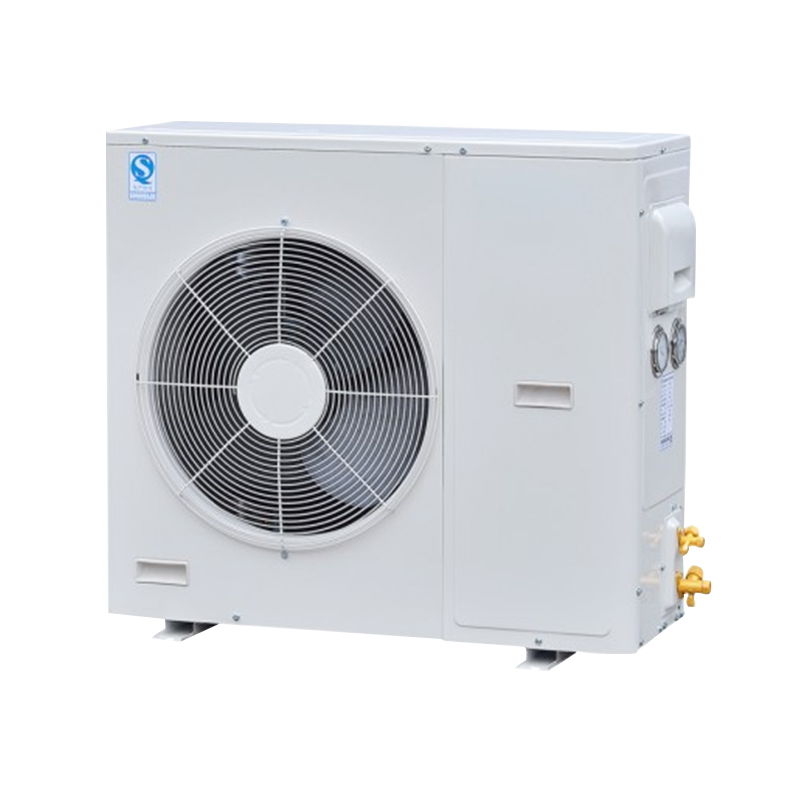
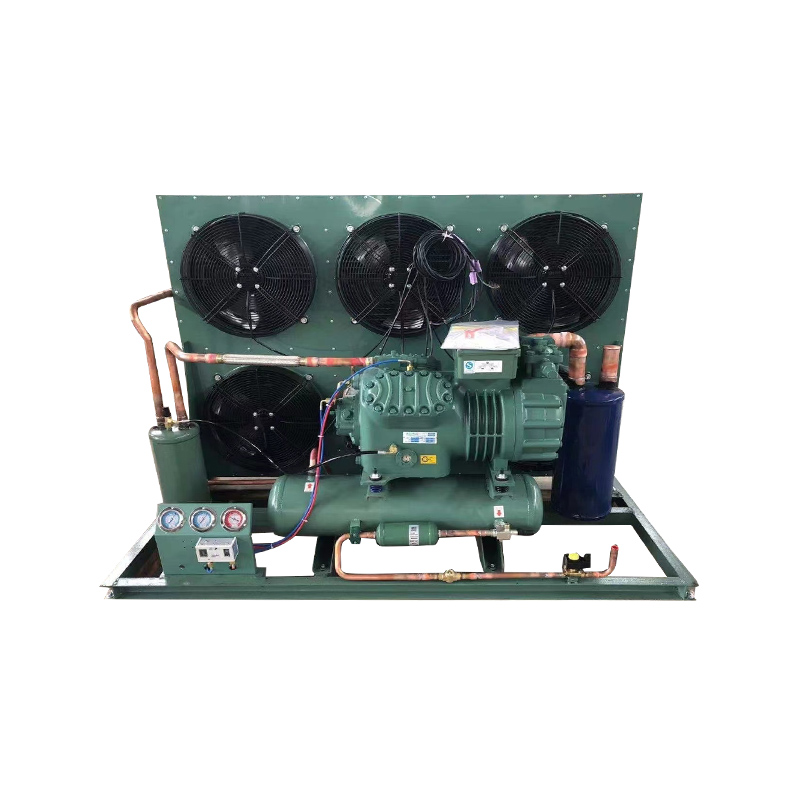
Air-Cooled Condensing Units (Box & Open Type)
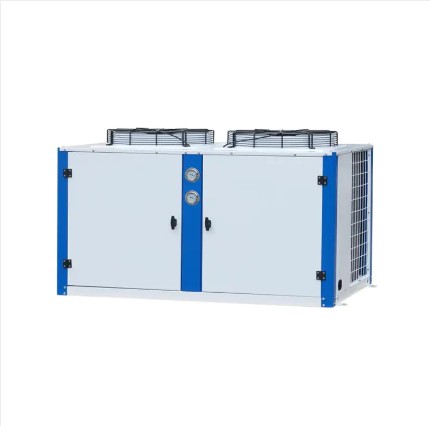
Box condensing units offer weatherproof enclosures for rooftop or outdoor placement; open-type units provide lower cost and easier field serviceability for machine-room installations.
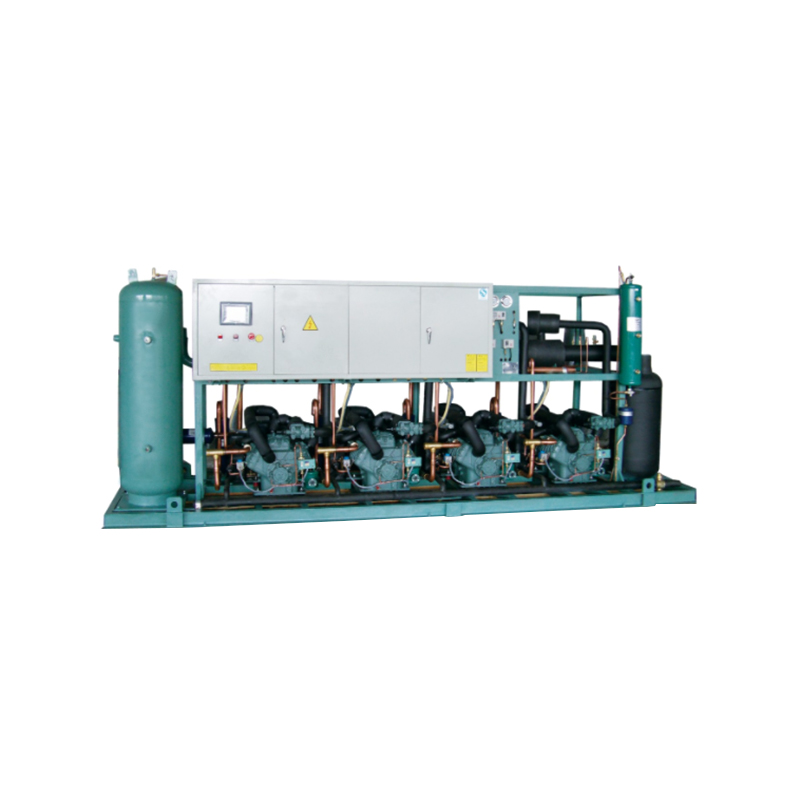
Low-Temperature Screw & Parallel Units
Purpose-built for blast freezing and multi-temperature cold storage facilities. The condenser circuits are rated for high discharge pressures and support refrigerants including R404A, R449A, R744 (CO₂), and R290 (propane).
Condenser Sizing: What You Need to Know Before Specifying
Correct condenser sizing prevents both undersized units (high head pressure, trips) and oversized units (unnecessary capital cost). Key parameters to confirm before selecting a condenser:
- Total heat of rejection (THR) = refrigerating capacity + compressor shaft power input. Always size to THR, not just cooling capacity.
- Design ambient temperature – use the 1% design dry-bulb temperature for your location (e.g., 38 °C for Middle East, 35 °C for Southern Europe).
- Target condensing temperature – typically ambient + 10–15 °C for air-cooled; ambient water + 5–8 °C for water-cooled.
- Refrigerant type – condenser coil and valve sizing varies significantly between R134a, R410A, R404A, and CO₂.
- Available footprint and airflow clearance – minimum 1.5–2 m on all air inlet faces for air-cooled condensers.
Condenser Maintenance: Best Practices to Maximize Lifespan
Proper maintenance keeps condensers running at rated performance and can reduce annual energy costs by 5–15%. Follow this schedule:
- Monthly: Inspect and clean condenser coil fins with low-pressure air or coil cleaner; check fan blade condition and belt tension.
- Quarterly: Measure and record subcooling and superheat; verify head pressure against design curves; check for refrigerant leaks.
- Annually: Deep-clean coils; replace fan motor bearings if needed; inspect tube sheets and fins for corrosion; verify non-condensable gas content in water-cooled systems.
- Water-cooled only: Treat cooling water to maintain pH 7–8.5 and limit scale-forming minerals; inspect tube internals for scale or biofilm every 2 years.
Frequently Asked Questions About Condensers
What is the main purpose of a condenser?
The main purpose is to reject heat from the refrigeration system to the environment, while simultaneously converting the high-pressure refrigerant vapor back into a liquid so the cycle can repeat.
What happens if the condenser is too small?
An undersized condenser cannot reject heat fast enough, causing condensing pressure and temperature to rise. This increases compressor power consumption, can trigger high-pressure safety trips, and over time leads to compressor failure.
How does a condenser differ from an evaporator?
The evaporator absorbs heat from the space being cooled (refrigerant evaporates), while the condenser rejects that heat to the outside (refrigerant condenses). They perform opposite heat-exchange roles in the refrigeration loop.
Can I use any refrigerant in my existing condenser?
No. Condensers are designed for specific pressure ranges and refrigerant properties. Always confirm compatibility with the manufacturer before switching refrigerants—especially when transitioning from HFCs to lower-GWP alternatives like HFOs or CO₂.
Is "condensing" the same as "cooling"?
Not exactly. Condensing specifically refers to the phase change from gas to liquid at constant pressure, which releases latent heat. Cooling is a broader term that includes sensible heat removal (temperature drop) without a phase change. In a condenser, both de-superheating (cooling) and condensing occur sequentially.
How do I know if my condenser needs cleaning?
Compare your current condensing temperature against the design value for the same ambient temperature. If the actual condensing temperature is 3 °C or more above the design curve, dirty or blocked condenser coils are a likely cause. Visual inspection of the coil surface is the simplest confirmation.
What refrigerants do Brozercool condensers support?
Brozercool condenser and condensing unit products are compatible with a wide range of refrigerants including R22 replacement options, R404A, R407C, R410A, R449A, R134a, R290 (propane), and R744 (CO₂) depending on the product series. Consult the product datasheet or contact Brozercool's technical team to confirm the right match for your application.