 English
 русский
 Tiếng Việt
Content
- 1 What Is a Hermetic Compressor?
- 2 What Is a Semi-Hermetic Compressor?
- 3 Core Differences at a Glance
- 4 What the Design Difference Actually Changes
- 5 Maintenance Realities After Installation
- 6 How to Choose: A Practical Selection Framework
- 7 Frequently Asked Questions
- 8 Final Recommendation: Let the Application Decide
You are comparing two compressors for a cold room project. One quote is lower. The other compressor costs more but has a bolted housing that a service technician can open. Which one should you buy?
Choose a hermetic compressor when the cooling duty is small, the system is treated as a replaceable component, and first cost matters more than long-term service. Choose a semi-hermetic compressor when the unit runs for thousands of hours per year, supports a cold storage or industrial cooling process, and the operator wants the option to repair rather than replace. That serviceability difference drives nearly every other comparison in this article.
What Is a Hermetic Compressor?
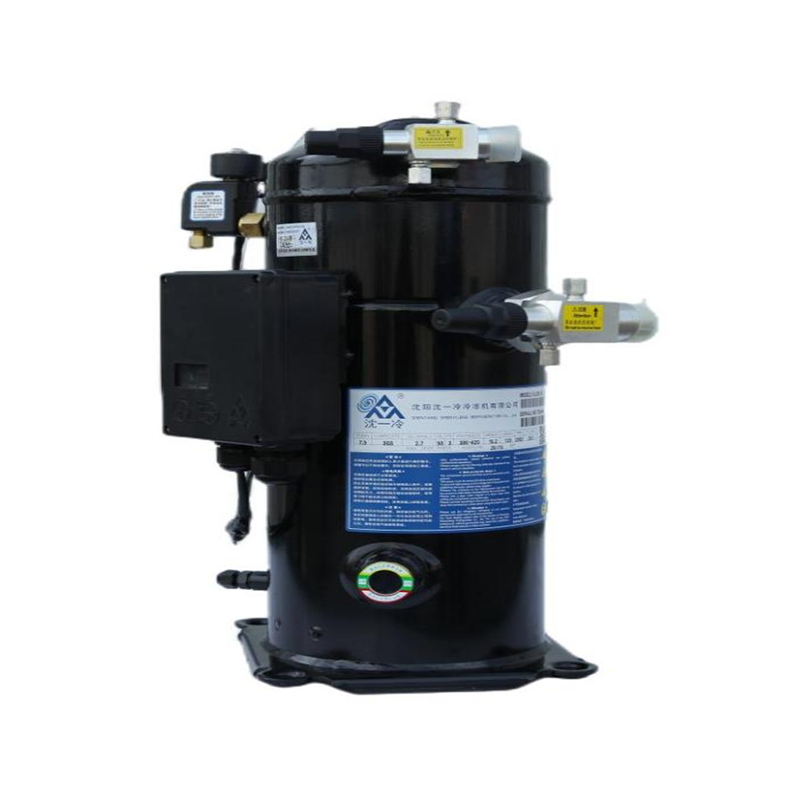
A hermetic compressor — also called a fully sealed or welded-shell compressor — keeps the electric motor and compression mechanism inside a single steel housing that is welded shut. There is no shaft seal and no access to internal parts. The motor is cooled by return suction gas, and the shell rejects a limited amount of heat to the surrounding air.
Because the casing is sealed, hermetic compressors are compact, leak-resistant, and inexpensive to mass-produce. They power domestic refrigerators, freezers, window air conditioners, and small plug-in commercial cabinets, typically from a fraction of a horsepower up to about 10–15 HP.
What Is a Semi-Hermetic Compressor?
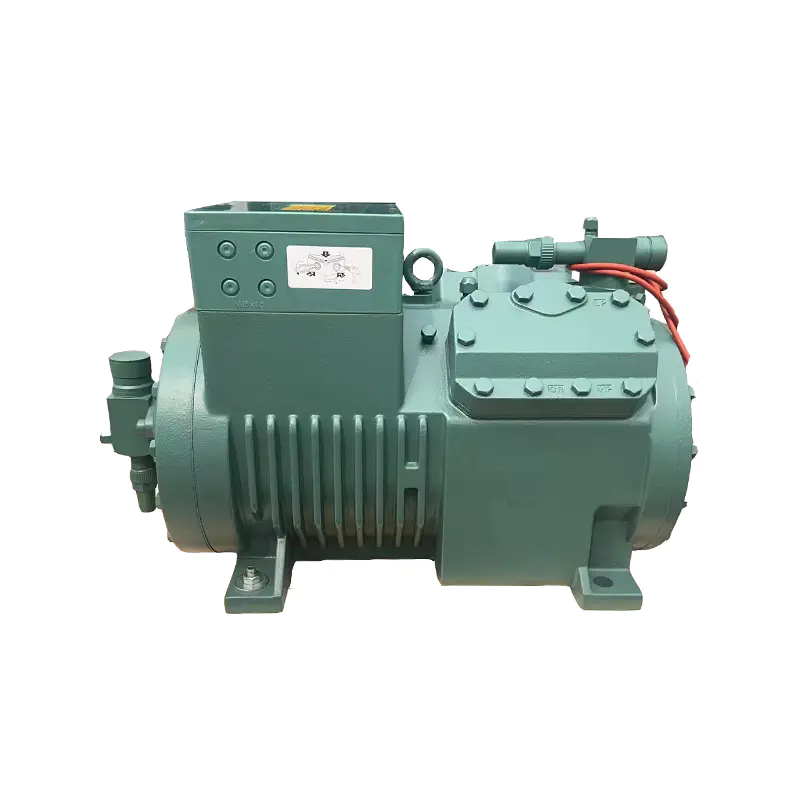
A semi-hermetic compressor also encloses the motor and compressor inside one housing, but the housing is made with bolted cover plates and gaskets. The environment is still kept out, yet a trained technician can open the housing, inspect the motor, replace valve plates, change rings, and service bearings.
Semi-hermetic compressors cover roughly 1 HP to 100 HP or more in multi-cylinder configurations. They are the usual choice for cold storage rooms, blast freezers, industrial water chillers, marine refrigeration, and process cooling systems, where continuous operation and long service life justify a higher first cost.
Core Differences at a Glance
The table below summarizes the characteristics that usually drive a purchase decision. Both designs solve the same fundamental problem — compressing refrigerant without leaking — but they do so with different service strategies and performance envelopes.
| Parameter | Hermetic Compressor | Semi-Hermetic Compressor |
|---|---|---|
| Housing style | Welded one-piece steel shell | Bolted cast-iron or steel shell with gaskets |
| Field serviceability | Not serviceable; replace the whole compressor | Serviceable; valves, rings, bearings and motor can be repaired |
| Typical capacity | 0.1 to 10–15 HP | 1 to 100+ HP |
| Initial cost per HP | Lower | Higher |
| Heat dissipation | Limited by small shell surface | Larger housing surface area, better heat rejection |
| Motor cooling | Suction gas only | Suction gas plus external shell cooling; optional oil cooling on larger models |
| Failure mode | Total unit replacement | Repair or overhaul on site or in a workshop |
| Common applications | Domestic refrigeration, AC, light commercial plug-in units | Cold storage, chillers, cold chain, industrial process cooling |
What the Design Difference Actually Changes
Repairability Drives Total Cost of Ownership
The most decisive difference is not electricity consumption; it is whether the compressor can be repaired. When a hermetic compressor fails, the welded shell makes internal repair impractical. The standard procedure is removing the complete unit, recovering the refrigerant, and installing a replacement compressor. For a small system that means a few hundred dollars. For a larger light-commercial unit, the combined cost of refrigerant, labor, and the new compressor can equal several years of routine maintenance.
A semi-hermetic compressor can usually be opened at the job site or in a service workshop. Worn valve plates, broken reeds, damaged rings, and failing bearings are replaced individually. An operator with multiple cold rooms can keep a spare valve-plate kit in stock and repair a failed compressor in a few hours. That serviceability shifts the calculation from “replace everything” to “replace the component.”
Illustrative 5-Year Cost Comparison (USD)
Illustrative example based on typical small commercial compressor service scenarios; actual figures depend on model, operating hours, and local labor rates.
Heat Dissipation and Sustained Load Behavior
Hermetic compressors are compact, but a welded shell has limited surface area. Under heavy load, most heat rejection depends on suction gas, and if return-gas temperature rises above the design point, motor winding temperature climbs quickly. Sustained operation at high condensing temperature can accelerate insulation aging and shorten compressor life.
The larger cast housing of a semi-hermetic compressor provides a much bigger surface area for heat exchange with the machine room. The motor is still cooled by suction gas, but the lower thermal resistance of the housing means less heat is trapped inside. Larger models can also be equipped with oil cooling to further reduce discharge temperature. In practice, this makes semi-hermetic compressors more forgiving in hot machine rooms, dusty environments, and high-ambient installations where an equally sized hermetic unit would run borderline hot.
Capacity Range and System Configuration
Hermetic compressors cover the lower end of the capacity range well, but their upper limit is constrained by heat dissipation and by the economics of replacement. Manufacturers concentrate hermetic lines in light commercial applications up to about 10–15 HP. Semi-hermetic compressors are built with multiple cylinder sizes and configurations, allowing a single product platform to cover a wide band from a few horsepower to well over 100 HP.
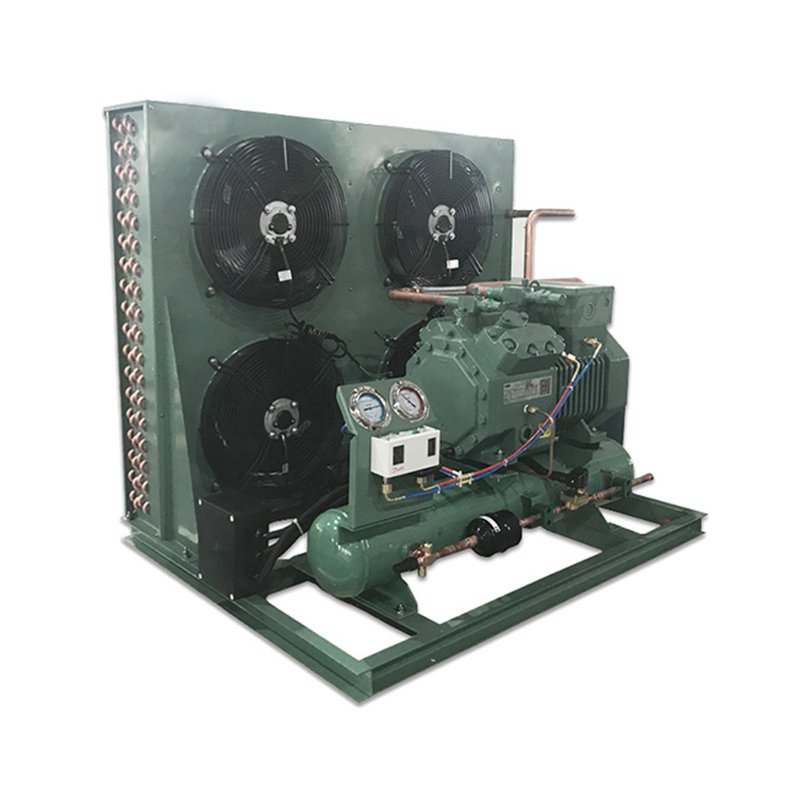
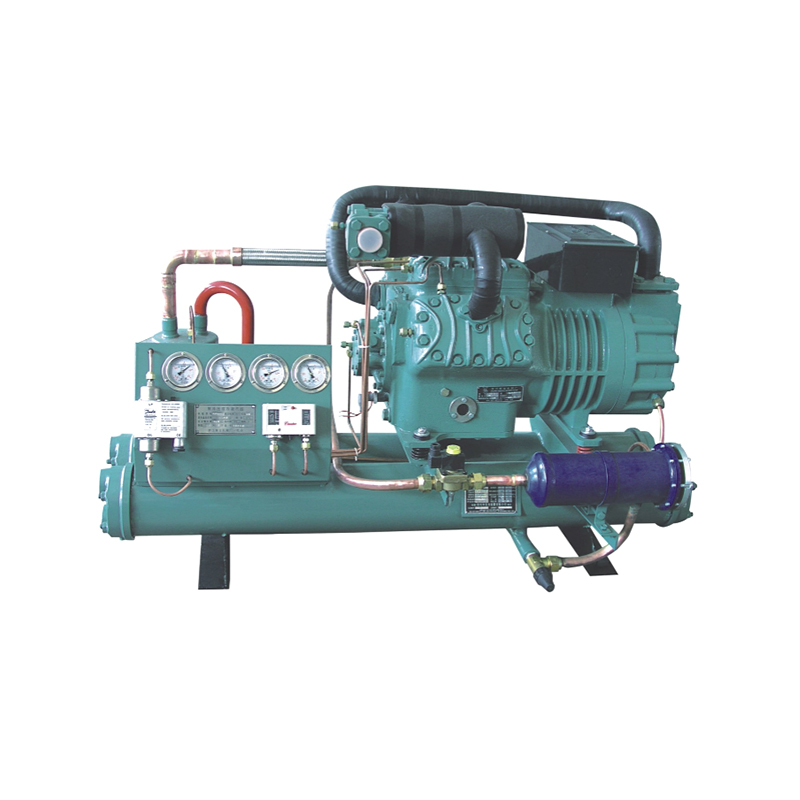
For cold rooms below roughly 50–80 cubic meters, a hermetic compressor is often sufficient. For larger cold rooms, blast freezers, and industrial water chillers, semi-hermetic systems are usually specified. In the field, semi-hermetic compressors are commonly packaged with a condenser, receiver, and controls into ready-to-install condensing units. These air-cooled condensing units with semi-hermetic compressors are a common choice for medium and large cold storage projects because they reduce field piping work and keep the refrigerant charge lower than in split systems.
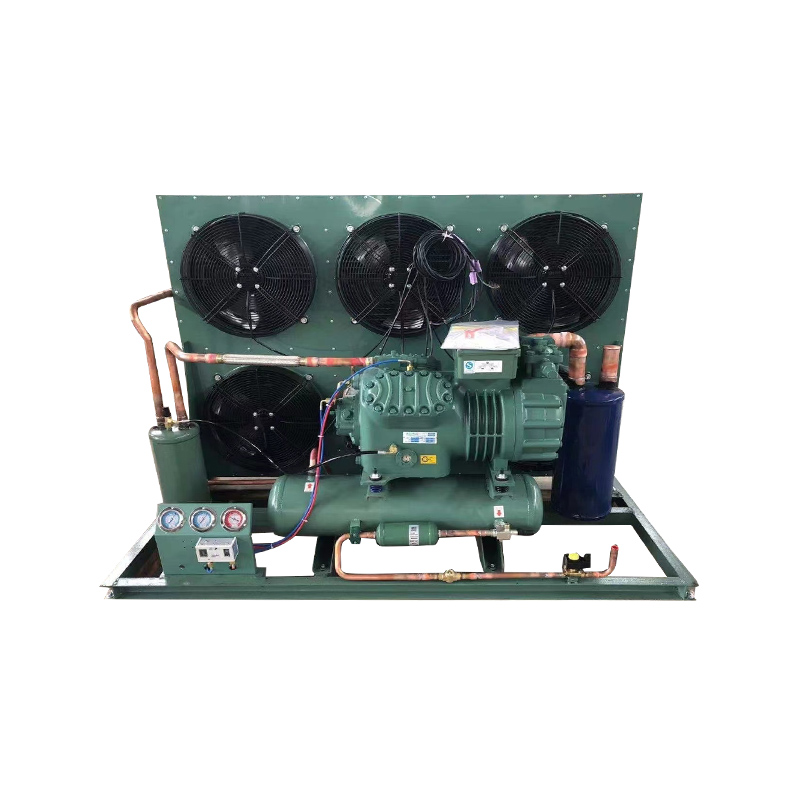 Custom Air-cooled condensing unit Manufacturers, Suppliers - Zhejiang Brozer RefZhejiang Brozer Refrigeration Technology Co., Ltd is China OEM/ODM Air-cooled condensing unit manufacturers and Air-cooled condensing uni...View Product →
- Cold storage & cold chain (42%)
- Industrial water chillers (27%)
- Food processing plants (17%)
- Other process cooling (14%)
Illustrative distribution based on typical project patterns in commercial and industrial refrigeration.
Continuous Duty, Parallel Architecture, and Redundancy
Cold-chain facilities and industrial chillers often run compressors year-round. When a single hermetic unit fails, the whole refrigeration circuit stops until replacement is completed. Semi-hermetic compressors can be repaired more quickly, and many facilities take the redundancy approach one step further: multiple semi-hermetic units are mounted on a common rack to form a parallel system. Parallel condensing units built around semi-hermetic compressors allow capacity modulation by staging compressors on and off, and they keep the load covered at reduced capacity while one unit is under service.
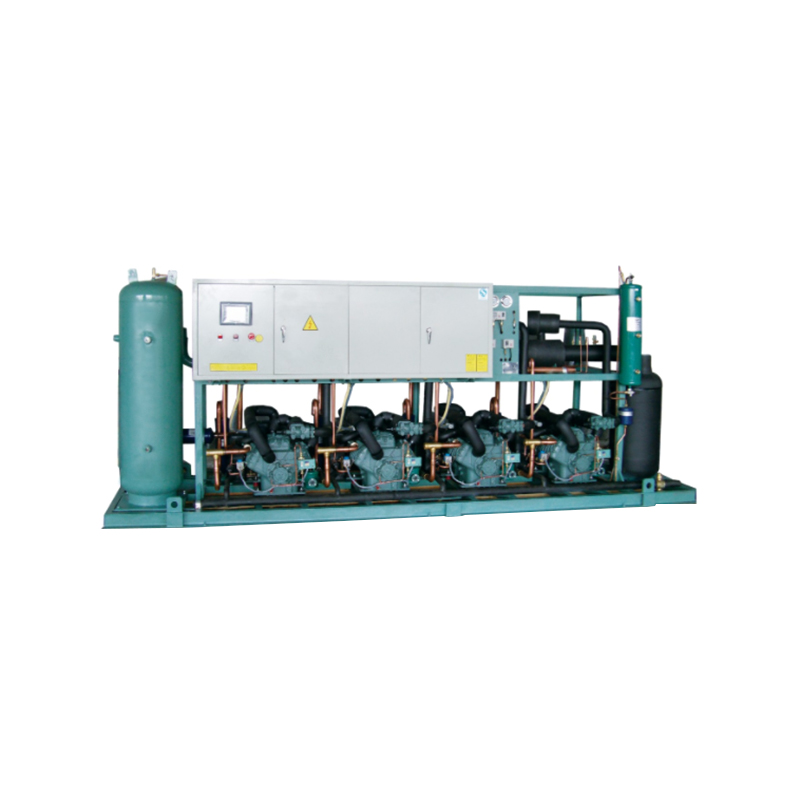 Custom Parallel condensing unit Manufacturers, Suppliers - Zhejiang Brozer RefriZhejiang Brozer Refrigeration Technology Co., Ltd is China OEM/ODM Parallel condensing unit manufacturers and Parallel condensing unit su...View Product →
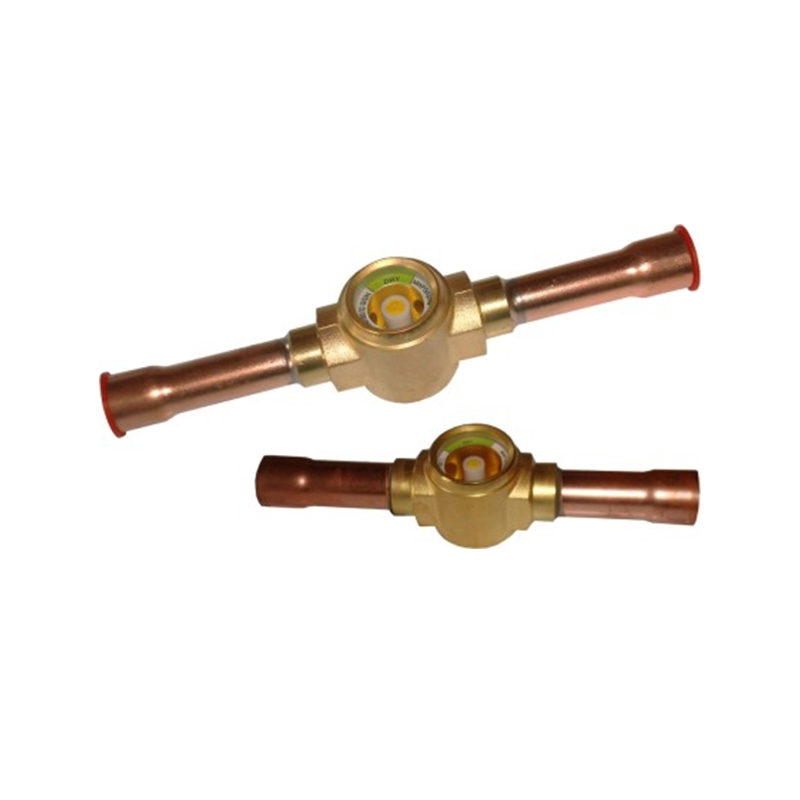
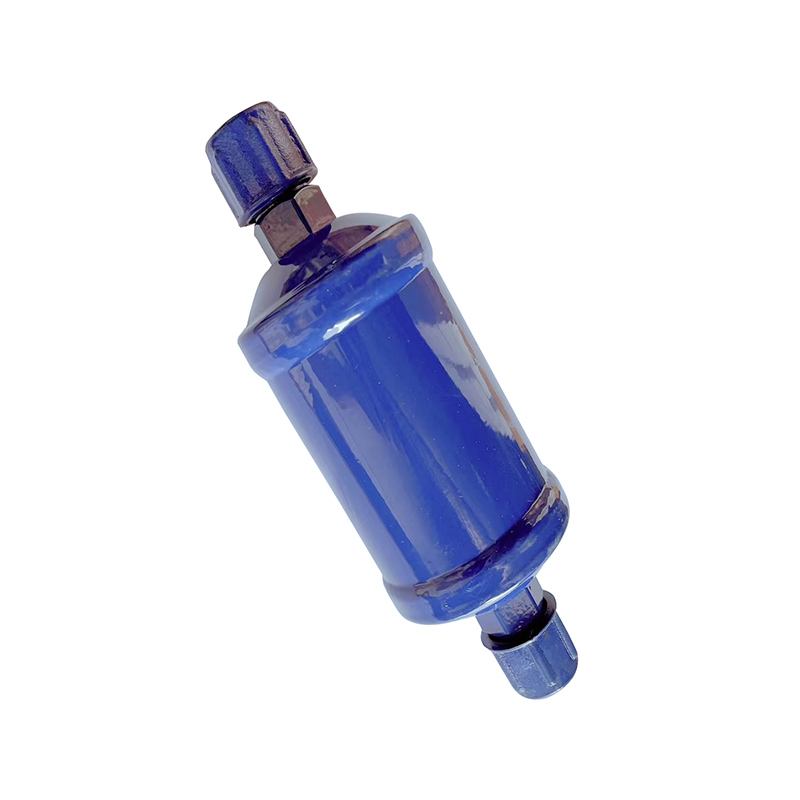
Matching the compressor to the whole circuit matters just as much. Common cold storage system faults — liquid slugging, oil return problems, and condenser fouling — always show up first at the compressor. A semi-hermetic compressor with an accessible oil sight glass and bolted covers allows a technician to check oil level, inspect the valves, and replace the filter drier before a small problem becomes a motor burnout.
Noise and Vibration
Hermetic compressors are usually quieter because the welded shell contains both vibration and motor noise. Semi-hermetic compressors transmit more mechanical noise through the bolted casting, although the practical difference is rarely decisive in machine rooms or rooftop installations. Where noise matters, mounting, flexible piping, and acoustic enclosures handle most of the gap.
Maintenance Realities After Installation
Once a semi-hermetic compressor is running, routine service follows a more detailed checklist than a sealed unit. Oil level and oil pressure, suction and discharge temperatures, valve condition, and oil return from the separator should all be inspected on a schedule. In systems with long pipe runs or low evaporating temperatures, an oil separator helps keep oil in the compressor crankcase and reduces the load on the oil return circuit. The separator is a small component compared with the compressor itself, but its failure slowly damages bearings and valves, so it deserves the same attention as the compressor.
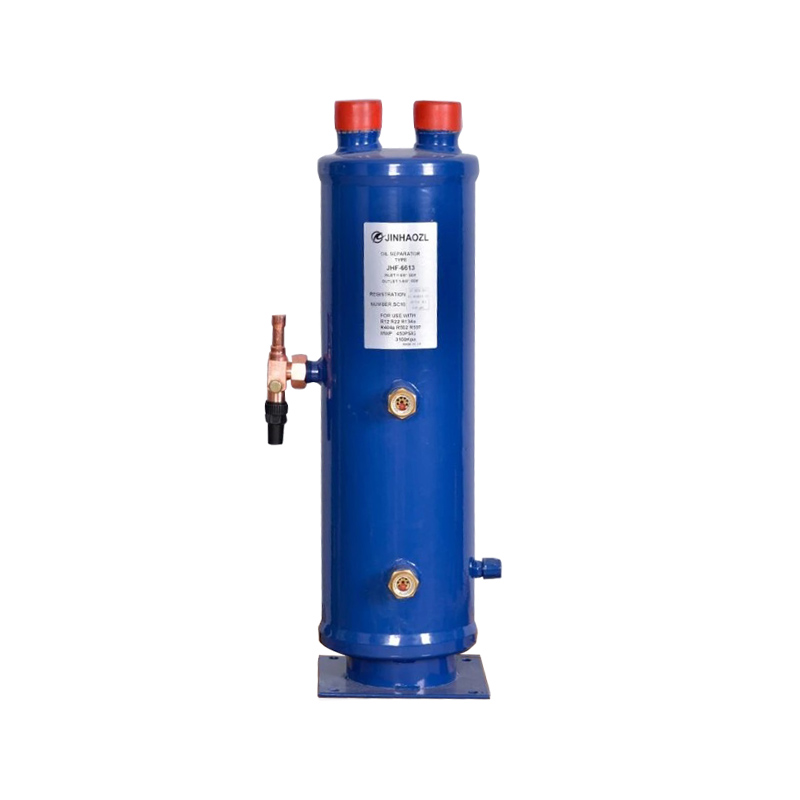 Custom Oil separator Manufacturers, Suppliers - Zhejiang Brozer Refrigeration TeZhejiang Brozer Refrigeration Technology Co., Ltd is China OEM/ODM Oil separator manufacturers and Oil separator suppliers, Our factory s...View Product →
Operators who run multiple semi-hermetic units often stock a small set of spare parts: valve plate kits, gaskets, filter driers, and oil pump parts. Brozer supports this approach by supplying service parts and by designing components for easy access during maintenance. A few hours of downtime once a year is usually enough to prevent the kind of failure that turns into a full compressor replacement.
How to Choose: A Practical Selection Framework
Instead of asking which type is better, evaluate each project with a small set of questions.
- Duty and capacity: Below 3–4 HP and fewer than 2,000 operating hours per year? A hermetic compressor is hard to beat on cost. Above 5 HP or running near-continuously? Semi-hermetic is the safer match.
- Service capability: Can the local technician open a bolted housing and recalibrate valve clearance? If yes, semi-hermetic protects against full-replacement scenarios. If not, a hermetic unit fits a simple replace-and-go philosophy.
- Operating hours: The more the compressor runs, the more repair capability matters. Semi-hermetic designs are built for sustained duty and long service intervals.
- Redundancy: If a single compressor failure stops the whole process, plan for parallel semi-hermetic racks instead of one large unit.
- Budget: Compare five-year cost, not first cost. Include refrigerant, labor, replacement parts, and downtime.
The evaporator side deserves attention as well. A correctly matched DD-type medium-temperature evaporator keeps suction pressure stable and reduces unnecessary running hours, which protects the compressor regardless of whether the system uses a hermetic or semi-hermetic design.
Frequently Asked Questions
Can a hermetic compressor be repaired at all?
Technically, the shell can be cut open, but the welded structure is difficult to reseal reliably, and the labor cost usually exceeds the value of the compressor. In normal commercial practice, hermetic compressors are replaced, not repaired.
Are semi-hermetic compressors more energy-efficient?
Not automatically. Efficiency depends on motor design, valve performance, operating envelope, and how well the compressor matches the system load. A well-matched semi-hermetic unit can match or exceed the efficiency of a smaller hermetic model because the larger motor and better heat dissipation reduce losses, but a correctly sized hermetic unit can also be very efficient within its design envelope.
Why is the semi-hermetic compressor significantly more expensive?
Because of the cast-iron housing, bolted cover plates, shaft seals, heavier internal components, and lower production volumes compared with mass-produced hermetic compressors. The price premium pays for repairability and service life.
What size cold room can still use a hermetic compressor?
Small walk-in coolers up to roughly 50–80 cubic meters with low usage rates work well with a hermetic compressor. Larger rooms, multi-temperature facilities, and blast freezing applications need the capacity and serviceability of a semi-hermetic system.
Final Recommendation: Let the Application Decide
For a small refrigerator or a plug-in display cabinet, a hermetic compressor is the natural solution. For a cold room, distribution center, or industrial water chiller that will run for years, the semi-hermetic compressor’s repairability, heat dissipation, and capacity range make it the dependable choice.
Brozer focuses on semi-hermetic compressor technology and the complete system around it — condensing units, evaporators, condensers, and service parts — to support refrigeration professionals in more than 80 countries. If you are evaluating a specific project, the right question is not which type wins in theory, but which design fits the duty cycle, service capability, and long-term budget of your facility.