 English
 русский
 Tiếng Việt
Content
- 1 What Changes on January 1, 2026, and What Does Not
- 2 Which Refrigerants Fall Inside the New Line
- 3 A2L Fluids Change Hardware, Not Just the Label
- 4 Retrofit, Convert, or Replace
- 5 Component Choices That Decide Your Compliance Cost
- 6 A Procurement Checklist for 2026 Projects
- 7 Frequently Asked Questions
- 8 What to Do Before the Deadline
A 180-kilogram R-404A rack in a cold storage warehouse was already a regulated system in 2025. The 20-pound condensing unit cooling the prep room next door was not. On January 1, 2026, that changes: the EPA lowers the leak-management and recordkeeping threshold from 50 pounds to 15 pounds for appliances holding high-GWP refrigerant, and a long list of small systems that nobody tracked enters the compliance ledger.
The conclusion first: 2026 is mainly a paperwork and specification problem, not an instruction to scrap your plant. Large racks were regulated before and still are. What changes is how many systems need leak-rate calculations, repair verification and refrigerant records, and, running in parallel, which new equipment may still be sold and installed with a high-GWP charge.
The second conclusion is the one that reaches capital budgets. The same regulatory wave pushes commercial refrigeration toward lower-GWP fluids, and those fluids reshape compressor selection, condenser pressure ratings, evaporator circuiting, lubricants and the spare parts kept on the service van.
What Changes on January 1, 2026, and What Does Not
The headline is the threshold. The trigger point for leak repair and recordkeeping drops from 50 pounds to 15 pounds for appliances containing refrigerant with a global warming potential above the regulatory cutoff. Published analyses of the expanded oversight describe that cutoff as HFCs and their substitutes with GWP greater than 53, a line that catches R-410A and R-404A, and also most of the lower-GWP retrofit blends used to keep existing racks running.
Three obligations follow from crossing the line:
- A leak-rate calculation for each appliance, based on charge size and annual leakage.
- Repair within the regulatory window once the calculated leak rate exceeds the applicable percentage.
- Verification testing after the repair, plus records that stand up to an inspection.
Industrial process refrigeration has its own date
Compliance dates are also set by equipment category, not by charge alone. Industrial process refrigeration equipment in which refrigerant enters the evaporator at or above -30 °C carries a January 1, 2026 compliance date. That temperature line is more practical than it looks: a -28 °C blast freezer and a -40 °C spiral freezer sit on opposite sides of it, even though both are "low temperature" to the operator.
What does not change
Existing equipment does not become illegal on January 1. You may keep an R-404A rack in service. What changes is the servicing regime around it and the range of new equipment that can legally be placed on the market. GWP figures also shift between assessment reports, so confirm the value the rule text cites before hard-coding a number into a budget.
Which Refrigerants Fall Inside the New Line
The table below groups the fluids most often found in cold storage, process cooling and light commercial work, and where each one sits after the threshold change.
| Refrigerant | Commonly cited GWP | Where you meet it | Position after the 2026 change |
|---|---|---|---|
| R-410A | About 2,088 | Split AC, light commercial heat pumps, small condensing units | Above the cutoff; new light commercial equipment must move to fluids at or below 700 GWP |
| R-404A | About 3,922 | Commercial freezer racks, blast freezers | High-GWP; retrofit or replacement planning |
| R-507A | About 3,985 | Low-temperature industrial racks | Same compliance pressure as R-404A |
| R-407A / R-407C | About 2,107 / 1,774 | Supermarket racks, chillers | Above the cutoff; managed under the new threshold |
| R-448A / R-449A | About 1,387 / 1,397 | Retrofit blends for R-404A racks | Lower GWP but still above 53; leak management applies |
| R-32 / R-454B | About 675 / 466 | New A2L air conditioning and heat pumps | A2L; charge limits, detection and marking required |
| R-744 (CO2) | 1 | Transcritical industrial, cold storage, industrial chillers | Natural fluid; far higher design pressures |
| R-717 (ammonia) | 0 | Industrial process refrigeration | Natural fluid; A1 but toxic, needs a dedicated plant room |
A2L Fluids Change Hardware, Not Just the Label
R-32 and R-454B are the two A2L refrigerants most often named for new equipment. A2L means mildly flammable, and that classification drives room-volume charge limits, refrigerant detection, ventilation or interlock requirements and component marking under ASHRAE 15 and local codes.
The hardware consequences matter more day to day:
- Compressor approval: a semi-hermetic or scroll compressor must be listed for the specific A2L fluid, including motor insulation class and terminal sealing.
- Lubricants: A2L blends are paired with POE oils, which absorb moisture quickly, so evacuation discipline and filter-drier change intervals both tighten.
- Glide: a blend such as R-454B glides roughly 1.5 K across the coil, so set superheat and electronic expansion valve control on the dew point rather than one saturation temperature.
- Seals and elastomers: not every gasket fitted to a rack in 2015 is compatible with the fluid replacing it.
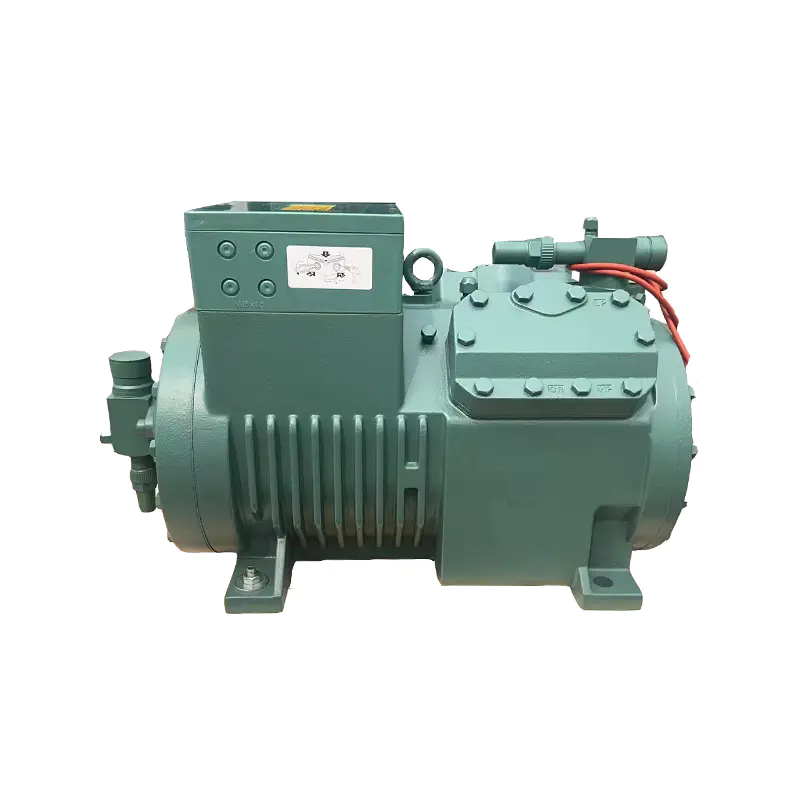
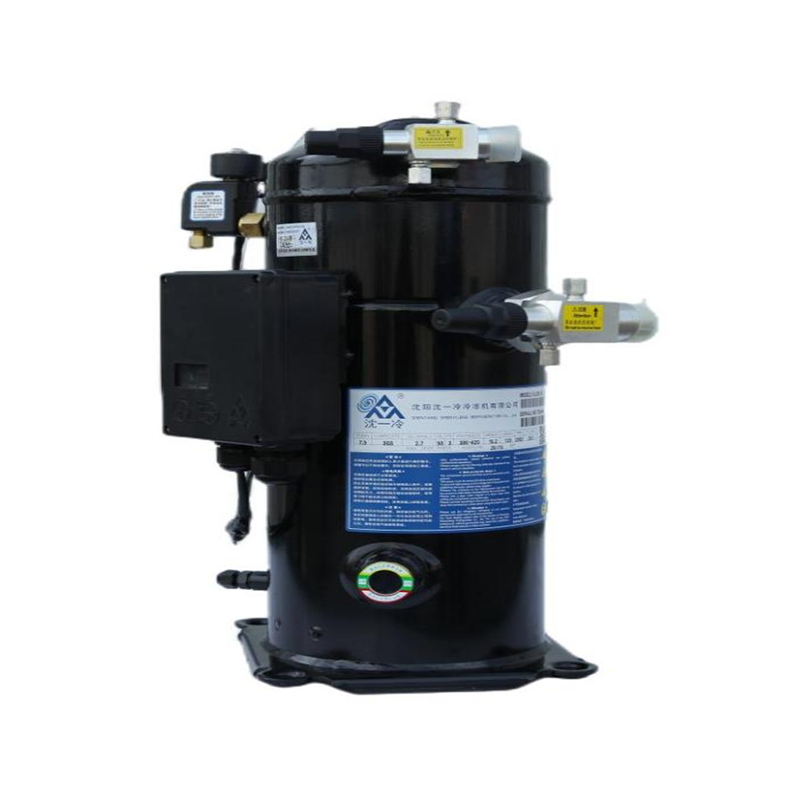 Scroll Compressor for Quiet, Efficient Refrigeration SystemsExplains orbiting and fixed scroll compression, tight machining tolerances, low noise and vibration, and efficient operation suited to quiet environments.View Product →
Retrofit, Convert, or Replace
Once a system crosses the 15-pound line with a high-GWP charge, the question is not which gas is best in isolation but which route survives the next rulemaking. Three routes dominate.
| Route | Typical scope | Main risks | Best fit |
|---|---|---|---|
| Retrofit to a lower-GWP blend | Replace expansion devices and driers, verify elastomer compatibility, reset superheat for glide | Capacity and efficiency drift, lubricant mismatch | Racks in sound mechanical condition with years of service left |
| Convert to a natural refrigerant | New compressors, condensers and evaporators rated for CO2 or ammonia | Higher capital cost, higher design pressures, plant-room requirements | Industrial process cooling and large cold storage with long horizons |
| Replace the rack | Full replacement with lower-GWP or natural refrigerant equipment | Longest downtime, highest capital cost | Racks already near end of life |
Retrofit is usually the lowest-capital and shortest-shutdown route, but it is a measured change rather than a drop-in swap: capacity, discharge temperature and expansion behaviour all move. Conversion removes you from future GWP-driven deadlines at a higher upfront cost. Replacement rarely makes sense purely for compliance, yet it becomes the obvious answer when the rack was due to be replaced anyway. On low-temperature duty, evaporator selection often decides whether a retrofit holds its rated capacity.
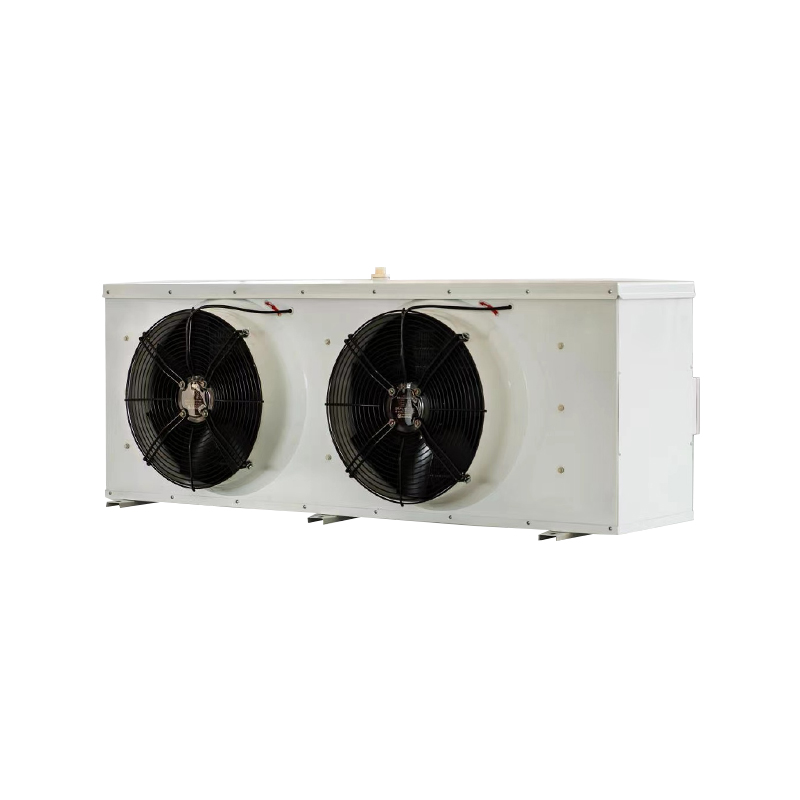
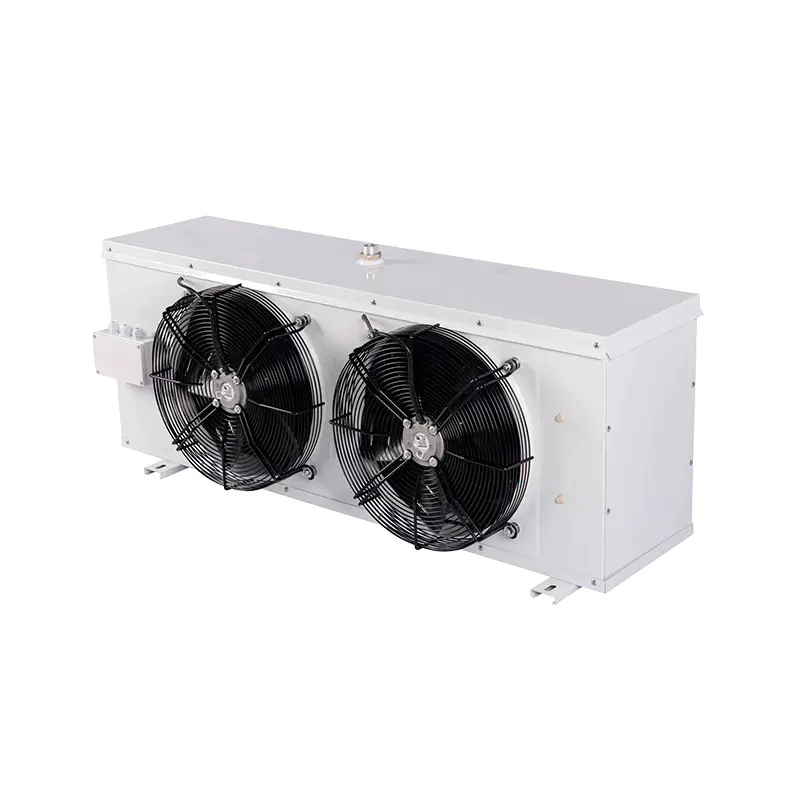 DJ Series Low-Temperature Evaporator for Quick-FreezingSuitable for quick-freezing warehouses below -25°C, with optimized refrigeration cycle, corrosion-resistant construction, and intelligent monitoring for low-temperature food, pharmaceutical, and chemical storage.View Product →
Component Choices That Decide Your Compliance Cost
Compliance is settled in the specification sheet, not at the commissioning visit. Four areas carry most of the risk.
Compressors
Ask for the refrigerant approval list before comparing price. Semi-hermetic compressors approved for a retrofit blend may need oil cooling because discharge temperatures run higher than with R-404A. Industrial systems moving to CO2 or ammonia use a different family altogether, and screw compressors become the usual choice once capacity and continuous duty enter the picture. Manufacturers such as Zhejiang Brozer Refrigeration Technology publish approval and pressure data per model, which is where a compliance conversation should start.
Condensers
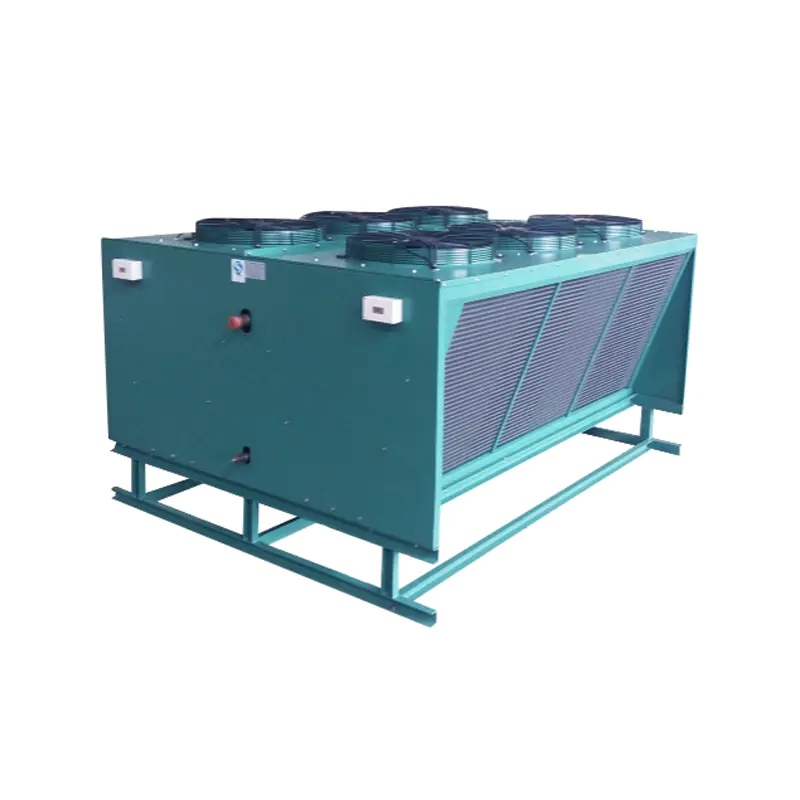
Pressure rating is the first filter. A transcritical CO2 high side can reach roughly 100-120 bar, against roughly 25-28 bar of conventional design for an R-404A system. That gap decides tube wall thickness, header design and relief valve selection long before it decides price. Air-cooled condensers and shell-and-tube water-cooled units are available with higher design pressures, but only if you specify them.
Condensing units and rack architecture
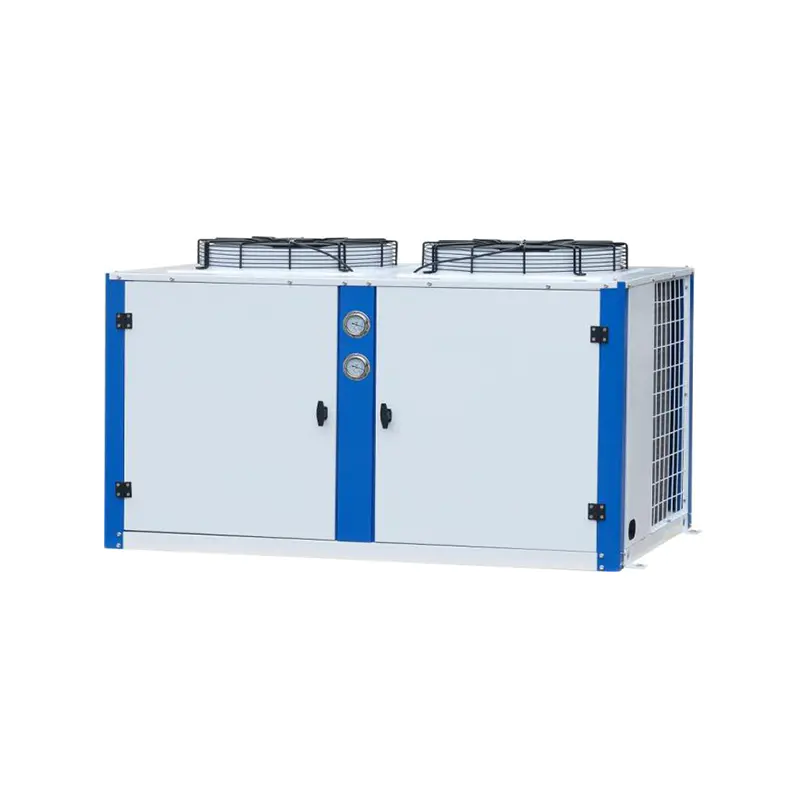
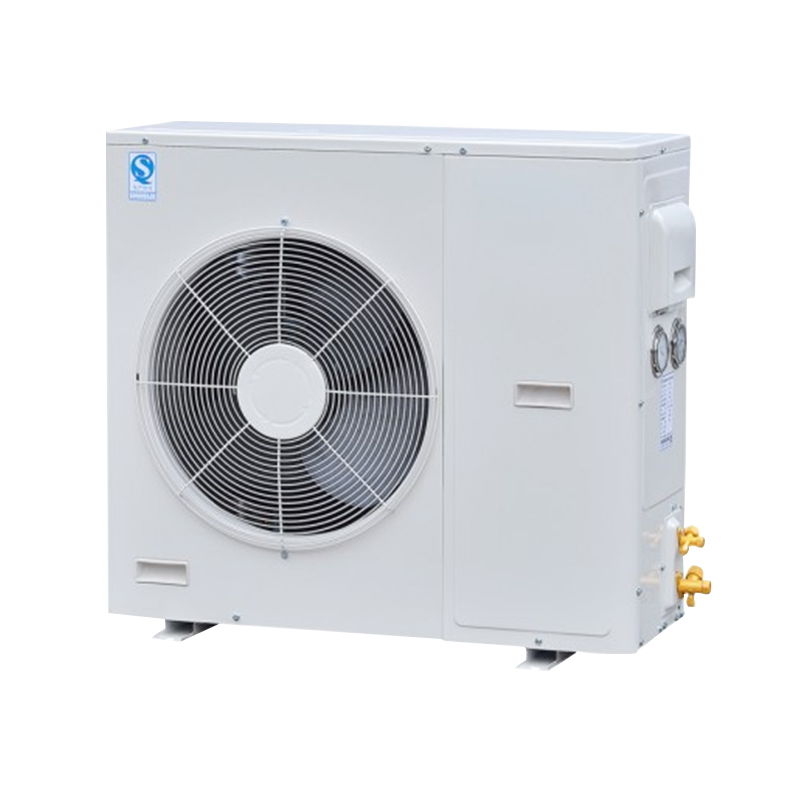
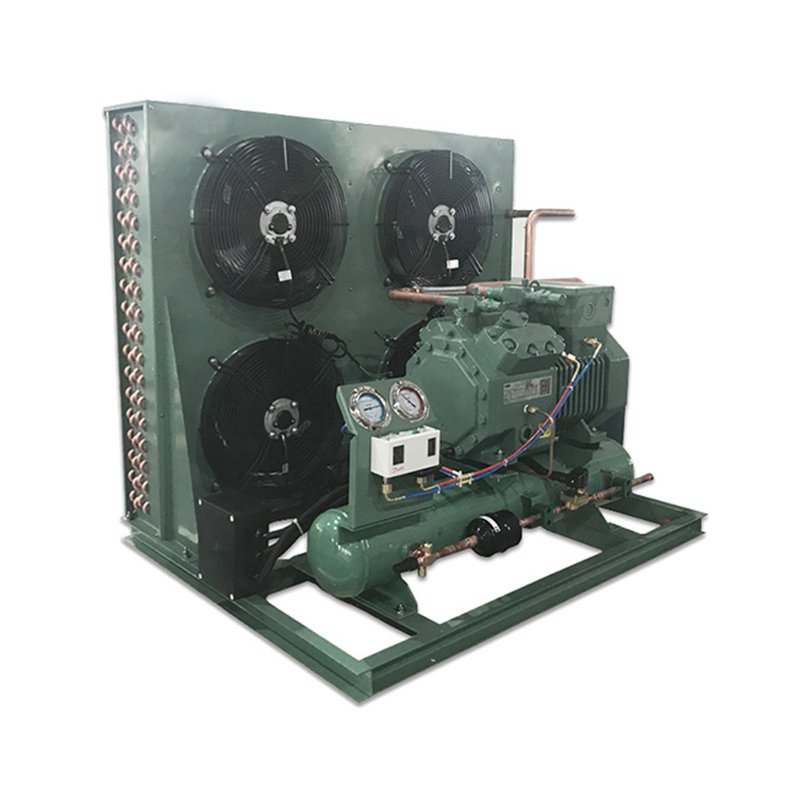
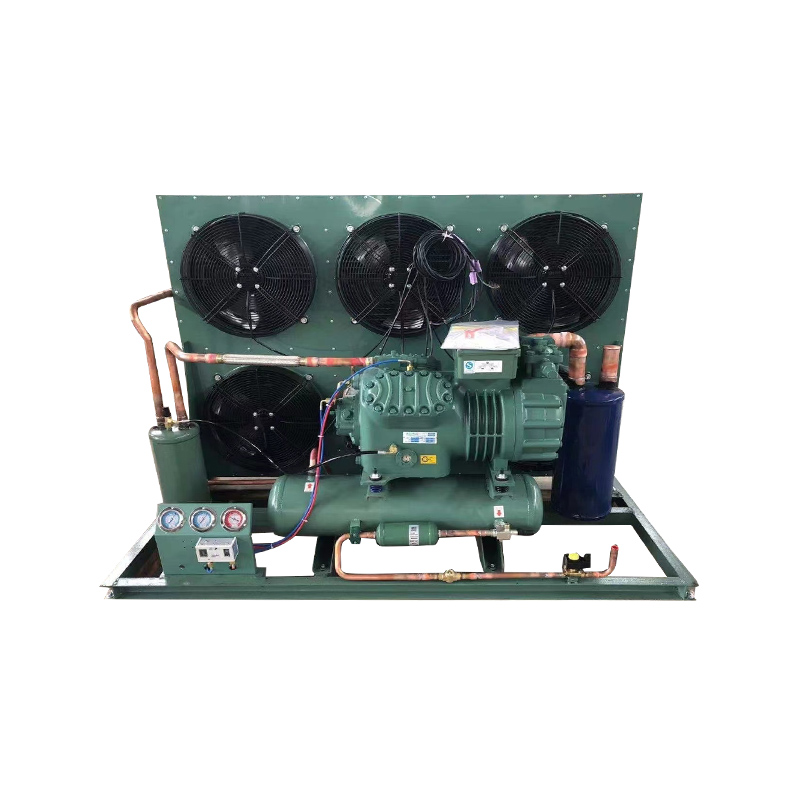
Parallel racks remain the standard for supermarket and distribution-centre loads, because they let you stage capacity and isolate one circuit for repair without shutting the whole room down. Box-type and open-type units cover smaller loads, while water-cooled condensing units suit indoor plant rooms where heat rejection is already handled.
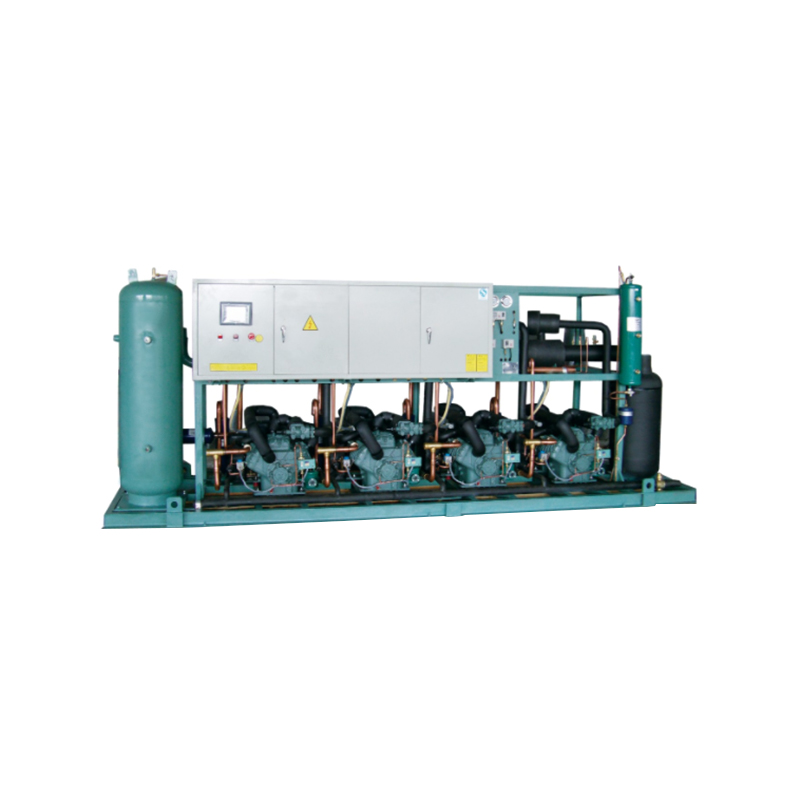 Parallel Condensing Unit for Supermarket and Cold StorageUses multiple parallel compressors and intelligent control to match refrigeration demand, offering reliable, efficient operation for supermarket and distribution-centre refrigeration loads.View Product →
Evaporators and accessories
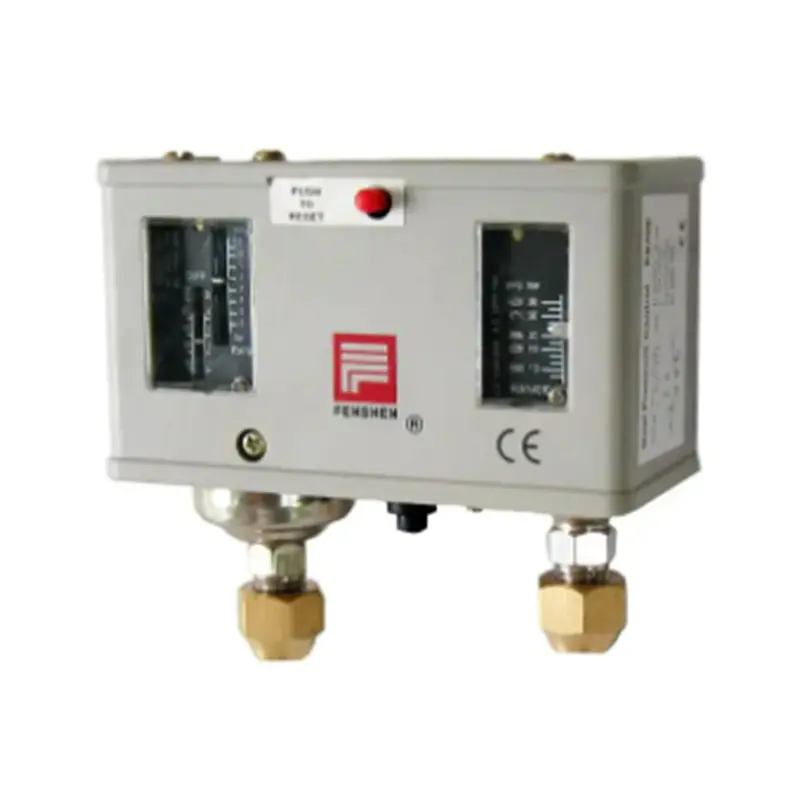
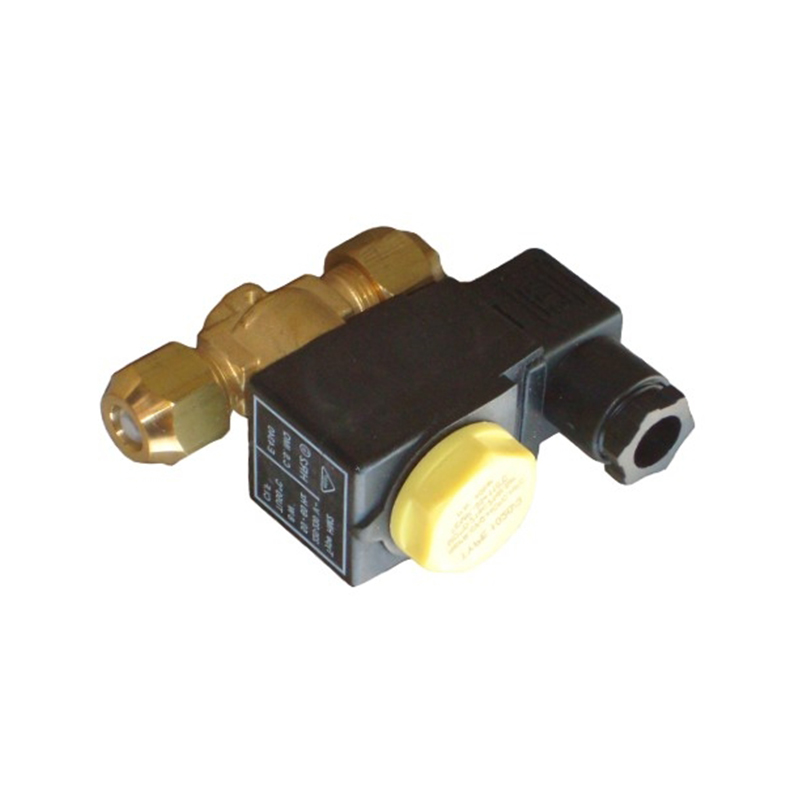
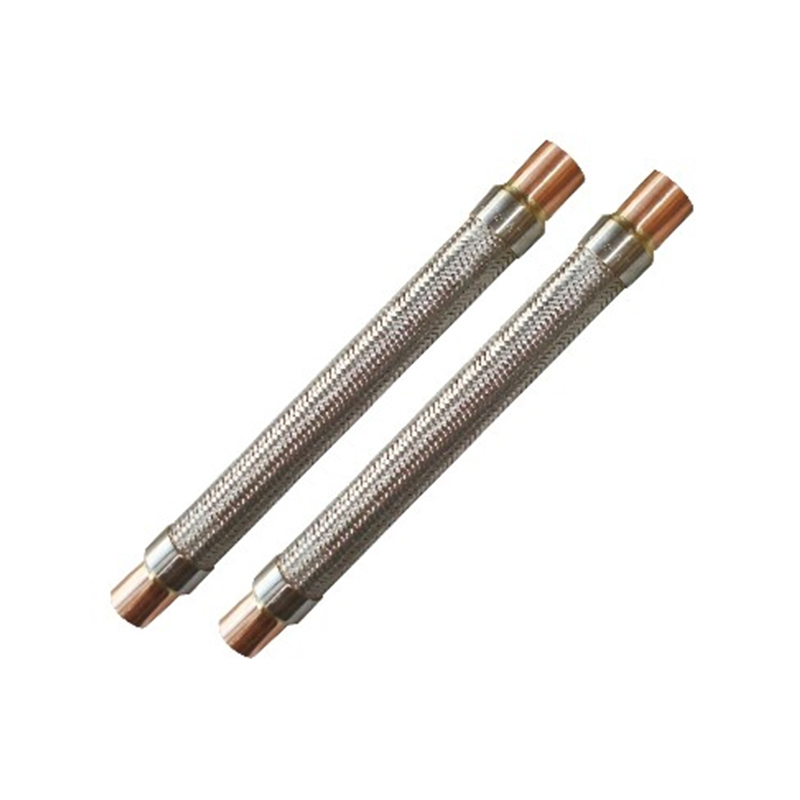
Match the evaporator class to the duty: DD for medium temperature, DJ for low temperature and DL for high temperature. Expansion valves must be sized for glide and for the correct pressure range, driers must carry the right pressure rating, and oil separators, pressure controllers, solenoid valves, sight glasses and vibration absorbers should be re-checked rather than reused by habit.
A Procurement Checklist for 2026 Projects
- Build a refrigerant inventory: model, refrigerant, charge in pounds, GWP, location and leak history for every system.
- Flag every appliance above 15 pounds carrying a refrigerant above the cutoff, then calculate leak rates for those that exceed the applicable percentage.
- Decide retrofit, conversion or replacement per rack, with a written reason rather than a default.
- Confirm refrigerant approvals and design pressures in writing before an order is placed.
- Recheck expansion devices, driers, seals and lubricants against the new fluid, not the old one.
- Standardise leak logs, repair verification and fault history across sites so a pattern appears before it becomes a repeat leak; a documented routine such as cold storage refrigeration system fault analysis is a reasonable template.
- Train technicians on A2L handling, detection equipment and the paperwork that has to survive an inspection.
Frequently Asked Questions
Does the 15-pound threshold mean I have to replace my R-404A rack?
No. Existing equipment can stay in service. The rule tightens leak repair, verification and recordkeeping. Replacement is a business decision driven by leak history, energy cost and future refrigerant availability.
Can new high-GWP equipment still be installed after January 1, 2026?
For many equipment categories, no. New equipment rules restrict what may be manufactured or imported, and the dates differ by category. Industrial process refrigeration, retail food refrigeration and cold storage warehousing do not share one deadline, so check the date that applies to the equipment you are buying.
Are A2L refrigerants suitable for large industrial rooms?
Charge limits and occupancy rules make A2L blends awkward for large industrial spaces, where CO2 and ammonia are more common. A2L fluids fit better in light commercial and small packaged equipment.
What should an operator collect first?
A refrigerant inventory: model, refrigerant, charge in pounds, GWP, location and leak history. That single list shows which assets cross the threshold and which ones need repair verification.
What to Do Before the Deadline
Build the inventory, calculate leak rates where the threshold applies, and freeze the equipment specification for anything commissioned after January 1, 2026. Then confirm refrigerant approvals, pressure ratings and evaporator classes on the hardware you intend to buy. The rule rewards the operator who reads a nameplate, refrigerant type, charge in pounds, design pressure, before the contractor arrives.