 English
 русский
 Tiếng Việt
Content
- 1 Industrial Water Chiller vs Air-Cooled Chiller: The Short Answer
- 2 How Each Chiller Rejects Heat
- 3 Key Differences at a Glance
- 4 Energy Efficiency and Operating Performance
- 5 Installation, Space, and Infrastructure
- 6 Maintenance, Reliability, and Service Life
- 7 How to Choose for Your Plant
- 8 Frequently Asked Questions
- 9 Conclusion
Industrial Water Chiller vs Air-Cooled Chiller: The Short Answer
If your plant runs a chiller more than 3,000 hours per year and has access to reliable cooling water, a water-cooled industrial chiller will usually deliver higher energy efficiency and a longer compressor life. If water is scarce, water treatment is a headache, or you need a fast, simple installation, an air-cooled chiller is the practical choice. That is the conclusion. The rest of this article explains why, with the numbers, risks, and site conditions that actually change the decision.
Consider a food processing plant in a dry region. It needs 500 kW of cooling for 6,000 hours a year. An air-cooled chiller might draw 180 kW, while a water-cooled unit with a cooling tower could draw 140 kW. The water-cooled option saves 40 kW per hour, but it also adds pumps, a tower, and water treatment. Whether those 40 kW outweigh the extra infrastructure and water demand is a system-level engineering question, not a slogan.
How Each Chiller Rejects Heat
Both types use a vapor compression cycle. The difference is where the condenser rejects heat. An air-cooled chiller uses fans to blow ambient air across a finned coil. A water-cooled chiller uses shell-and-tube or plate heat exchangers, and the heat goes into condenser water that is pumped to a cooling tower or a liquid cooler.
That single difference drives almost everything else. Air-cooled condensers must handle outdoor air temperatures that can reach 35°C or 45°C in summer. Water-cooled condensers usually see 30°C to 32°C water from a tower, and with a properly sized tower, the approach can be tighter. Lower condensing temperature means lower compressor discharge pressure and lower power draw.
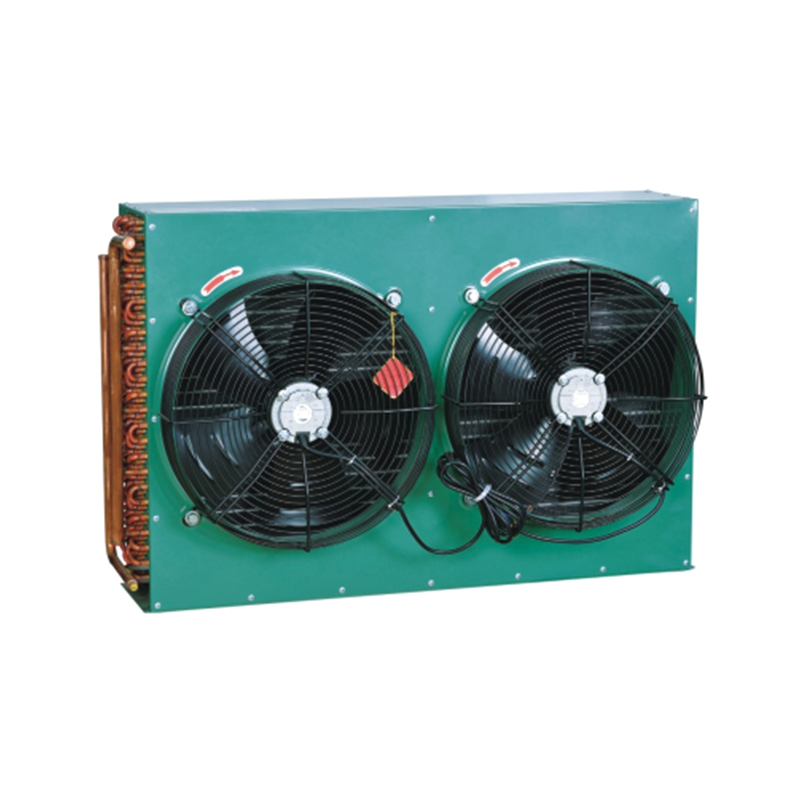 H Type Air Cooled Condenser with Plate-Side Air OutletProduct facts include staggered coils and mechanically expanded copper tubes with aluminum fins for high heat exchange efficiency, relevant when comparing air-cooled condenser designs.View Product →
 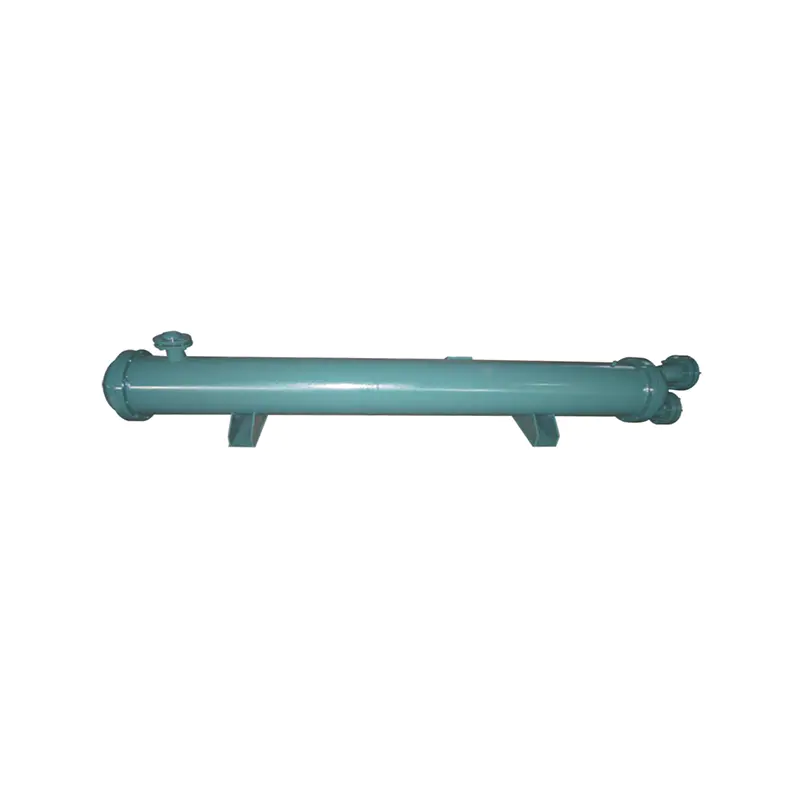 Shell and Tube Water-Cooling Condenser with Threaded Copper TubesUses high-efficiency externally threaded copper tubes and a safety fusible plug, fitting the water-cooled side of the condensing temperature comparison.View Product →
For a real-world example, a 200 kW air-cooled chiller might have a condensing temperature of 50°C on a 35°C day. A water-cooled chiller with a 32°C tower water supply might condense at 40°C. That 10 K difference can cut compressor power by 15% to 25%, depending on refrigerant and compressor type. If you want to understand how condenser surface area affects this, our article on condenser heat exchange surface area breaks down the physics.
Key Differences at a Glance
The table below summarizes the main trade-offs. Pay attention to the last two rows: they often decide the project when the site has high ambient temperatures or strict noise requirements.
| Factor | Air-Cooled Chiller | Water-Cooled Chiller |
|---|---|---|
| Heat rejection | Ambient air through finned coils | Cooling tower or water loop |
| Typical COP | 2.8 – 3.2 | 4.5 – 5.5 |
| Installation | Simple, rooftop or pad, no water piping | Requires tower, pumps, piping, water treatment |
| Footprint | Large outdoor area for airflow | Smaller chiller, but tower and pumps take space |
| Water use | None | Evaporation, blowdown, makeup water |
| Maintenance | Coil cleaning, fan and motor checks | Water treatment, tower cleaning, condenser descaling |
| Part-load efficiency | Good with variable speed fans | Excellent with variable speed drives and tower control |
| Capacity in extreme heat | Can derate on very hot days as condensing temperature rises | More stable, since performance follows wet-bulb temperature |
| Noise | Fan noise at the unit, rising with ambient temperature | Generally quieter; noise sources can be located remotely |
Energy Efficiency and Operating Performance
The efficiency gap is real but not constant. It depends on ambient temperature, load profile, and how well the cooling tower is controlled. In a hot climate, an air-cooled chiller’s capacity and efficiency drop as the day heats up. A water-cooled chiller’s performance depends more on the tower’s approach to wet-bulb temperature, which is usually lower than dry-bulb.
Typical full-load COP ranges. Actual values vary with refrigerant, compressor type, and condenser design.
For a 500 kW load running 6,000 hours a year, a COP difference of 1.5 translates into roughly 200,000 kWh of electricity per year, along with a matching reduction in electrical demand and indirect carbon emissions. That advantage only holds if the tower is well maintained and makeup water is reliably available. If water supply is limited, water use is restricted, or the load runs fewer than 2,000 hours a year, the air-cooled system often turns out to be the better fit.
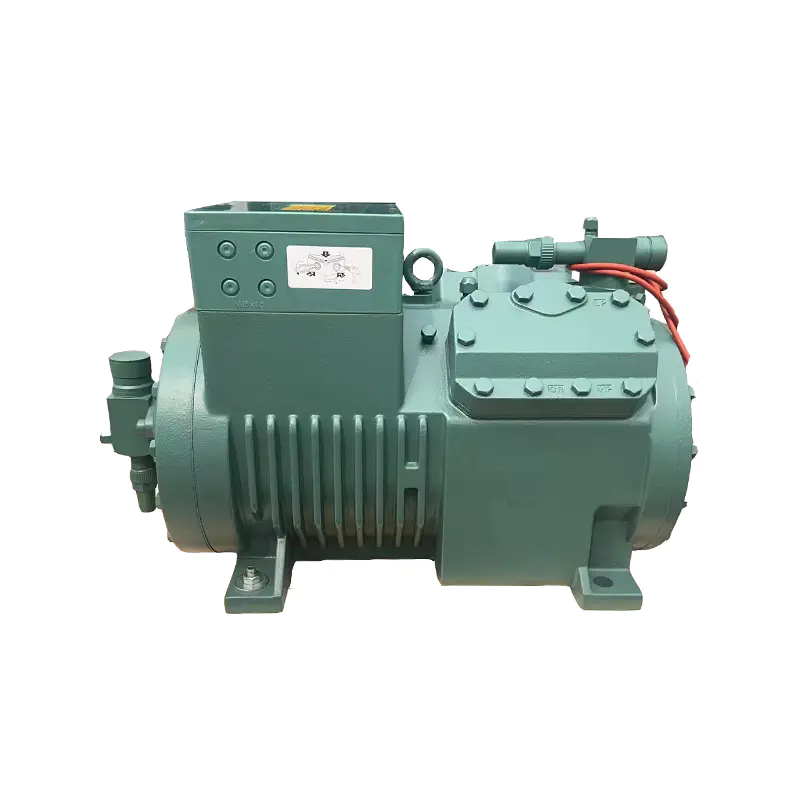 Screw Compressor with Symmetrical Spiral Yin and Yang RotorsFeatures opposite-rotating concave rotors and oil-film-driven female rotor operation, worth reviewing when compressor selection affects water-cooled system efficiency.View Product →
Compressor selection matters here. A screw compressor with variable volume ratio can track the lower condensing pressure in a water-cooled system more efficiently than a fixed-ratio compressor. That is why many industrial water-cooled chillers use screw or scroll compressors with capacity control.
Installation, Space, and Infrastructure
Air-cooled chillers are the simpler installation. You need a structural pad or roof curb, electrical power, and enough clearance for airflow. There is no cooling tower, no condenser water pump, and no water treatment system. For a temporary or rental installation, that simplicity is hard to beat.
Water-cooled chillers require more coordination. You need a cooling tower or a water loop, pumps, piping, valves, a water treatment program, and freeze protection in cold climates. The chiller itself may be smaller than an equivalent air-cooled unit, but the total mechanical room footprint can be larger once the tower and pumps are included. In urban buildings where outdoor air is limited, water-cooled chillers are often the only way to fit the required capacity.
One risk to watch: air-cooled chillers can lose capacity on hot days because the condenser cannot reject heat as effectively. If your process needs guaranteed 7°C water on a 40°C afternoon, you may need to oversize the air-cooled chiller or add adiabatic pre-cooling. A water-cooled chiller with a properly sized tower is less sensitive to dry-bulb spikes.
Maintenance, Reliability, and Service Life
Air-cooled chillers have fewer auxiliary systems, which means fewer things to break. The main tasks are cleaning the condenser coils, checking fan blades and motors, and verifying refrigerant charge. In dusty environments, coil cleaning may be needed monthly. In clean environments, quarterly is often enough.
Water-cooled chillers add a cooling tower, pumps, and water treatment. The tower needs regular cleaning to prevent algae and scale. The condenser tubes need brushing or chemical descaling depending on water quality. Water treatment chemicals must be monitored, and the system must be protected from freezing in winter. If water treatment is neglected, scale can reduce heat transfer and raise condensing pressure, wiping out the efficiency advantage.
- Air-cooled: coil cleaning, fan motor lubrication, electrical checks, refrigerant leak detection.
- Water-cooled: tower basin cleaning, strainer cleaning, water chemistry testing, condenser descaling, pump inspection.
Reliability is similar when both are maintained. However, water-cooled systems have a higher risk of downtime from water-related issues: pump failure, tower fan failure, or fouling. Air-cooled systems are more tolerant of neglect, but they are exposed to weather and can suffer from hail damage, corrosion, or debris.
How to Choose for Your Plant
Use this checklist to make the decision. If you answer “yes” to most items in one column, that type is the better fit.
Choose an air-cooled chiller when:
- Water is scarce, restricted, or not permitted.
- Annual operating hours are below 2,000.
- You need a fast installation with minimal infrastructure.
- The chiller will run in a mild climate or with reliable ventilation.
- You want a simpler system with fewer auxiliary components and easier maintenance.
Choose a water-cooled chiller when:
- Annual operating hours exceed 3,000 and energy efficiency is a priority.
- You have space for a cooling tower and can manage water treatment.
- Ambient temperatures are high or humid, reducing air-cooled efficiency.
- You need a smaller chiller footprint or lower noise near occupied areas.
- You can accommodate a more complex system in exchange for higher efficiency and more stable capacity in hot weather.
Also consider partial-load operation. If your plant runs at 40% to 60% load most of the time, a water-cooled chiller with variable speed drives and optimized tower control can maintain high efficiency. An air-cooled chiller with variable speed fans also performs well, but its condenser temperature still floats with outdoor air.
Frequently Asked Questions
Can I convert an air-cooled chiller to water-cooled?
In some cases, yes. You can add a water-cooled condenser and a cooling tower, but the compressor, expansion valve, and controls may need to be re-rated. It is usually more practical to replace the chiller than to convert it.
Which type is quieter?
Water-cooled chillers are generally quieter because the condenser is remote and the cooling tower can be placed away from sensitive areas. Air-cooled chillers produce fan noise that increases with ambient temperature.
How much water does a water-cooled chiller use?
A cooling tower evaporates about 1.5 to 2 liters per kWh of cooling, plus blowdown. For a 500 kW chiller running 6,000 hours, that can be millions of liters per year. Local water availability and usage restrictions are critical factors.
Do I need a water treatment program?
Yes, if you want the efficiency and life expectancy that water-cooled chillers promise. Untreated water causes scale, corrosion, and biological growth that can increase energy use and lead to tube failures.
Conclusion
There is no universal winner in the industrial water chiller vs air-cooled chiller debate. The right choice depends on your load profile, climate, water availability, maintenance capability, and operational priorities. Evaluate your specific site: compare annual energy consumption, water use and treatment requirements, maintenance workload, and reliability over a 10-year horizon. If you need help specifying condensers, compressors, or complete condensing units for either system, Zhejiang Brozer Refrigeration Technology can support the selection with components and assemblies built for industrial refrigeration.
Start with the load profile and operating hours. Those two numbers will usually point you toward the correct chiller type before you even open a catalog.