 English
 русский
 Tiếng Việt
Content
How to Determine If There Is a Refrigerant Leak
A refrigerant leak is confirmed when system pressures fall below manufacturer specifications, superheat readings exceed 10–15°F above normal, or electronic leak detectors register concentrations above 0.1 oz/year. Under EPA Section 608, commercial systems containing 50 or more pounds of refrigerant must be repaired when leak rates exceed 10% for comfort cooling or 20% for commercial refrigeration within a 12-month period.
Direct Detection Methods
Direct methods physically identify refrigerant in the atmosphere or system components. Electronic leak detectors using heated diode or infrared sensors remain the industry standard for pinpointing leak locations during service calls, with modern units achieving sensitivity down to 0.1 oz/year. Ultrasonic detectors excel in noisy mechanical rooms by capturing the high-frequency sound waves produced by escaping pressurized gas, requiring no refrigerant-specific calibration.
UV fluorescent dye offers visual confirmation of slow leaks over time but requires 24–72 hours of system operation before inspection. For manufacturing quality control, helium leak testing has become the gold standard, detecting micro-leaks that pressure decay or bubble tests miss.
Indirect Detection Methods
Indirect monitoring analyzes system behavior anomalies to flag potential leaks before physical detection. IoT pressure and temperature sensors provide real-time baseline data that detects charge loss within hours of onset—critical for data centers and hospitals. A declining subcooling value or increasing superheat often indicates refrigerant loss before alarms trigger.
Leak Rate Calculation
Calculate annual leak rate using the formula: (total pounds added ÷ total full charge) × 100. For example, adding 6 pounds to a 30-pound charge yields a 20% annual leak rate. Facilities must maintain records of all refrigerant purchases, charges, recoveries, and disposals for a minimum of three years.
| Detection Method | Sensitivity | Best Application | Limitation |
|---|---|---|---|
| Electronic (Infrared) | 0.1 oz/year | Service calls, pinpointing leaks | Requires technician presence |
| Ultrasonic | Pressurized leaks only | Noisy mechanical rooms | Cannot detect static leaks |
| UV Dye | Slow leaks | Intermittent or micro-leaks | 24–72 hour delay for results |
| IoT Sensors (NDIR) | PPM levels | Continuous monitoring | Higher initial investment |
When Should the Door Seal Be Replaced
Replace door seals immediately when visible cracks, tears, or deformation appear, when the seal fails the dollar-bill test (resistance felt when pulling a bill from the closed door), or when condensation forms excessively around the seal perimeter. A compromised seal forces compressors to run 15–30% longer to maintain set temperatures, directly increasing energy consumption and shortening equipment lifespan.
Visual and Physical Inspection Criteria
Inspect gaskets monthly for these failure indicators:
- Cracks, rips, or torn corners in the gasket material
- Hardening or loss of elasticity—proper seals should compress and rebound when pressed
- Mold or mildew buildup indicating moisture infiltration
- Gaps or uneven contact when the door closes
Performance-Based Replacement Triggers
Beyond visual inspection, operational symptoms signal seal failure. If the unit runs continuously, struggles to reach set temperature, or exhibits frost buildup on evaporator coils, the seal likely admits warm ambient air. For industrial cold rooms and reach-in units, perform the dollar-bill test weekly: insert a bill between the door and frame at multiple points. If it slides out without resistance at any location, the seal requires replacement.
Material Selection for Replacement
Select gasket material based on operating temperature and refrigerant compatibility. Nitrile (NBR) suits temperatures from -40°C to +120°C and works with R-134a, R-404A, and R-407C. EPDM handles -50°C to +150°C with superior ozone resistance but is incompatible with mineral oils. For ammonia or CO₂ systems, PTFE or specialized FKM (Viton) grades provide chemical inertness up to +260°C.
How to Monitor the Refrigeration Oil Level
Maintain oil levels at the midpoint of the sight glass, never allowing levels to drop below 1/4 of the sight glass height during operation. Screw compressors require an oil pressure differential between 1.4 and 3.5 bar, while reciprocating units depend on splash or pump-fed lubrication with levels checked every six months under normal operation.
Sight Glass Monitoring Procedure
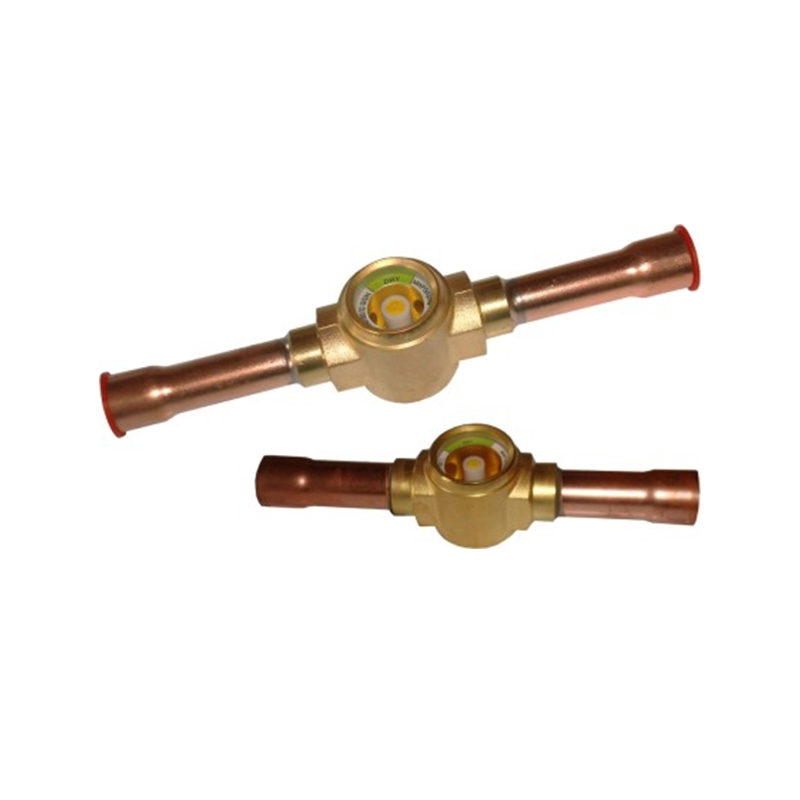
Most commercial compressors feature an oil level sight glass mounted on the crankcase or oil separator. Check levels only when the compressor is running and stabilized—oil levels appear lower when the unit is off due to drainage from passages. The optimal reading places the oil meniscus at the center mark. If the level falls below the lower quarter mark, add compatible refrigeration oil immediately to prevent bearing damage.
Oil Pressure Verification
For screw compressors equipped with oil pumps, connect a pressure gauge to the needle valve on the oil pump suction line. The oil pump suction pressure should approximate the compressor low-side suction pressure. Monitor the oil pressure differential (oil pump discharge minus suction) which must remain within 1.4–3.5 bar. Differentials below 1.4 bar indicate filter clogging, pump wear, or insufficient oil charge.
Oil Quality and Contamination Checks
Oil color indicates system health. Clear or light amber oil signals normal operation. Dark brown or black oil suggests oxidation or contamination from overheating. Milky or foamy oil indicates refrigerant dilution or moisture intrusion—common after low-side leaks or improper evacuation. If contamination is present, replace the oil and filter drier, then evacuate the system to below 500 microns before recharging.
| Compressor Type | Sight Glass Level | Oil Pressure Differential | Check Frequency |
|---|---|---|---|
| Reciprocating | 1/2 to 3/4 full | N/A (splash lubrication) | Every 6 months |
| Screw (with oil pump) | Midpoint of sight glass | 1.4–3.5 bar | Monthly |
| Scroll | Factory sealed | N/A | Visual inspection only |
How Often Should a High and Low Temperature Test Chamber Be Calibrated
High and low temperature test chambers require calibration every 12 months for standard laboratory use, every 6 months for high-frequency or critical applications, and every 3 months for aerospace or semiconductor testing where temperature deviation must stay within ±0.5°C. ISO/IEC 17025-accredited facilities must maintain traceable calibration records with measurement uncertainty documented.
Calibration Frequency by Application
For chambers used daily in continuous testing cycles, quarterly calibration prevents sensor drift caused by thermal cycling stress. Chambers used only for quarterly product validation still require annual calibration because prolonged idleness may decrease sensor sensitivity or cause mechanical component seizure. Environmental factors matter: chambers operating in humid, dusty, or corrosive environments need 6-month cycles to offset accelerated aging of temperature sensors and heating elements.
Key Calibration Parameters
A comprehensive calibration validates three critical metrics:
- Temperature uniformity: Maximum difference between any two points within the workspace at steady state
- Temperature fluctuation: Variation at a single point over time during stable operation
- Temperature deviation: Difference between displayed setpoint and actual measured center-point temperature
Calibration Methodology
Perform no-load calibration first by placing calibrated RTD or thermocouple sensors at the chamber geometric center and corners. Record readings at setpoints spanning the operational range—typically -40°C, 0°C, and +85°C for standard chambers. Follow with loaded calibration using actual product fixturing to verify thermal mass effects do not exceed tolerance. For critical applications, conduct monthly spot checks with a standard thermometer at key temperature points between full calibrations.
FAQ About Refrigeration System Maintenance
What causes refrigerant leaks most frequently?
Vibration-induced fatigue at brazed joints, corrosion of copper lines in acidic environments, and failed flare fittings account for over 70% of service-call leaks. Modern systems using R32 or R410A operate at higher pressures than legacy R22 units, increasing stress on mechanical connections.
Can a refrigeration system run with low oil?
Operating below 1/4 sight glass level risks catastrophic compressor failure within 48–72 hours. Oil starvation causes bearing seizure, scored crankshafts, and metallic debris circulation that contaminates the entire system. Low oil pressure differentials in screw compressors trigger automatic safety shutdowns precisely to prevent this damage.
How do I know if my door seal is failing before visible damage appears?
Monitor compressor runtime hours. A 20% increase in daily runtime without setpoint changes strongly indicates seal leakage. Infrared thermometer measurements showing temperature gradients exceeding 2°C along the door perimeter also reveal seal compromise before physical deterioration becomes visible.
What happens if I skip test chamber calibration?
Uncalibrated chambers produce test data that fails ISO 17025 audit requirements, invalidates product certifications, and risks customer rejection of qualification batches. Sensor drift of just 1°C at -40°C can shift polymer brittleness results or semiconductor failure thresholds, leading to false pass/fail determinations.
Is UV dye safe for all refrigerants?
Most UV dyes are compatible with CFC, HCFC, and HFC refrigerants including R134a, R404A, and R410A. However, some manufacturers void warranties for dye injection in certain compressor models. Always verify compatibility with the OEM before adding dye, particularly for systems using POE oil which has strong hygroscopic properties.