 English
 русский
 Tiếng Việt
Content
- 1 1. Start with the Real Heat Load
- 2 2. Decide the Leaving Water Temperature and Tolerance
- 3 3. Choose an Air-Cooled or Water-Cooled Condenser
- 4 4. Match the Compressor to the Capacity Range
- 5 5. Verify Pump Flow and Pressure Drop
- 6 6. Check the Operating Environment
- 7 7. Compare Part-Load Efficiency, Not Just Full-Load Tonnage
- 8 8. Plan for Controls and Maintenance
- 9 Final Selection Checklist
- 10 Frequently Asked Questions
If a factory chiller is too small, you will see process temperatures drift every afternoon. If it is too large, the compressor cycles too often, part-load efficiency drops, and the evaporator can freeze up. That is why the first step is not to pick a brand or a horsepower rating, but to define the heat load and the leaving water temperature in numbers.
This guide walks through the seven decisions that determine whether a water chiller suits a factory: heat load, leaving water temperature, condenser cooling source, compressor type, flow and pressure, operating environment, and maintenance.
1. Start with the Real Heat Load
The required cooling capacity is the amount of heat that must be removed from the process water per hour. Calculate it from process fluid flow and temperature difference: kW = flow (m3/h) x temperature difference (°C) x 1.16. In imperial units: tons = GPM x temperature difference (°F) / 24.
Do not size from the pump's maximum flow alone. A pump can deliver 20 m3/h while the process only removes 15 m3/h, and the extra water will mask the true load. The safer approach is to measure the temperature difference across the process under full production, then add a 10–20% safety factor. Avoid oversizing above 30%; it raises first cost and makes the chiller unstable at light load.
2. Decide the Leaving Water Temperature and Tolerance
Your process requirement determines the leaving water temperature (LWT), not the chiller. Most general factory processes run with LWT between 7°C and 12°C. If you only need to cool hydraulic oil or molds, a LWT of 15–18°C is more efficient. If the process uses brine or glycol, LWT can be -5°C to 5°C.
- 15°C to 25°C: mold cooling, hydraulic oil, welders, and comfort cooling.
- 7°C to 12°C: general process water, reactors, and industrial HVAC loops.
- -5°C to 5°C: glycol or brine loops for low-temperature reactors and cold storage.
Once you fix LWT, check how tightly it must be held. A process that needs +/-0.5°C will require a buffer tank and a precisely matched expansion valve, not just a larger chiller. A buffer tank sized to 3–5 minutes of pump flow is a simple way to reduce short-cycling.
3. Choose an Air-Cooled or Water-Cooled Condenser
The condenser is where the chiller rejects heat to the outside. Air-cooled machines are easier to install and need no water treatment. Water-cooled machines are more efficient in hot factories and can be paired with a cooling tower or an existing plant water loop.
| Item | Air-cooled | Water-cooled |
|---|---|---|
| Installation | Fast and self-contained | Requires cooling tower or city water |
| Energy at part load | Good in mild climates | Better in hot or year-round warm climates |
| Maintenance | Clean condenser coil regularly | Control scale, algae, and water quality |
| Space | Needs outdoor airflow area | Indoor footprint plus tower space |
| Typical noise | Fan noise is higher | Mostly pump and tower noise |
If the factory has dusty air, a V-shaped air-cooled condenser with coated fins is usually easier to keep clean than a horizontal unit.
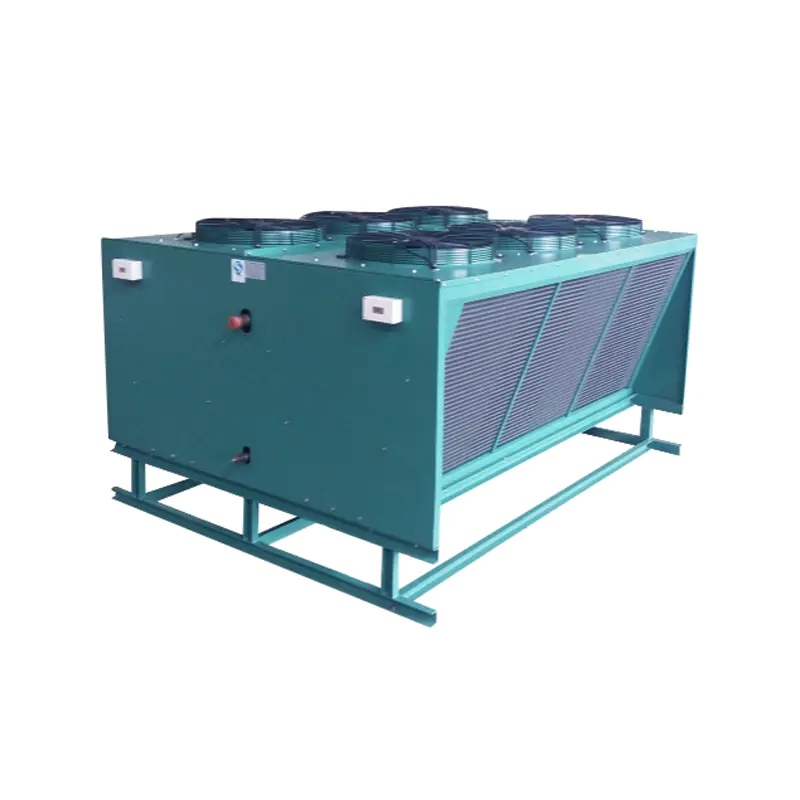 V-Type Air Cooled Condenser with Corrosion-Resistant Coated FinsThis V-shaped air-cooled condenser suits dusty factory environments where cleaning access matters. Its coated fins and phosphated steel shell are designed to resist corrosion and simplify maintenance.View Product →
If you decide to use water cooling, specify condenser water entering temperature between 25°C and 32°C, and check the required flow rate and allowable pressure drop.
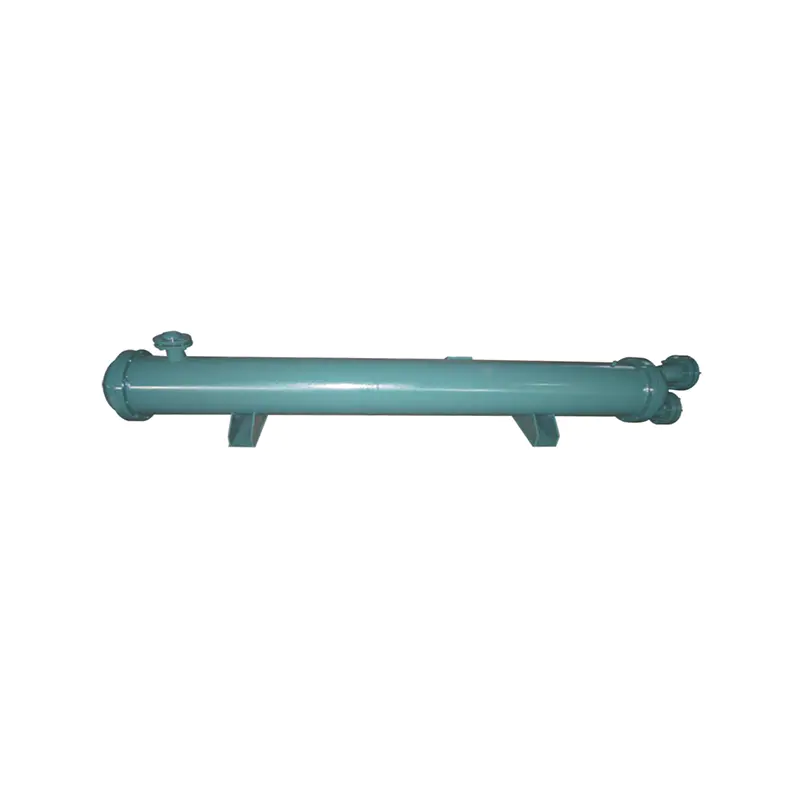 Shell-and-Tube Water-Cooled Condenser with Safety Relief PlugWater flows inside externally threaded copper tubes while refrigerant condenses between them. This compact design offers efficient heat exchange, and the safety fusible plug provides pressure relief protection.View Product →
4. Match the Compressor to the Capacity Range
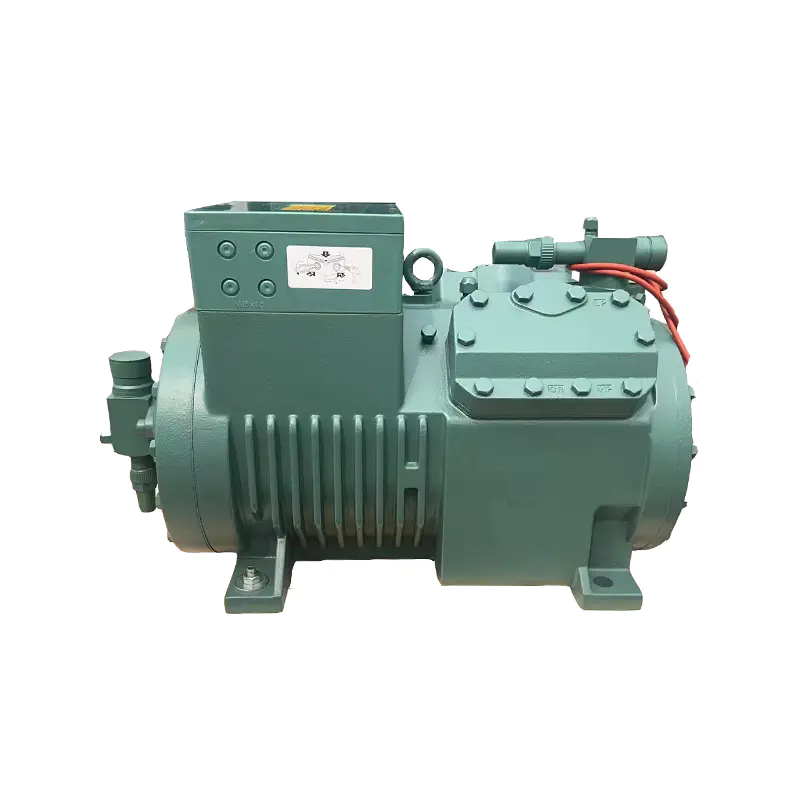
A factory chiller's compressor must deliver steady capacity at full load and still control smoothly at the lowest production shift. Scroll compressors are common up to around 30 tons; screw compressors cover most 30–300 ton applications; semi-hermetic reciprocating compressors offer flexible capacity and easy service.
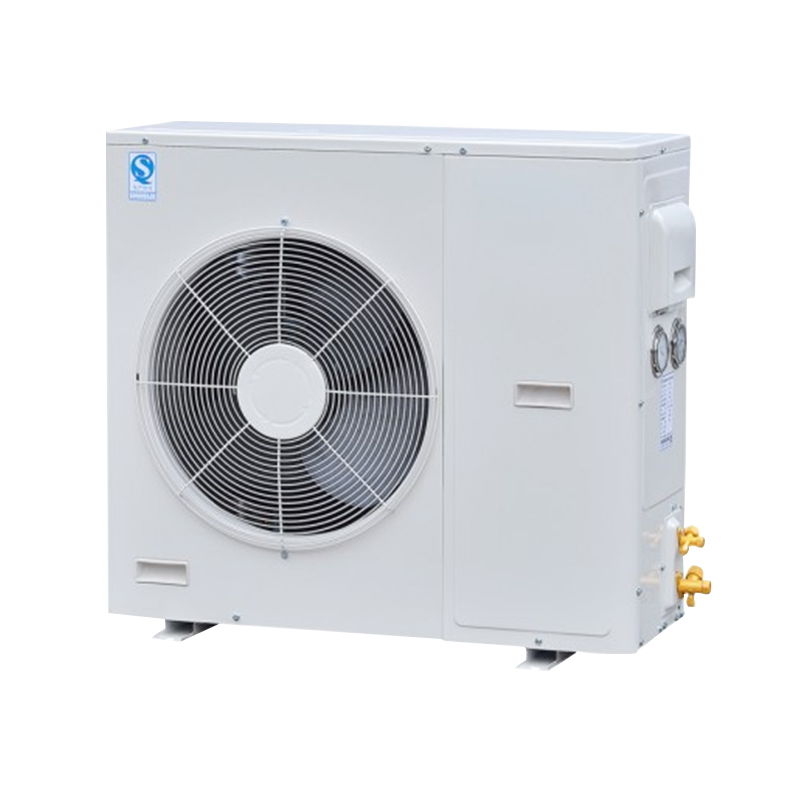
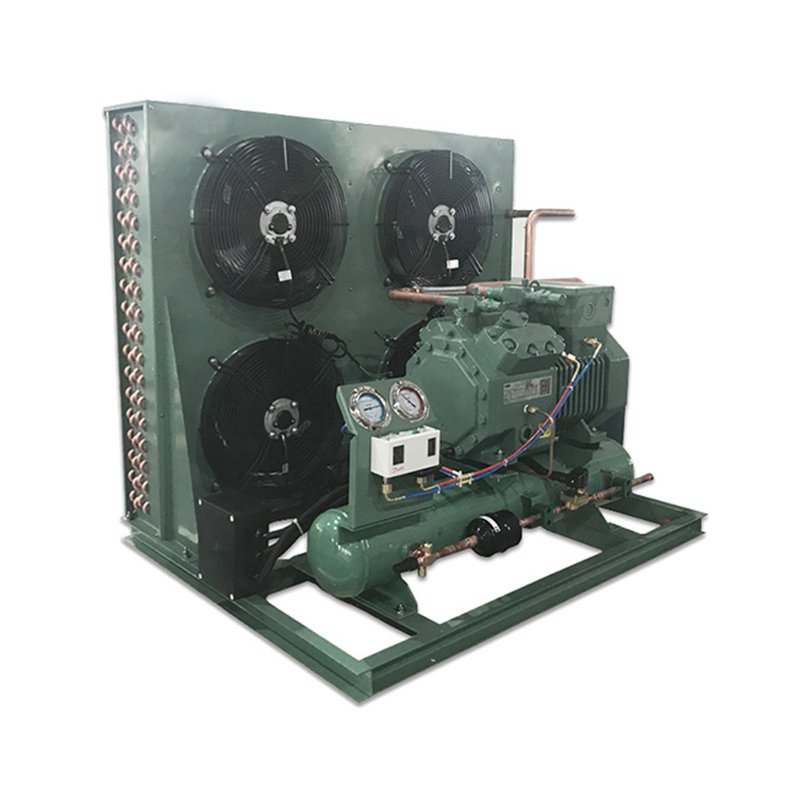
For water-cooled machines, a pre-assembled water-cooled condensing unit saves engineering time because the compressor, oil control, pressure controls, and receiver are already matched. It is especially useful when you want a maintenance-friendly layout.
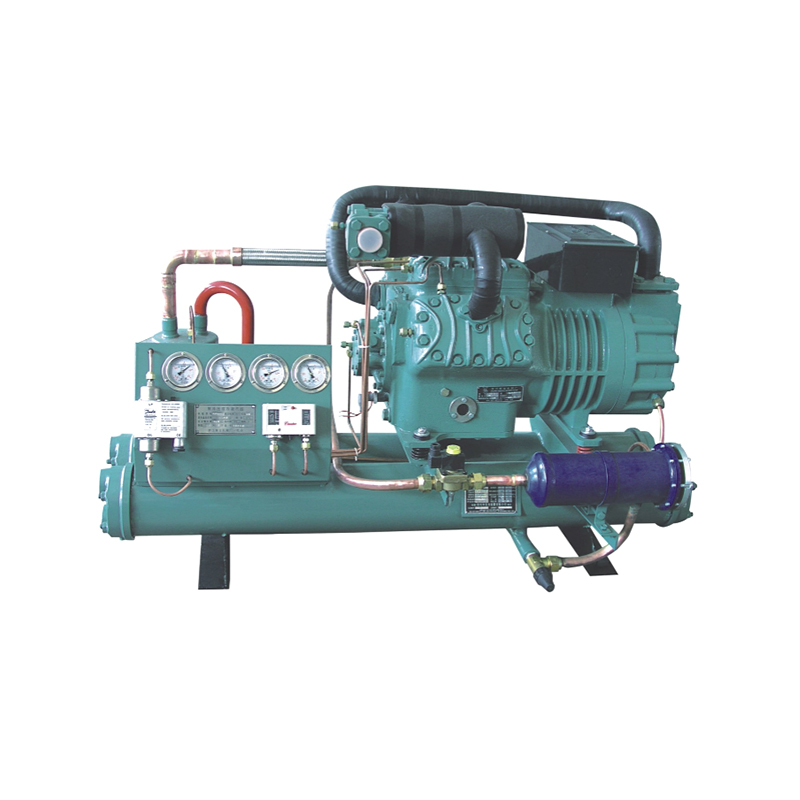 Water-Cooled Condensing Unit with Matched ComponentsThis pre-assembled water-cooled condensing unit pairs the compressor, evaporator, expansion valve, and controls. It is suited for engineered installations needing strong cooling capacity and lower energy consumption.View Product →
Whatever capacity you choose, require performance data at standard rating conditions and also at your actual LWT and ambient temperature. A 100-ton machine rated at AHRI conditions can only produce 80 tons on a hot afternoon if the condenser is undersized.
5. Verify Pump Flow and Pressure Drop
A chiller is not just a compressor and condenser; the hydraulics decide whether you achieve the setpoint. You need enough flow to create a sensible temperature difference, but not so much that the evaporator is starved or eroded.
Use this quick flow check for water: m3/h = required kW / (temperature difference (°C) x 1.16). For a 100 kW load at a 5°C delta-T, you need about 17.2 m3/h. Ask the supplier for the evaporator's water-side pressure drop at that flow. If the drop is above 70 kPa, your pump selection and piping cost start to climb.
Do not forget the buffer tank. If the smallest production shift creates a small heat load, the chiller will short-cycle without buffer volume. A simple rule is 3–5 minutes of pump flow at full load.
6. Check the Operating Environment
The same chiller model can perform very differently in two factories. Air-cooled condensers must be installed where hot exhaust air cannot recirculate. In a low-roof or enclosed plant, condensing pressure rises, capacity falls, and energy per ton goes up.
- Ambient above 40°C: derate air-cooled capacity or choose water cooling.
- Altitude above 1,000 m: lower air density reduces airflow; adjust fan and compressor selection.
- Aggressive air: coastal salt, chemical vapor, and plating lines need coated fins and corrosion-resistant panels.
- Indoor installation: plan for ducted exhaust or a remote condenser.
A remote V-type condenser can be separated from the compressor area, which helps when the factory floor is short on space or heavy with dust.
7. Compare Part-Load Efficiency, Not Just Full-Load Tonnage
Factories rarely run at 100% load all year. A chiller with 0.9 kW/ton at full load but poor unloader control can consume more energy than a slightly lower full-load unit that tracks part load well. Compare IPLV when available, and request data at 25%, 50%, 75%, and 100% load.
The operating cost over five years is usually far larger than the first purchase price. The chart below shows a typical ten-year cost split for a factory water chiller.
Use this split to justify a higher-efficiency condenser or a variable-speed pump if the payback is below two or three years.
8. Plan for Controls and Maintenance
Factory water chillers often run unattended, so protection components decide whether a small fault becomes a failed compressor. A flow switch, high/low pressure controller, anti-freeze thermostat, and phase monitor should be standard. Low condensing pressure behavior matters in winter, because an unloaded chiller can lose oil return and freeze the evaporator.
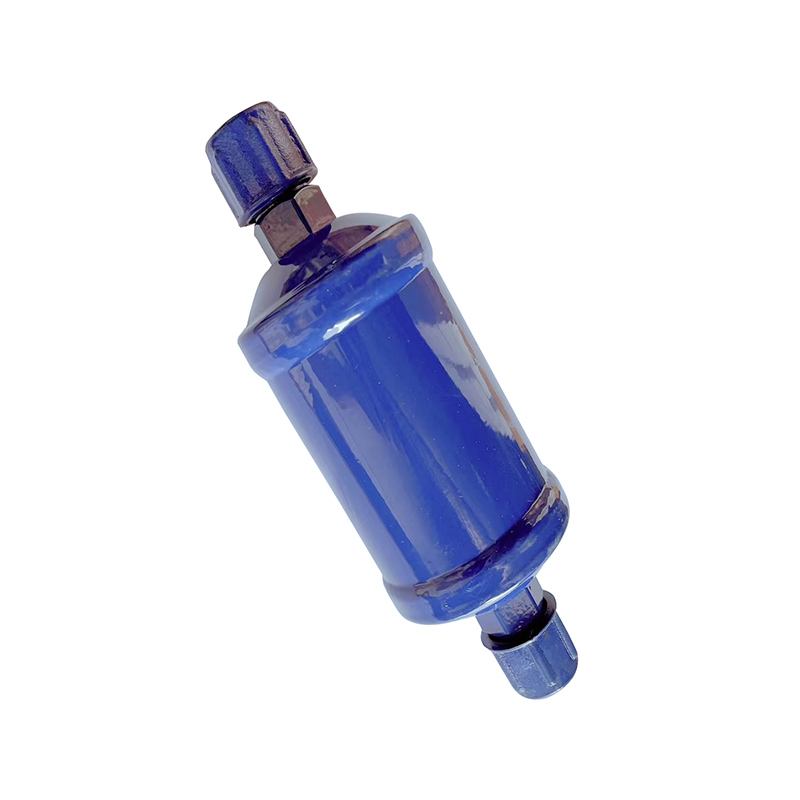
Blockages in the filter drier, expansion valve, or oil return line are common causes of performance loss. Systematically diagnosing pipeline blockage is faster than changing parts randomly. For water-cooled systems, the maintenance program should start with water treatment, not with refrigerant leaks.
Final Selection Checklist
Before you ask for quotes, put the following numbers into one specification sheet:
- Required capacity in kW or tons, including a 10–20% safety factor.
- Leaving water temperature and allowed tolerance.
- Condenser type: air-cooled, water-cooled, or remote condenser.
- Compressor type and rating at your actual operating conditions.
- Evaporator flow rate and maximum pressure drop.
- Buffer tank volume and pump head.
- Ambient design temperature and altitude factor.
- Part-load efficiency and expected annual operating hours.
A water chiller is a long-term asset. When you document these details, suppliers can quote compatible equipment, and you can compare based on lifecycle cost instead of only the purchase price.
Frequently Asked Questions
What size water chiller do I need for a factory?
Measure the actual process heat load with flow x temperature difference, then add 10–20% safety. For a rule of thumb, 1 ton of cooling equals about 3.5 kW. For hydraulic cooling, use the amount of motor input power that ends up as heat.
Should I choose an air-cooled or water-cooled chiller?
Air-cooled is simpler and costs less to install. Water-cooled is more efficient in large factories or hot climates, but it requires a cooling tower, water treatment, and more piping maintenance.
Can a condensing unit be used to build a factory water chiller?
Yes. A condensing unit with a matched water-cooled condenser and evaporator is the core of a chiller. Ask the manufacturer to rate the condensing unit, evaporator, and controls together at your leaving water temperature.