 English
 русский
 Tiếng Việt
Content
- 1 How Evolving Energy Efficiency Regulations Are Driving Accessory Technology Iteration
- 2 Cold Chain Logistics Expansion Spurs Demand for High-Reliability Accessories
- 3 How Intelligent Accessories Are Reshaping Maintenance Models
- 4 Why New Refrigerant Compatibility Has Become the Primary Design Consideration for Accessories
- 5 Supply Chain Regionalization and the Trend Toward Localized Accessory Production
- 6 Which Practical Strategies Should Guide Accessory Selection and Maintenance
The refrigeration equipment accessories industry has entered a new phase in 2026 characterized by technology intensity and demand diversification. The global cold chain logistics market has surpassed USD 650 billion, directly driving demand growth for core components such as compressor valve plates, electronic expansion valves, and high-efficiency heat exchangers. Concurrently, the EU F-Gas Regulation Phase III (2024-2026) restrictions on refrigerant GWP values, alongside the implementation of China's new national standard GB 21455-2024 on energy efficiency limits for refrigeration and air conditioning equipment, are reshaping technical standards and supply chain landscapes. To remain competitive, companies must prioritize three strategic directions: low-GWP refrigerant-compatible accessories, intelligent sensing and control modules, and variable-frequency drive components.
How Evolving Energy Efficiency Regulations Are Driving Accessory Technology Iteration
Major economies worldwide continue to tighten regulatory oversight on refrigeration equipment energy efficiency. As a critical variable in system-level efficiency, accessories face unprecedented pressure for technological upgrades.
Comparison of EU and China Energy Efficiency Standards
<<| Regulation / Standard | Effective Date | Core Metric | Direct Impact on Accessories |
|---|---|---|---|
| EU F-Gas III | 2024-2026 | HFC reduction of 62% | Seals and piping must be compatible with A2L refrigerants such as R290/R454B |
| China GB 21455-2024 | October 2024 | APF improvement of 15% | Electronic expansion valve precision upgraded to ±0.5K superheat control |
| US DOE 10 CFR 431 | January 2025 | Commercial refrigeration SEER improvement of 10% | Variable-frequency compressor drive boards must support wider speed range (15-120Hz) |
| Japan Top Runner | April 2025 | COP baseline raised by 8% | Heat exchanger fin spacing optimized below 1.2mm to enhance heat transfer coefficient |
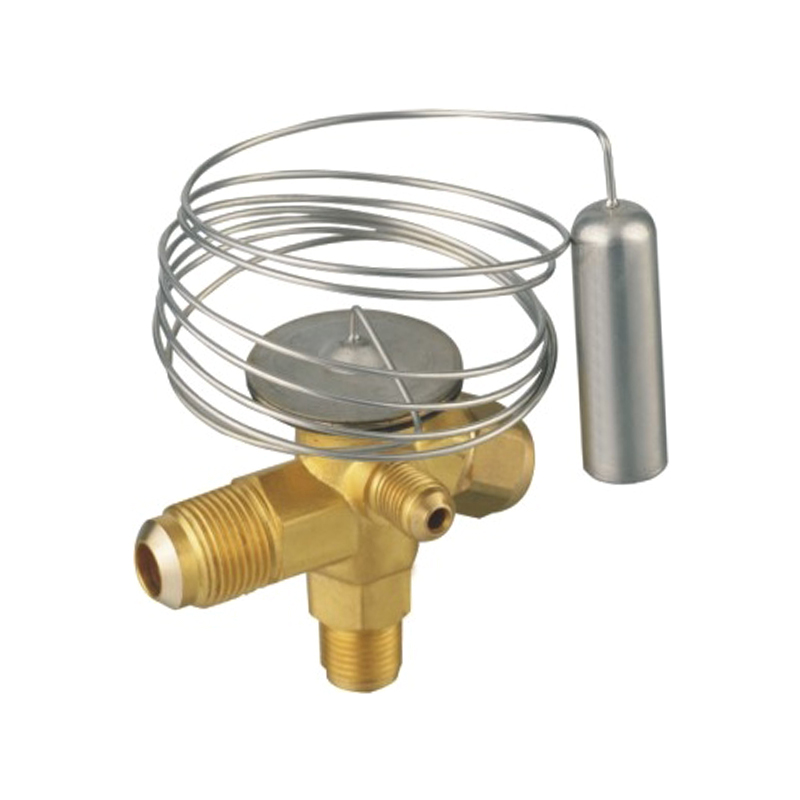
Taking electronic expansion valves as an example, the new national standard requires superheat control precision to tighten from ±1.5K to ±0.5K under partial-load conditions. This change directly drives upgrades in stepper motor drive algorithms. Laboratory tests show that valve bodies employing adaptive PID control can reduce superheat fluctuation by 67%, but this also means manufacturers must invest more heavily in sensor integration and firmware development.
Cold Chain Logistics Expansion Spurs Demand for High-Reliability Accessories
The global cold chain logistics market maintains a compound annual growth rate of 9.2% (2023-2028). China's fresh food e-commerce penetration has surpassed 28%, directly driving replacement and upgrade demand for accessories in cold storage units, refrigerated vehicle systems, and end-point display coolers.
Failure Mode Analysis of Accessories in Cold Chain Scenarios
Cold chain equipment typically operates across a wide temperature range of -25°C to +45°C with frequent start-stop cycles, imposing stringent durability requirements on accessories. Industry survey data reveals the following accessory failure distribution in cold chain refrigeration systems:
- Compressor start capacitor failures account for 22%, primarily due to electrolyte performance degradation across wide temperature ranges
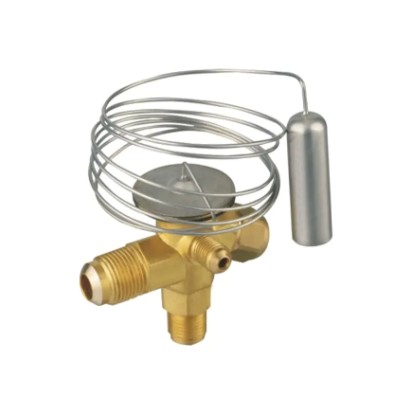
- Thermostatic expansion valve bulb drift accounts for 18%, causing superheat control inaccuracy
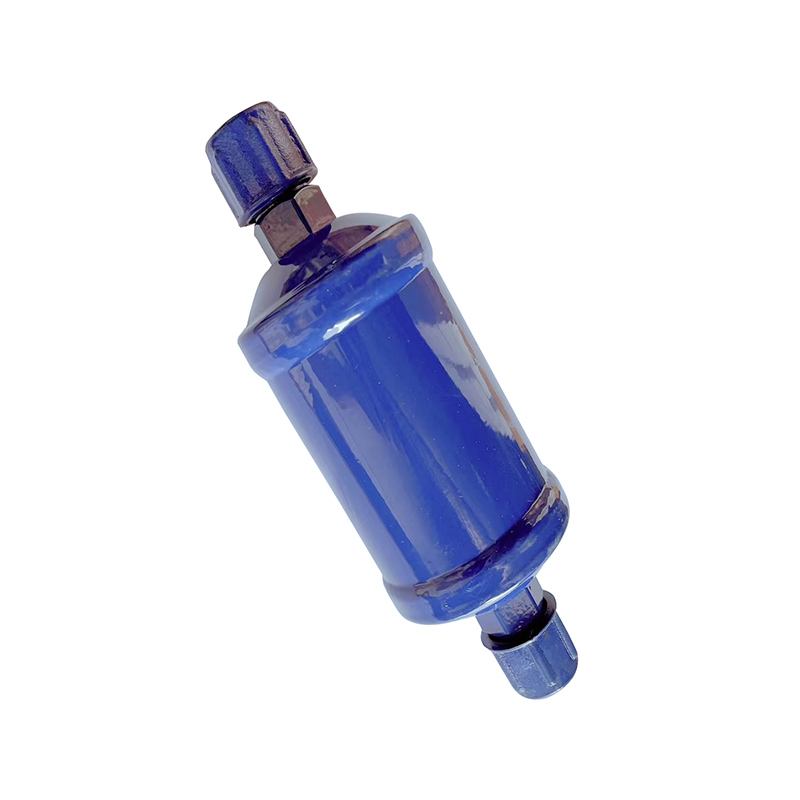
- Drier-filter clogging accounts for 15%, linked to high-humidity environments and refrigerant impurities
- Pressure controller contact oxidation accounts for 12%, an electrochemical corrosion issue in low-temperature, high-humidity conditions
To address these pain points, leading accessory suppliers have introduced solid-state start relays to replace traditional capacitors, reducing start failure rates to below 3%. Simultaneously, stainless steel bulb housings and vacuum encapsulation processes extend expansion valve drift cycles from 2 years to over 5 years in cold chain applications.
How Intelligent Accessories Are Reshaping Maintenance Models
The maturation of IoT and edge computing technologies is transforming refrigeration accessories from passive actuators into active sensing nodes. Intelligent accessories equipped with pressure, temperature, and vibration sensors can advance equipment fault warning times from "post-failure repair" to more than 72 hours in advance.
Typical Application Scenarios for Intelligent Accessories
In large-scale commercial refrigeration systems, intelligent electronic expansion valves automatically adjust opening by collecting real-time data on evaporator outlet superheat, condensing pressure, and ambient temperature, combined with built-in algorithms. Measured data shows that such systems compared to traditional thermostatic expansion valve solutions can achieve:
- System energy efficiency improvement of 12%-18%, with particularly significant advantages under partial-load conditions
- Compressor liquid slugging failure rate reduction of 85%, due to substantially improved superheat control precision
- Annual maintenance labor hours reduced by 40%, with remote diagnostics replacing 80% of on-site inspections
It is worth noting that the adoption of intelligent accessories is not instantaneous. Current market penetration is approximately 15% (based on electronic expansion valve statistics), primarily constrained by communication protocol fragmentation (coexistence of Modbus, BACnet, and LoRa) and legacy equipment retrofit costs. Industry consensus suggests that after 2027, as unified protocols such as Matter over Thread penetrate industrial scenarios, installation costs for intelligent accessories could decline by 30%, driving penetration beyond 35%.
Why New Refrigerant Compatibility Has Become the Primary Design Consideration for Accessories
The rapid adoption of low-GWP refrigerants such as R32, R290, R454B, and R1234yf has fundamentally altered material selection and structural design logic for accessories. A2L-class mildly flammable refrigerants (such as R32, R454B) require system leak concentrations to remain below 25% of the lower flammability limit (LFL), setting entirely new standards for seals, piping connections, and leak detection accessories.
Specific Requirements of A2L Refrigerants for Key Accessories
<<| Accessory Category | Traditional HFC Solution | A2L-Compatible Solution | Key Change |
|---|---|---|---|
| Seals | NBR rubber | HNBR or PTFE composite materials | Permeability reduced by 60%, oil resistance enhanced |
| Piping connections | Flared connections | Double ferrule or welded connections | Leak rate controlled below 3g/year |
| Leak sensors | No mandatory requirement | Infrared or semiconductor sensors (response time <10 seconds) | Must be integrated into indoor units or machine rooms |
| Compressor motors | Standard insulation Class E | Insulation Class F + explosion-proof junction box | Prevents arc ignition of leaked refrigerant |
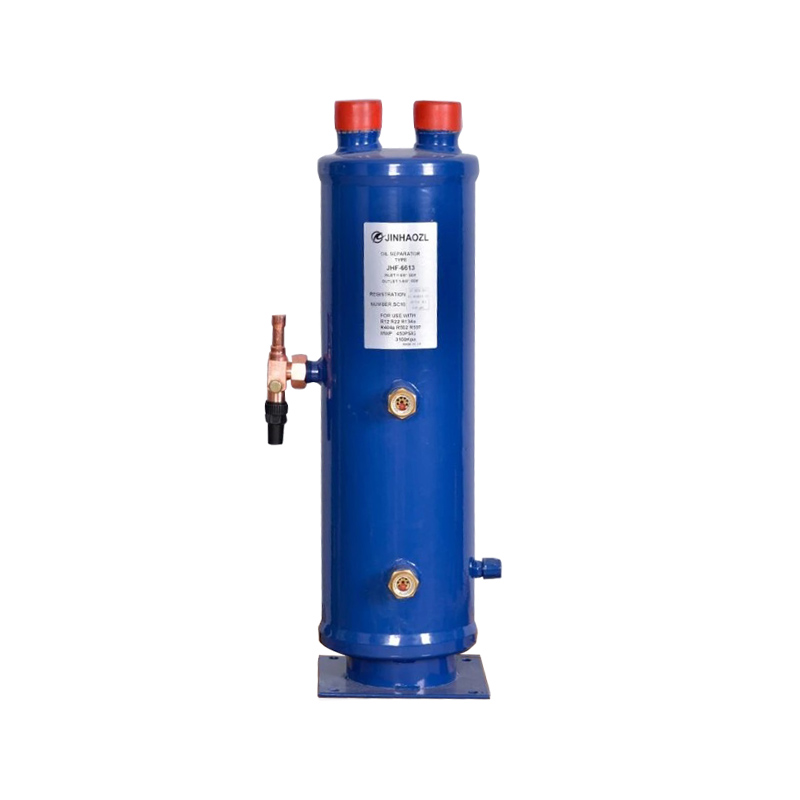
| Oil separators | Conventional wire mesh | Cyclonic separation + coalescing filter element | Oil return efficiency improved to 99.5%, reducing oil circulation in system |
Taking R290 (propane) as an example, its lower flammability limit is only 2.1% (by volume), and its small molecular weight and high permeability require evaporator and condenser piping wall thickness to increase by 15%-20%. All weld joints must pass helium mass spectrometry leak detection (leak rate <1×10⁻⁶ Pa·m³/s). These changes significantly increase manufacturing costs but also create technical barriers, driving the industry toward higher value-added concentration.
Supply Chain Regionalization and the Trend Toward Localized Accessory Production
The global supply chain restructuring since 2020, combined with localization rate requirements for refrigeration equipment in various countries (such as India's PLI scheme and US IRA domestic manufacturing subsidies), is reshaping the global production map for refrigeration accessories. China remains the world's largest exporter of refrigeration accessories, accounting for 42% of global trade volume, but Southeast Asia and Mexico are showing significant capacity growth rates.
Capacity Change Data by Major Region
Between 2023 and 2025, refrigeration accessory capacity changes across regions show clear divergence:
- China: Compressor accessory capacity grew by 8%, but growth in high-end products such as electronic expansion valves slowed to 5%
- Southeast Asia (Vietnam, Thailand, Indonesia): Capacity expanded by 25%, primarily taking over labor-intensive accessories such as copper tubing and fins
- Mexico: Driven by nearshoring, condenser and evaporator capacity grew by 30%, primarily supplying the North American market
- Europe: Domestic production retains high-precision valve bodies and controllers, but copper processing outsourcing has reached 40%
This trend presents dual challenges for accessory purchasers: on one hand, establishing multi-source supply systems to mitigate geopolitical risks; on the other, addressing technical standard differences across regions (EU CE certification, US UL certification, and China CCC certification have 20%-30% non-overlapping test items for the same type of electronic expansion valve).
Which Practical Strategies Should Guide Accessory Selection and Maintenance
Based on the industry trends outlined above, procurement and maintenance decisions for refrigeration equipment accessories should follow these priorities:
- Prioritize refrigerant compatibility verification: Before procuring any seals, piping, or valves, confirm material compatibility certificates with target refrigerants (especially A2L/A3 classes) to avoid costly retrofitting later
- Focus on intelligent interface openness: Select intelligent accessories supporting standard communication protocols (such as Modbus RTU or BACnet/IP) to avoid being locked into a single vendor's proprietary protocol
- Build an accessory lifecycle database: For different scenarios such as cold chain, commercial retail, and industrial refrigeration, record actual replacement cycles of key accessories (expansion valves, drier-filters, pressure switches) to drive predictive maintenance planning with data
- Evaluate supplier regional service capabilities: In the context of supply chain regionalization, supplier local inventory depth and technical support response time should be incorporated into procurement scoring systems (recommended weight no less than 20%)
Industry data shows that enterprises implementing systematic accessory management can reduce unplanned equipment downtime by 45% compared to industry averages, with annual maintenance costs lowered by 18%-22%. In an era of rapid accessory technology iteration, upgrading accessory management from "passive replacement" to "active strategy" has become the key lever for optimizing total lifecycle costs of refrigeration systems.