 English
 русский
 Tiếng Việt
Content
Picture a 3,000 m² cold storage warehouse where the outside temperature climbs to 38 °C in July and the freezer rooms hold -25 °C. That is the project where the choice between an HFC plant and a CO2 transcritical refrigeration system usually gets decided, and where most of the budget surprises appear.
The conclusion first: a transcritical CO2 system handles that duty, but only when the high-pressure side is designed for it from the first pipe spool. Discharge pressure in these systems routinely reaches 80 to 120 bar, three to four times the pressure of an equivalent R404A plant. Components, piping and controls that work perfectly well at 25 bar stop being acceptable at 100 bar. That single number drives the engineering effort, the cost and most of the field failures reported on transcritical installations.
How Transcritical Operation Differs From a Standard CO2 Plant
CO2 has a critical point at 31.0 °C and 73.8 bar. Below that temperature the refrigerant condenses like any other gas, and the system behaves in the familiar subcritical way: heat rejection happens at 25 to 40 bar, and condensing pressure simply follows ambient temperature.
Above 31 °C ambient, no practical pressure turns CO2 back into a liquid. The condenser becomes a gas cooler, the refrigerant leaves it as a single-phase supercritical fluid, and heat rejection depends on the temperature glide across the cooler rather than on condensation. Discharge pressure is no longer tied to ambient temperature; it becomes a control variable, held by the high-pressure expansion valve at the value that delivers the best COP. In practice that is often 85 to 95 bar at 35 °C ambient, while the design pressure of the high side is typically specified at 100 to 120 bar.
Two other properties affect layout. CO2 has a very high volumetric refrigeration capacity, so compressors and suction lines are noticeably smaller than HFC equipment of the same tonnage. And most industrial plants use a booster arrangement: low-temperature compressors discharge into the flash tank or into the suction of the high-stage compressors, with flash gas either bypassed or handled by a parallel compressor for better part-load efficiency.
Where Transcritical CO2 Pays Off and Where It Does Not
In cool climates and shoulder seasons, transcritical CO2 is competitive on energy and often cheaper to run than HFC systems. In hot climates the picture changes. At 35 to 40 °C ambient, a purely transcritical plant can lose 10 to 20 percent COP against a well-selected HFC alternative unless it uses adiabatic gas cooler pre-cooling, parallel compression or ejectors.
The argument that usually wins is not efficiency but heat recovery. A transcritical cycle rejects heat at a high, gliding temperature, so it can produce sanitary hot water at 60 to 90 °C without a separate heat pump, which is valuable in dairies, meat plants and food processing sites. Combine that with a GWP of 1 and a much smaller refrigerant charge, and the economics often close even in warm regions.
| Parameter | Subcritical CO2 | Transcritical CO2 |
|---|---|---|
| High-side pressure | 25 to 40 bar | 80 to 120 bar |
| Heat rejection | Condensation at constant temperature | Sensible cooling in a gas cooler |
| Pressure control | Follows ambient temperature | Actively optimised for COP |
| Best fit | Low stage of a cascade, cold climates | Heat recovery, low-GWP industrial sites |
| Ambient sensitivity | Moderate | High |
Component Choices That Decide Reliability
Compressors
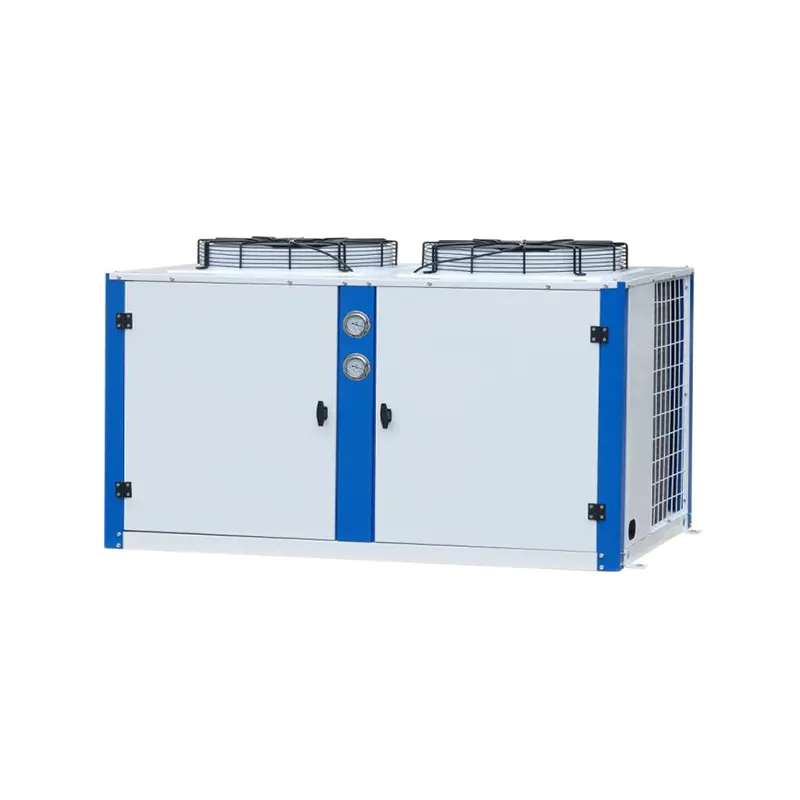
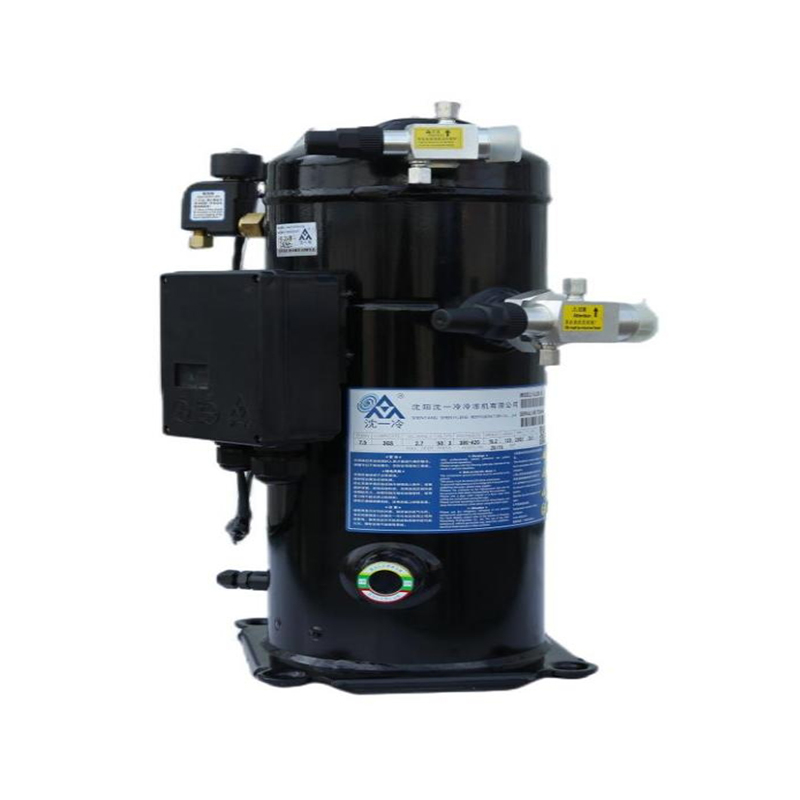
Discharge temperatures above 100 °C and pressure ratios of 3 to 4 put real stress on the compressor. Screw compressors are the usual choice for large industrial duties because they tolerate high pressure ratios at part load, while reciprocating machines fit smaller capacities and tighter budgets. Whatever the type, high-stage cooling, oil management and a suction superheat strategy need to be settled at selection stage, not on site.
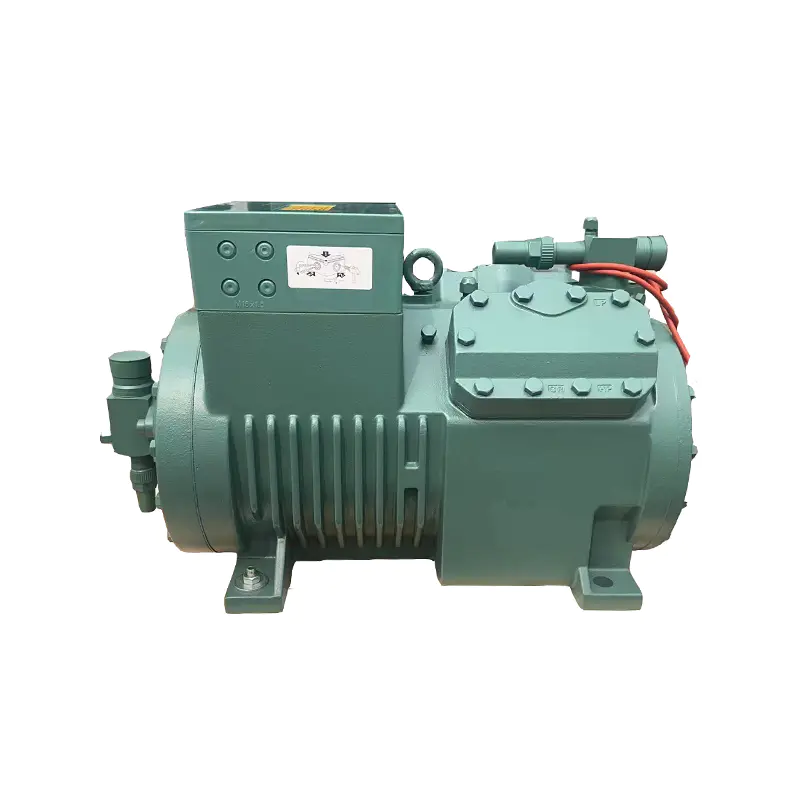 Screw Compressor for High-Pressure Industrial Refrigeration DutiesTwin-rotor screw compressor with oil-film or synchronised drive and no theoretical metal contact; review its construction for demanding high-pressure-ratio industrial duties.View Product →
Gas Coolers
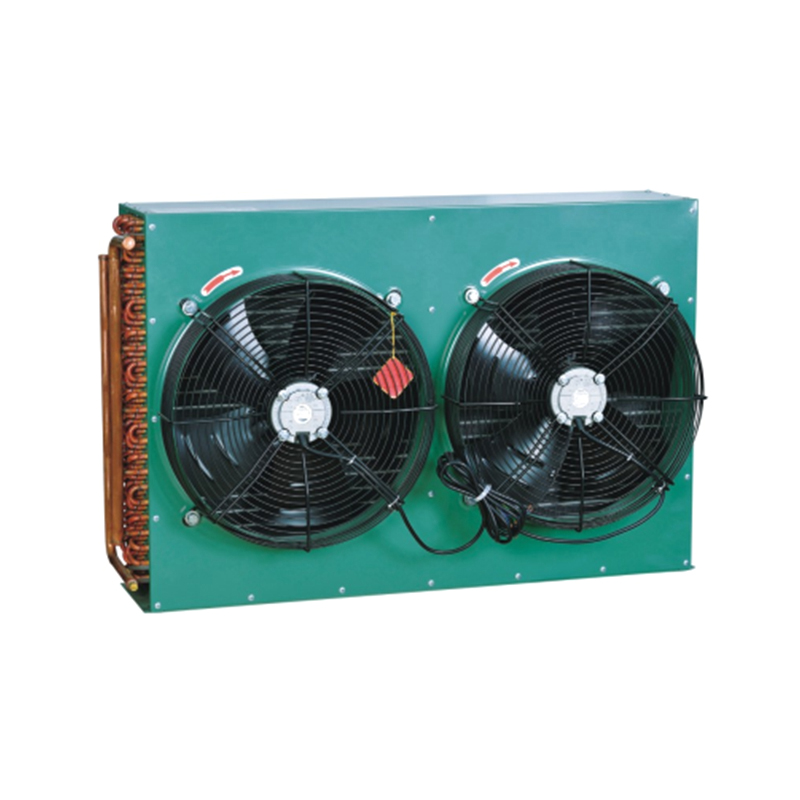
An air-cooled condenser used as a gas cooler must be selected on approach temperature, not on condensing temperature, and it needs more surface per kW because there is no latent duty to lean on. V-type and H-type air-cooled coils are the common industrial formats. On warm sites, spray or adiabatic pre-cooling can lower the effective inlet temperature by 8 to 12 K and take a large load off the high side, so fin spacing and coil cleanability matter as much as nominal capacity.
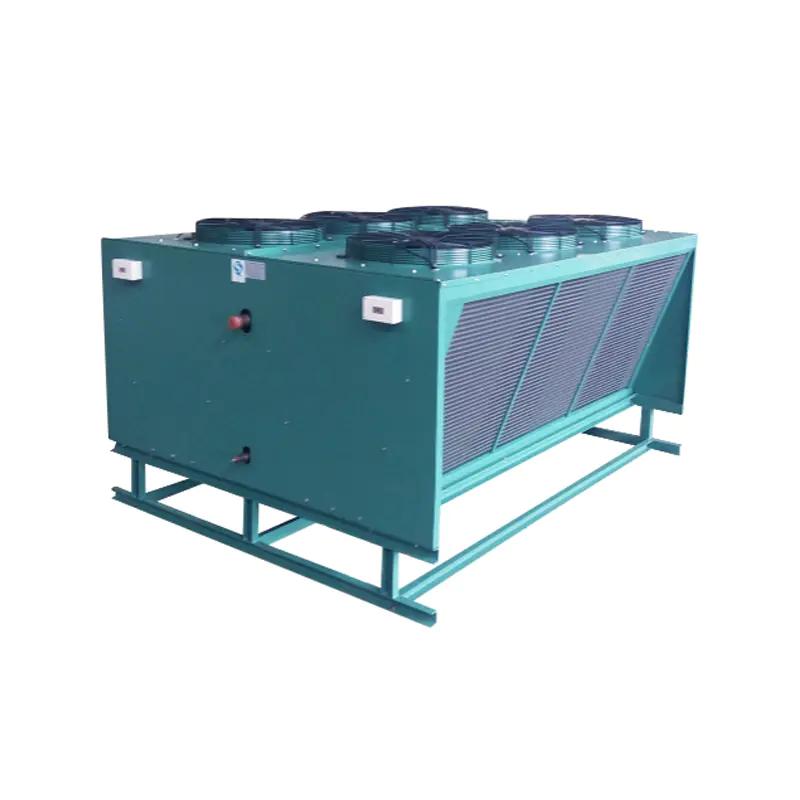 V-Type Air-Cooled Condenser for Industrial Gas CoolingV-shaped air-cooled condenser with coated steel shell and guided airflow; suited to industrial gas-cooler duties where approach temperature and coil cleanability drive selection.View Product →
Evaporators and Expansion
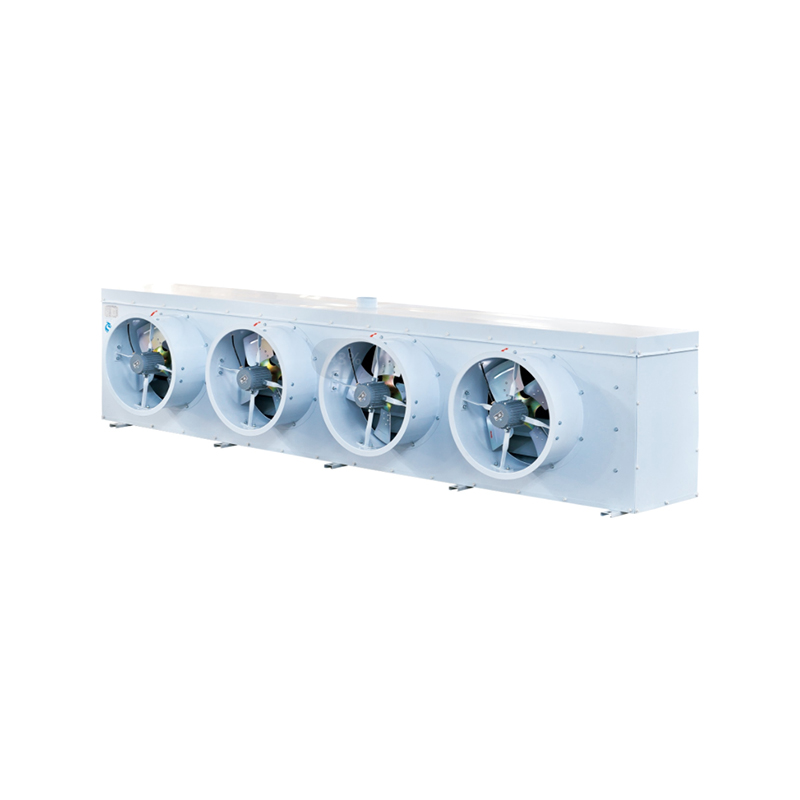
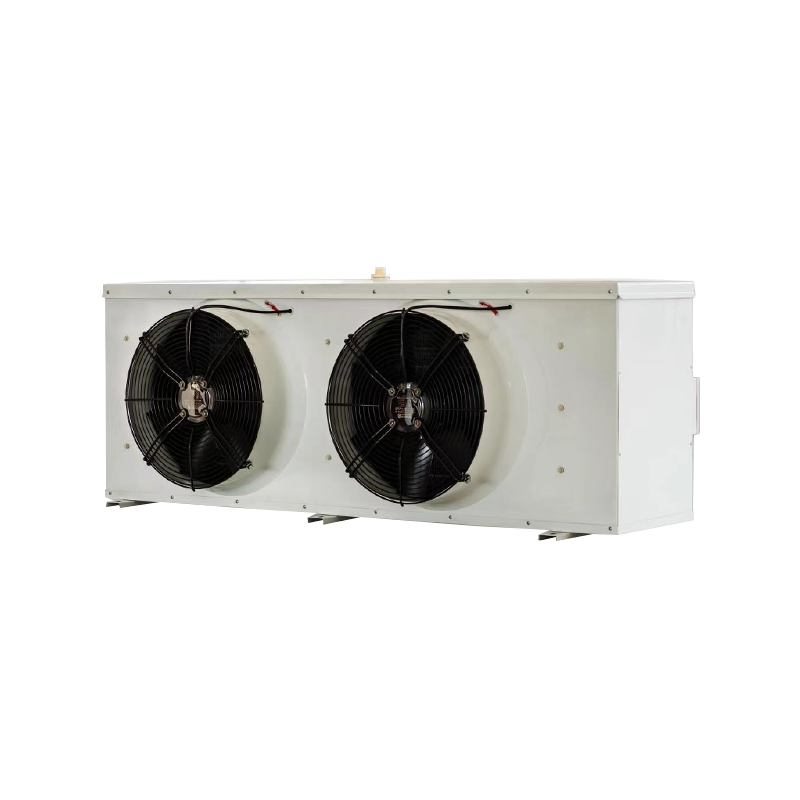
Room-side equipment is normally a pumped-circulation or DX air cooler sized for a small temperature difference; low-temperature freezers at -30 °C use a low-temperature evaporator with generous surface and wider fin spacing to limit frost build-up. The expansion device is where transcritical systems differ most: an electronic high-pressure valve with pressure and temperature feedback, backed by a flash tank, a suction line heat exchanger and a controller that keeps the high side at its optimum as ambient moves through the day.
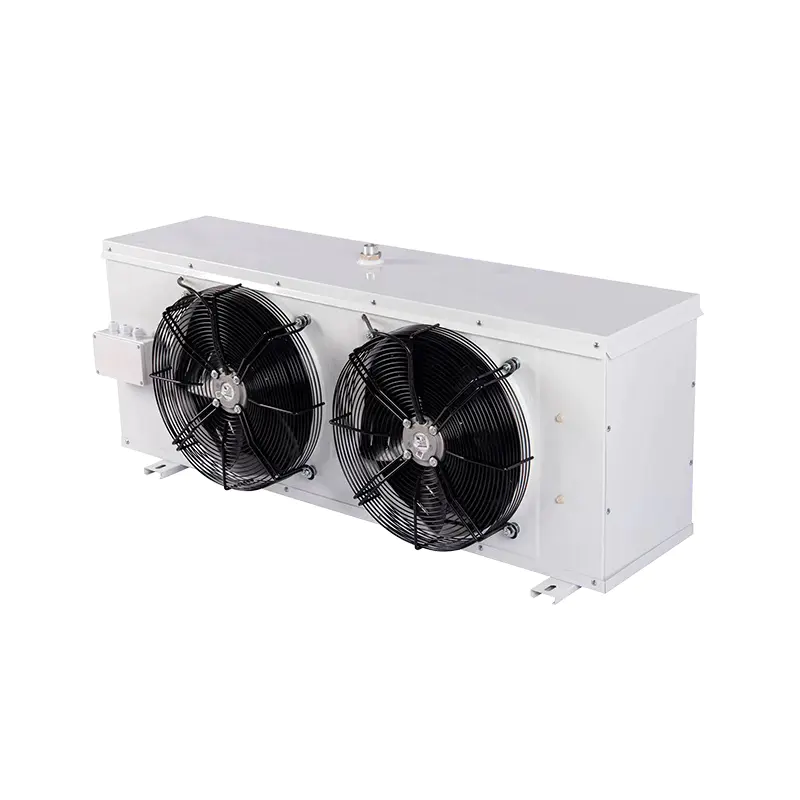 DJ Low-Temperature Evaporator for Quick-Freezing StorageLow-temperature evaporator for quick-freezing warehouses below -25°C, with monitored operation and structural design aimed at food, pharmaceutical and chemical freezing duties.View Product →
Materials, Piping and the Risks Buyers Underestimate
At 100 bar, ordinary practice stops working. High-side pipework is steel or stainless steel with verified wall thickness, rated fittings and documented supports; copper is limited to small diameters where the manufacturer's pressure rating allows it, and brass should not appear on the high side at all. Relief valves, burst discs and vent lines must be sized for the full mass flow and routed to a safe discharge location, in line with EN 378, ISO 5149 or the applicable local code.
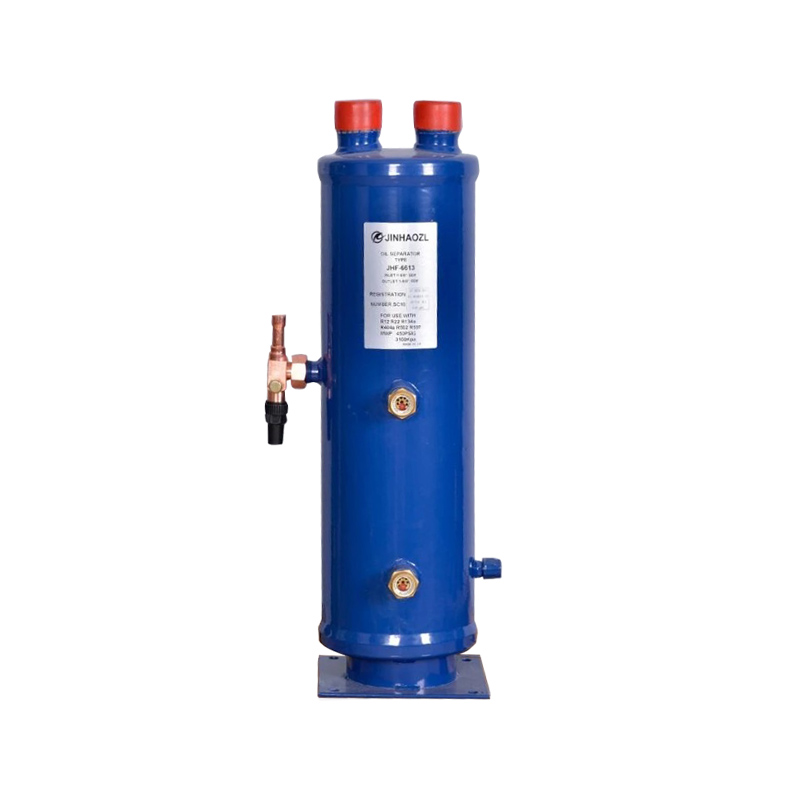
Moisture is the second risk. CO2 and water form carbonic acid, which attacks steel from the inside and clogs driers and valves, so the system needs correctly sized desiccant driers, dry-nitrogen purging and a disciplined evacuation protocol before charging. Oil is the third: CO2 dissolves in POE oil, changes its viscosity and can migrate away from the compressor, which makes oil separators, oil level gauges and sight glasses standard items rather than extras. Most field problems trace back to these three areas rather than to the compressors themselves, which is why any cold storage refrigeration system fault analysis should start with pressure readings, moisture indicators and oil level checks.
A Practical Specification Checklist
Before requesting quotations, put these numbers on a single page. They change the design more than any brand choice:
- Ambient design dry-bulb temperature and the annual hours above 25 °C.
- Room temperatures and simultaneous cooling loads, including pull-down duty.
- Required heat recovery temperature and daily hot water volume, if any.
- High-side design pressure and the standard the plant must satisfy.
- Machinery room volume, ventilation rate and gas detection arrangement.
- Electrical supply, control platform and remote monitoring expectations.
Zhejiang Brozer has manufactured semi-hermetic compressors and assembled refrigeration equipment for more than 21 years, with production exported to over 80 countries, and most transcritical discussions we join start with exactly this list.
Frequently Asked Questions
Is CO2 safe inside a food plant?
CO2 is classified A1, non-toxic and non-flammable, but it displaces oxygen in confined spaces, so leak detection, low-level ventilation and clear signage are mandatory. High pressure is the other hazard, and it is handled with relief devices and correctly rated components rather than with procedural caution alone.
Can a transcritical system work in a hot climate?
Yes, with adiabatic pre-cooling, parallel compression or ejectors. Expect slightly higher capital cost and a modest efficiency penalty compared with a mild-climate installation.
Can an existing R404A plant be converted?
Rarely. Compressors, piping, valves and controls all need pressure ratings three to four times higher, so conversion in practice means a new high side.
What maintenance does the high side need?
Pressure transmitter calibration, valve response checks, gas cooler cleaning and an annual inspection of relief devices and burst discs.
Transcritical CO2 is not a drop-in technology; it is a different pressure regime with its own component rules. Get the design pressure, the gas cooler selection and the moisture control right, and the plant will run for decades on a refrigerant that will never be phased down. Get them wrong, and the savings disappear in the first hot summer.